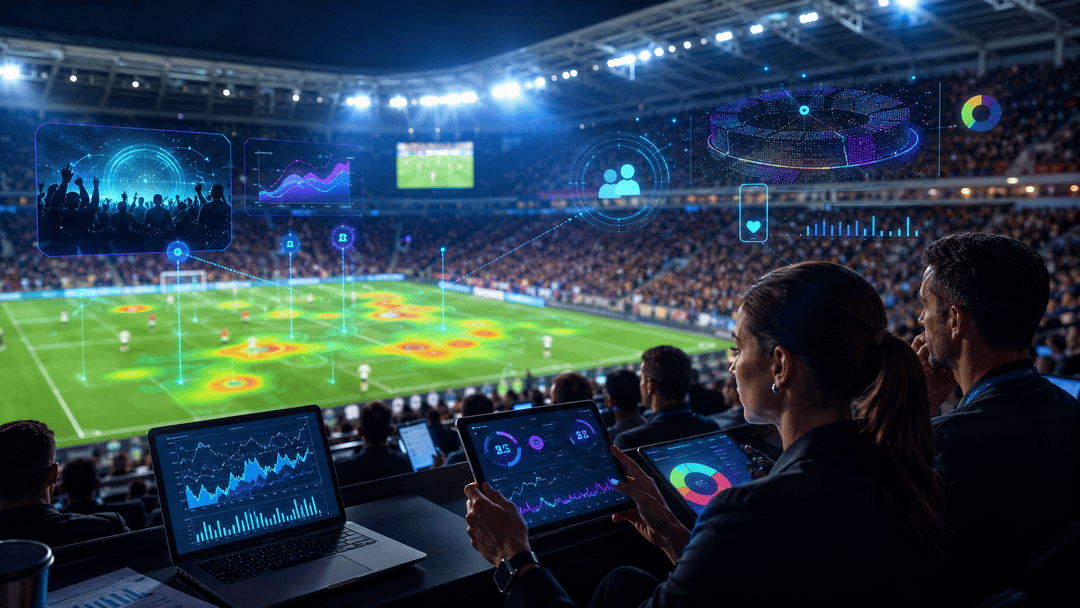
Sports event analytics is becoming one of the most valuable tools in live event planning because fan behavior is no longer easy to read from ticket sales alone. A packed venue can still hide weak engagement, poor digital adoption, or missed revenue opportunities, while a smaller event can reveal powerful loyalty signals if organizers know what to measure.
The real issue is not whether sports organizations have data. Most already do. The harder question is whether they can turn that data into better decisions about content, concessions, ticketing, mobile experiences, sponsorship, and the emotional rhythm of the fan journey.
Sports Event Analytics Turn Crowd Noise Into Usable Signals
Live sports have always produced visible reactions: cheering, booing, early exits, long lines, merchandise surges, and social chatter. What has changed is the ability to connect those behaviors into a clearer picture of what fans actually value.
Sports event analytics helps organizers move beyond surface-level assumptions. Attendance can show demand, but it does not explain satisfaction. App downloads can show interest, but they do not prove usefulness. Social activity can show attention, but it does not always translate into loyalty.
The strongest analytics approach looks for behavioral signals across the full event experience. Did fans arrive early? Did they open pre-game notifications? Did they use mobile tickets smoothly? Did they engage with in-venue content? Did they stay until the end? Did they return for another event?
Those details matter because sports fans rarely experience an event as one single moment. They experience it as a sequence: discovery, purchase, travel, entry, seating, watching, sharing, buying, leaving, and remembering. Analytics becomes valuable when it reveals where that sequence feels strong and where it breaks.
The Hidden Gap Between Attendance And Fan Intent
Organizers often treat attendance as the main proof of success, but attendance alone can be misleading. A fan may attend because of a rivalry game, a promotional offer, a family outing, or a one-time social invitation. Those motivations require different follow-up strategies.
This is where sports event analytics can expose fan intent more clearly. A season-ticket holder who rarely opens mobile content behaves differently from a casual visitor who engages with every replay, poll, and post-game highlight. Both fans matter, but they should not receive the same messaging.
The same logic applies to pricing, concessions, parking, and sponsorship. If families respond strongly to early start times and bundle offers, that tells organizers something useful. If younger fans engage heavily with short-form clips but ignore long emails, that suggests a different content strategy. If premium-seat guests value faster service more than extra digital features, the priority becomes operational speed rather than app complexity.
Good analytics does not reduce fans to numbers. It helps organizers respect different fan motivations instead of treating the crowd as one broad category.
Where Sports Event Analytics Changes Event Planning
The best use of analytics is not simply reporting what happened after the event. It is improving the next event before fans ever arrive. That is where the technology becomes operational rather than decorative.
Organizers can use analytics to refine entry flow, staffing, merchandise placement, digital content timing, promotional offers, and sponsor activations. A slow gate experience, for example, is not only a logistics problem. It can affect food purchases, pre-game energy, app usage, and overall satisfaction.
A broader sports technology strategy also depends on connecting analytics to real decisions. Data has little value if it sits in a dashboard without changing planning meetings, staffing models, content calendars, or sponsor packages.
The opportunity is especially strong for mid-sized sports properties, regional events, college programs, and niche competitions. They may not have the largest budgets, but they can still use smart measurement to understand which parts of the event experience create loyalty and which parts create friction.
The Data Points That Separate Interest From Loyalty
Not every metric deserves equal attention. Some numbers look impressive but say little about actual fan commitment. Others are quieter but more useful because they show repeat behavior, timing, or satisfaction.
A practical analytics model should separate attention, action, and loyalty:
| Fan Signal | What It Can Reveal | Why It Matters |
|---|---|---|
| Ticket purchase timing | Demand patterns and urgency | Helps shape pricing and promotion windows |
| App engagement | Digital usefulness and content interest | Shows whether technology supports the event |
| Arrival and entry times | Venue flow and friction points | Helps improve staffing and access planning |
| In-event purchases | Food, merchandise, and offer relevance | Connects fan behavior to revenue opportunities |
| Repeat attendance | Loyalty and long-term relationship strength | Shows whether the event experience creates return value |
| Post-event engagement | Memory, sharing, and follow-up interest | Helps guide content and retention strategy |
The key takeaway is that the most useful metrics are connected to decisions. If a number cannot help improve a fan experience, reduce friction, increase relevance, or strengthen loyalty, it may be interesting but not strategic.
The Risk Of Measuring Everything And Understanding Too Little
The biggest analytics mistake is assuming that more data automatically means better insight. It does not. Sports organizations can collect huge amounts of information and still miss the central question: what did fans actually want from the event?
This creates the danger of measurement without meaning. A dashboard may show open rates, scans, clicks, dwell time, purchase data, and attendance patterns, but those numbers need interpretation. A low app engagement rate may mean the app is poorly promoted. It may mean fans did not need it. It may mean the content was irrelevant. The number alone does not explain the reason.
Privacy and trust also matter. Fans may accept personalization when it improves convenience, access, or relevance. They are less likely to accept it when messaging feels intrusive or excessive. Organizers need to be disciplined about what they collect, why they collect it, and how clearly it benefits the fan.
For teams comparing tools and performance measurement, a stronger approach to event technology analytics should focus on usefulness, not just innovation. The goal is not to prove that technology exists. The goal is to prove that it improves the event.
The Next Signal Is Whether Data Improves The Live Experience
The next phase of sports event analytics will be judged less by technical sophistication and more by fan impact. Can organizers reduce wait times? Can they personalize offers without annoying people? Can they improve streaming, mobile alerts, replays, and sponsor content without turning the event into a screen-first experience?
Cloud platforms and connected systems are making this easier by helping organizations manage real-time engagement, content delivery, and audience segmentation through tools built for scale. For sports properties thinking about digital infrastructure, cloud-based fan engagement is becoming part of the larger conversation around how live events remain relevant in a mobile-first environment.
Still, the human standard should remain simple: did the fan feel better served? If analytics helps a venue open the right gates earlier, send fewer but smarter alerts, place merchandise where demand is strongest, or create content that fans actually want after the game, then it is doing useful work.
Sports event analytics will matter more as competition for attention intensifies, but the winning organizations will not be the ones collecting the most information. They will be the ones that turn data into operational decisions fans can feel. The future of fan understanding is not hidden in one perfect metric. It is found in the careful connection between behavior, experience, and the next choice an organizer makes.