Music streaming genres became a clearer signal of cultural demand in the first half of 2026, not because one sound replaced another, but because audience attention spread across language, format, and event behavior. Confirmed data showed global on-demand audio streams reached 2.8 trillion in H1 2026, up 9.8% from the same period in 2025, while U.S. streams reached 732.7 billion, up 4.8% year over year, according to Marketing Charts. The same reporting said Spanish-language music accounted for nearly 9.4% of U.S. streams, while English-language content fell to about 87.1% of U.S. streaming volume.
Market-analysis: those figures point to a streaming market where fan engagement is less tied to older assumptions about genre borders or language barriers. The key shift is not just growth in total listening. It is the way streaming data now reveals audience clustering around scenes, moods, artist communities, live-event habits, and cross-cultural discovery.
Why Music Streaming Genres Broadened In 2026
Music Streaming Genres As A Market Signal
Confirmed data from H1 2026 showed streaming still expanding, but the growth pattern mattered as much as the total. A 4.8% U.S. increase in on-demand audio streams was not explosive by itself. Yet the genre mix suggested that listeners were using streaming platforms to move between familiar catalog listening and newer discovery lanes. For platforms, labels, promoters, and artists, music streaming genres became a practical way to read where attention was deepening.
Market-analysis: genre growth should be treated cautiously. A rising share does not automatically mean a genre has become culturally dominant, and a lower share does not mean a genre has lost influence. Streaming share reflects repeat listening, catalog strength, playlist placement, platform recommendation systems, social activity, and artist release timing. Still, when a genre gains share during a period of high total volume, it indicates that audience behavior is moving in measurable ways.
Dance/Electronic Growth Showed A Different Fan Pattern
Confirmed data from Luminate reporting, as summarized by Music Times, said Dance/Electronic was the fastest-growing genre in the U.S. streaming market in H1 2026, gaining 0.51 percentage points of U.S. on-demand audio stream share and recording nearly 18.9% year-over-year growth; the same report said John Summit generated 295.1 million U.S. on-demand audio streams in the first half of 2026, up 59% year over year, while a Disco Lines remix drew 120.6 million U.S. streams Music Times reported.
Market-analysis: Dance/Electronic’s growth was culturally notable because it connected streaming behavior with scene-based engagement. The genre often moves through clubs, festivals, short-form video edits, remixes, DJ sets, workout playlists, and late-night social listening. That makes its growth different from a simple hit-song cycle. The fan relationship can be track-based, artist-based, event-based, or mood-based, depending on the listener.
What Genre Diversity Means For Platforms
Discovery Is Less Language-Bound
The rise of Spanish-language listening in U.S. streaming data showed that language is no longer a narrow filter for mainstream participation. Confirmed data said Spanish-language music reached nearly 9.4% of U.S. streams in H1 2026, while English-language content fell to about 87.1%. That shift does not mean English-language music weakened across all measures. It does suggest that U.S. streaming audiences were more open to bilingual discovery, Latin catalog depth, and cross-border artist circulation.
Market-analysis: this is where streaming differs from older distribution models. Radio formats and physical retail sections often sorted listeners into harder categories. Streaming platforms can place a regional Mexican track, a Latin pop single, a reggaeton collaboration, a Country hit, and a Dance/Electronic remix within the same user session. That does not erase genre identity. It changes how listeners encounter it.
Programming Becomes A Retention Problem
For platforms, genre diversity creates opportunity and risk. The opportunity is clear: more listening contexts, more playlist surfaces, more fan segments, and more reasons for subscribers to return. The risk is that recommendation systems can flatten cultural meaning if they treat genres only as metadata. A listener who streams Latin music, Dance/Electronic, Country, and R&B/Hip-Hop may be expressing different social contexts, not random taste.
This is similar to the broader streaming behavior discussed in SiteBob’s analysis of streaming viewership trends, where platform engagement depends on how audiences form habits across services and formats. Music services face a related question: how do they keep discovery useful without making culture feel interchangeable?
For readers interested in how video content influences music discovery and audience habits, Internet Video Magazine explores shifts in viewing behavior within streaming media.
Fan Engagement Beyond The Stream Count
Live Events Add A Different Signal
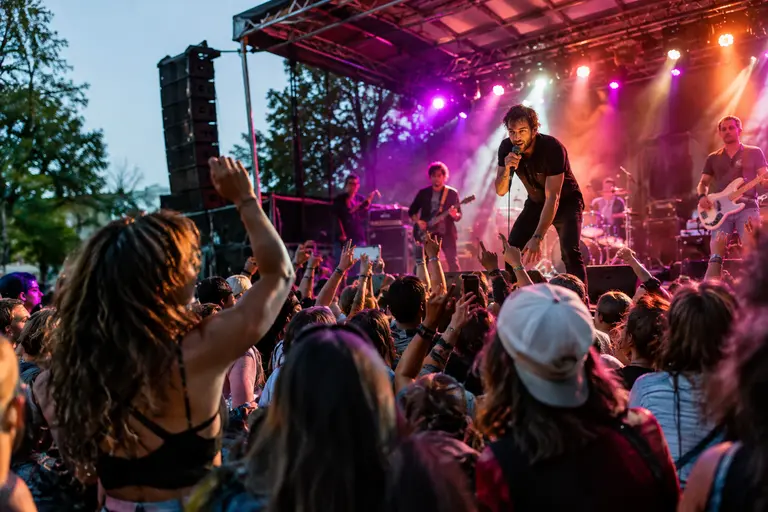
Confirmed data from the same H1 2026 reporting said 31% of Dance/Electronic listeners in a Q1 2026 Luminate survey had attended a live music event in the prior three months, 13 percentage points higher than the general U.S. population average. That data matters because streaming volume alone cannot explain fan value. A listener who streams a track repeatedly may be valuable to a platform. A listener who also attends events, follows artists, shares clips, and joins scene-based communities can shape cultural momentum in a different way.
Market-analysis: event behavior helps explain why music streaming genres are increasingly relevant to sponsors, promoters, and festival organizers. Genres are not just catalog labels. They can identify social groups with distinct spending patterns, gathering habits, and content expectations. Dance/Electronic’s live-event signal suggested a fan base that was active beyond headphones. Latin and Country gains, as described in the research notes, also pointed to genres where identity, locality, and community can affect engagement beyond passive streaming.
Fandom Formation Is Not Uniform
Audience engagement varies by genre because fandom is shaped by different rituals. Dance/Electronic fans may gather around festivals, remixes, DJs, club nights, and live sets. Country fans may respond to touring circuits, regional identity, storytelling, and radio-to-streaming overlap. Latin music fans may move between language communities, family listening, social video, and cross-border artist networks. These are market-analysis observations, not universal claims about every listener.
That distinction matters for marketers. A single streaming campaign can show strong reach but weak cultural fit if it ignores how fans participate. A playlist placement may help discovery, but it may not replace the credibility built through local events, creator partnerships, artist storytelling, or community-specific programming. The strongest engagement strategies are likely to read streaming data alongside audience behavior rather than treating the play count as the full story.
Music Streaming Genres And Audience Engagement
What The 2026 Data Can And Cannot Prove
The H1 2026 data confirmed growth in global and U.S. streaming volume, a measurable rise for Dance/Electronic, and a larger role for Spanish-language listening in the U.S. market. It did not prove that any one genre had permanently changed the hierarchy of music demand. Streaming data is powerful, but it is sensitive to release calendars, playlisting, catalog cycles, platform design, and promotional timing.
Market-analysis: the better reading is that music streaming genres are becoming sharper tools for understanding how audiences form identity through listening. Genre is not disappearing. It is becoming more flexible, more social, and more tied to adjacent behavior such as event attendance, video discovery, artist communities, and language crossover.
For media companies and event marketers, the practical lesson is to avoid treating diverse genre growth as a novelty story. The data from H1 2026 suggested a structural change in how fans spread attention across music categories. The cultural impact sits in that spread: listeners are not only consuming more music, they are making room for more types of music to carry meaning, community, and commercial value.
The cautious takeaway is that music streaming genres should be read as audience signals, not fixed boxes. The platforms and promoters that interpret those signals with context will be better positioned to understand fan engagement after the stream count has already been logged.