

Managing marketing for a huge game can feel chaotic. Scattered emails, last-minute approvals, and reactive social posts lead to missed chances and stress.
Imagine a live event newsroom instead. A place where content, team members, and issues are all coordinated from one strategic hub. This is your real-time marketing command center.
This setup is not just nice to have—it’s essential. Like event operations, the behind-the-scenes work of planning and clear communication is key to success. It makes processes smoother, cuts down on mistakes, and turns chaos into order.
Switching from random, reactive posts to a proactive command center model brings order. It saves time and resources. Your team becomes a well-oiled machine, ready for anything.
It’s like the difference between a disorganized pickup game and a team with a winning strategy. Let’s create your strategy.
Before the Event: goals, KPIs, must‑win moments, risk register
Your real-time marketing command center needs a solid war room playbook before the event starts. It’s not just a list; it’s your strategy for success. It’s like the game plan your team practices before the game.
Begin with outcome-driven planning. Think about what success means to you. Is it increasing brand love, selling more tickets, or engaging partners better? Make these goals clear. They guide you during the event.
Then, turn those goals into measurable Key Performance Indicators (KPIs). These are the metrics you’ll watch live. Examples include social media scores, website traffic, or event hashtags. Clear KPIs show you if you’re winning.
Identify your “must-win moments.” These are key moments during the game where your audience is most engaged. Examples include a last-minute goal or a heartfelt halftime show. Your playbook should have ideas for these moments, so you can share content that connects instantly.
The last step is the risk register. It’s like venue security checking for threats. Your marketing team must check for brand risks. This is proactive risk and compliance planning.
Build your register by doing three assessments:
- Threat Assessment: What could go wrong? (e.g., a key player injury, a controversial referee call, negative fan sentiment).
- Vulnerability Assessment: How could it hurt us? (e.g., our brand is tied to that player, our slogan could be misinterpreted).
- Criticality Assessment: How bad would it be? (Rank risks from “minor hiccup” to “full-blown crisis”).
Documenting these scenarios and your responses means you’re always ready. When something happens, your team can quickly move to Plan B.
This work turns your command center into a strategic asset. You go from hoping for the best to planning for success. That’s the power of a true war room playbook.
Org Chart: producer, copy, design, community, legal, paid, analyst
To avoid chaos during a major event, you need a dedicated crew with assigned roles. From the strategic producer to the data-driven analyst, everyone has a job. Think of your real-time marketing command center as a live broadcast booth. Everyone has a headset, a specific job, and a clear line of sight to the action.
When a big play happens, there’s no time for confusion over who should react.
Effective team management starts with rock-solid communication. Every member must know their task and its timing. By mapping out your org chart and escalation paths before the event, you create a collaborative machine. This machine leverages expertise and sidesteps bottlenecks.
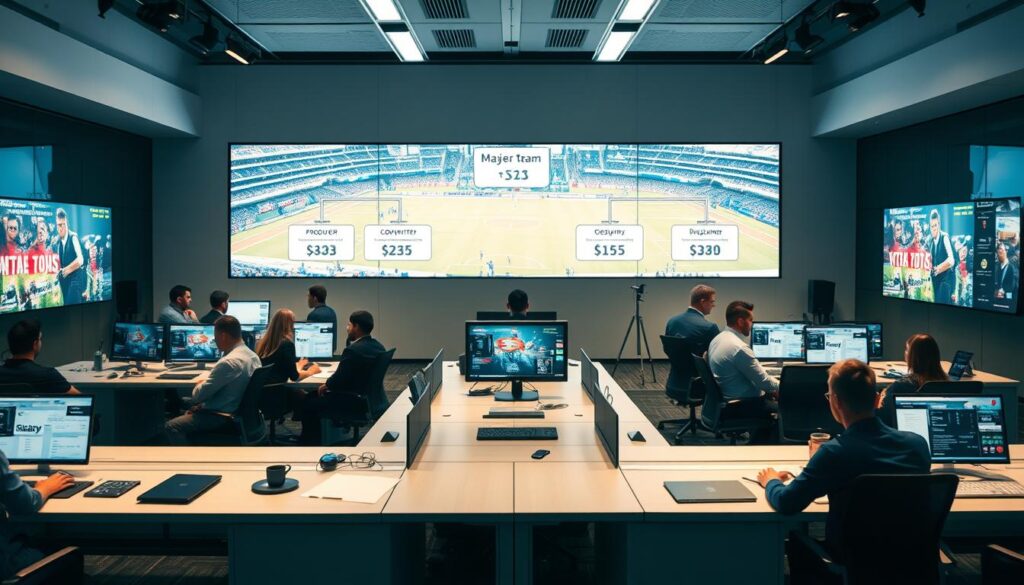
Here’s a breakdown of the essential players you need on your roster and how they connect. This table gives you the quick-reference playbook.
| Role | Core Responsibilities | Key Escalation Path |
|---|---|---|
| Producer | Final authority on content calendar & live timeline; manages team workflow and approvals. | Escalates major strategic shifts or brand safety concerns to senior leadership. |
| Copywriter | Crafts all text for posts, captions, and ads in real-time; maintains brand voice. | Flags potentially sensitive or unclear messaging to Legal and Producer. |
| Designer | Creates visual assets (graphics, GIFs, short videos) on demand. | Alerts team to visual trends; escalates technical asset issues to Producer. |
| Community Manager | Monitors social conversations, engages with fans, and identifies viral moments. | Surfaces major sentiment shifts or crisis comments to the entire command center. |
| Legal Counsel | Reviews content for compliance, rights issues, and risk; provides rapid “green lights.” | Triggered by Copy or Community for any sensitive topic, rival mention, or tragedy. |
| Paid Media Specialist | Manages real-time ad buys, adjusts targeting, and amplifies top-performing organic content. | Pauses or shifts campaigns based on Analyst data or Producer direction. |
| Data Analyst | Tracks live performance metrics, sentiment analysis, and measures against KPIs. | Alerts team to performance spikes/drops and informs strategic pivots. |
Let’s get into the details of each position. The Producer is your head coach. This person owns the master schedule, keeps the team on task, and makes the final call when a tough decision arises. They ensure the right message gets out at the perfect moment.
Your Copywriter and Designer are the star offensive players. They create the content that fans will see and share. The copywriter spins clever captions in seconds, while the designer turns ideas into eye-catching graphics. They work in a tight feedback loop.
The Community Manager is your ears on the ground. They listen to what the audience is saying across platforms. This role is critical for finding those unexpected, authentic moments to capitalize on traffic spikes during major sports.
Now, for the vital support roles. Legal Counsel isn’t there to say “no” to everything. They’re your safety referee, providing fast approvals to keep you agile and protected. Having them embedded in the command center is a game-changer.
The Paid Media Specialist and Data Analyst are your strategic advantage. The analyst reads the live data, telling you what’s working. The paid specialist then uses that intel to boost your best content with targeted ad spend. This turns organic buzz into measurable results.
Clear escalation paths are what make this structure work. For example, if the community manager spots a negative trend, they know to immediately alert the producer and copywriter. If copy drafts a post about a player injury, a pre-defined path sends it straight to legal for a sensitivity check. This prevents small issues from becoming big problems.
By defining these roles and connections upfront, your team will operate like a symphony, not a scramble. You’ll have the right people, with the right skills, making the right moves at the right time. That’s the power of a well-built real-time marketing command center.
Asset Bank: prebuilt cutdowns, caption banks, alt text library
Your Asset Bank is like a secret weapon in your real-time marketing command center. It helps you act fast when moments are critical. With a library of pre-approved assets, your team can publish content quickly and keep it on-brand.
Without it, your team scrambles to create content. They’re racing to edit, write, and check everything from scratch. This can lead to mistakes and missed chances. But your Asset Bank makes things smooth and efficient.
So, what’s in this vital bank? It’s built on three main pillars, each covering a different part of your live response.
1. Prebuilt Video Cutdowns
Don’t wait to edit; edit beforehand. Prepare short video clips for every big moment. Imagine having 15-second clips ready for wins, losses, or records. Your team works on these during downtime, ensuring quality and brand standards. Then, when the moment comes, you just pick and post.
2. Caption Banks for Every Tone
What you say is just as important as what you show. A caption bank has pre-written social copy for every scenario and emotion. You’ll have posts for wins, losses, and more. It’s not about being robotic; it’s about having a solid base for your community manager to adjust quickly.
3. The Alt Text Library
Accessibility is a key part of your content. An alt text library has simple descriptions for common images and videos. When a graphic of the star player goes live, so does the alt text. This makes your content accessible to all fans right away.
This approach optimizes your resources. By preparing these assets ahead of time, you avoid delays and shortages in live event coverage. Your team works smoothly, without being overwhelmed.
Building this bank might seem like extra work at first. But it’s worth it when the game is on the line. You’ll act fast, confidently, and keep your brand safe. This turns brief moments into lasting marketing successes.
Approval in Minutes: red/yellow/green lanes with examples
A fast approval process is key for a successful real-time marketing command center. During big games, viral moments happen fast. If your team waits too long, you miss out.
Old ways of getting approval slow things down. We need something quicker. The Red, Yellow, and Green lanes are like a traffic light system for your brand safety matrix.
This system sorts content before it’s made. It tells your team what to post right away and what to check again. It’s all about being fast but safe.
Let’s look at what each lane means for sports coverage, with examples you can use today.
The Green Lane: Go Live Now
Green lane content is ready to go. It’s safe and fits your brand perfectly.
For sports, this includes:
- Celebratory posts for big wins, like making the playoffs.
- Sharing league news with your captions.
- Posting graphics of player milestones.
Here, if the content fits, anyone can post it. It’s a quick way to engage without risk.
The Yellow Lane: Quick Specific Check
Yellow lane content is mostly safe but needs a quick check. It’s not a full committee review.
Imagine a post about a player’s comeback. The story is good, but the stats must be right. This goes to Yellow lane.
A “copy lead” or “data analyst” checks the stats fast. They make sure everything is correct. Other checks might be new hashtags or designs.
The Red Lane: Full Review Required
The Red lane is for sensitive content. It’s for legal issues or big messages. High risks that happen often should be avoided.
Red lane scenarios include:
- Responding to serious injuries.
- Statements on controversies involving your brand.
- Comparative content with rivals.
This content goes to legal and executives for review. It ensures careful comments.
To use this system, your team needs a guide. Here’s how you might see it:
| Lane | Description | Sports Event Example | Who Approves |
|---|---|---|---|
| Green | Pre-approved, zero-risk content matching pre-built templates. | “With that 3-pointer, he’s now the franchise’s all-time leading scorer!” (Pre-written caption + pre-designed graphic). | Community Manager or Producer on duty. |
| Yellow | Low-risk but needs one specific fact or element verified. | “Her second-half performance had a +25 plus/minus, the best in a finals game, 2004.” (Stat needs verification). | Designated Data Analyst or Copy Lead. |
| Red | High-sensitivity, legal, or crisis-adjacent content. | Drafting a brand statement following an unexpected stadium evacuation. | Legal Counsel & Head of Marketing. |
This framework does two great things for your real-time marketing command center. It lets your team work freely and fast. They know the rules.
Instead of slow lines, you have fast lanes. This makes your brand safety matrix quick and responsible, keeping up with the game.
Listening + Alerting: queries, thresholds, who reacts
Think of your real-time marketing command center as a high-tech radar. It doesn’t just send out messages. It scans the digital world for any news about your brand, teams, and the event. This constant listening turns you from a simple announcer into an active, responsive part of the event.
Your radar’s sensors are your listening queries. These are special search strings set up in social listening tools and Google Alerts. They act like digital tripwires, catching important conversations as soon as they start.
You’ll want to mix different types of queries to get a full view:
- Brand & Product Mentions: Your company name, official hashtags, key product names.
- Event & Competitor Focus: The event’s name, rival team names, sponsor mentions.
- Sentiment & Crisis Signals: Queries with words like “complaint,” “refund,” or “awesome play.”
But just hearing everything isn’t enough. You need to know when to act. This is where setting clear thresholds is key. Your command center needs rules for when to react to volume and sentiment changes.

Set specific triggers, like a “yellow alert” for a 50% jump in negative mentions in an hour. A “green light” might go off when positive sentiment around a hashtag reaches a certain level. This shows when your brand is at risk or has a great opportunity.
The last step is deciding who reacts. Every alert needs a clear owner to avoid confusion and delay.
- Community Manager: Reacts to general sentiment shifts, fan questions, and mid-level engagement opportunities.
- Producer/Content Lead: Activated for major positive trends to deploy pre-approved amplification assets.
- Legal/Compliance Team: Immediately notified for alerts containing specific crisis keywords or possible reputational threats.
By using smart queries, clear thresholds, and assigned responders, your command center becomes incredibly powerful. You go from guessing to knowing, from slow reactions to quick engagement. This framework keeps your team informed, aligned, and ready to act smartly as the event happens.
Decision Trees: injury/news sensitivity, tragedy protocols, rival mentions
Think of decision trees as your brand’s ethical GPS for sudden, sensitive events. When a crisis hits, there’s no time for debate. You need a clear plan that tells your team what to do.
These trees simplify complex “what if” scenarios into simple “if this, then that” actions. They ensure everyone responds quickly, with empathy, and in brand consistency.
Let’s create your first trees. We’ll focus on three key areas for any sports real-time marketing command center:
- Player Injury or News Sensitivity: How to change your tone instantly.
- Tragedy or Major Incident Protocols: How to assess impact and respond.
- Rival Team or Fan Mentions: Where to draw the line between engagement and negativity.
For injuries or sensitive news, your tree starts with a simple trigger. If a key player is injured on live TV, then: pause all celebratory posts, shift to a supportive tone, and avoid imagery of the incident. This isn’t about stopping communication—it’s about guiding it with empathy.
Tragedy protocols require a deeper consequence evaluation. Your real-time marketing command center must look beyond the game. Your tree should analyze social trauma, loss of life, and community impact. The “if” is a major tragic event. The “then” involves steps like holding promotional content, issuing a pre-approved statement, and proposing measures to reduce consequences.
When dealing with rivals, aim for engagement without escalation. Your tree defines clear guardrails. If a rival team’s official account posts playful banter, then: you may respond with a pre-approved, good-natured template. If fans or accounts cross into harmful negativity, then: disengage entirely—no quote tweets, no clapbacks. This protects your brand’s voice and keeps focus on your community.
By building these decision trees in advance, you empower your team. From community manager to legal reviewer, everyone knows their role under pressure. This makes your operation fast and fundamentally sound.
Cross‑Channel Sync: organic, paid, email/SMS, site modules
Silos kill momentum. In real-time marketing, your email, paid ads, and site must move as one. Your real-time marketing command center is the conductor, ensuring every channel plays its part at the right moment.
Think of it as your marketing central nervous system. A great moment on social media is just the start. Its true power is unlocked when it’s instantly amplified everywhere your audience looks.
Let’s break down how this sync works in practice across your key channels.
The Organic-to-Paid Amplification Loop: That incredible highlight clip your team posts organically? Your command center should have a rule. If engagement hits a specific threshold, it automatically triggers a paid promotion budget. This turns a single post into a scalable campaign in minutes, not days.
Triggering Owned Channels (Email/SMS): When a must-win moment happens live—like a record-breaking play—you can capitalize on that excitement immediately. A pre-written email or SMS blast can be sent with one click from the command hub. This is how you turn viewers into engaged subscribers by perfectly timing your content for sports.
Updating the Digital Front Door (Site Modules): Don’t let your website be a static billboard. Use your command center to update homepage banners, hero images, or promotional modules in real-time. If your star player is having a historic night, your site should celebrate it as it happens. This creates a unified brand experience from social feed to website.
This is where the magic happens. Success on one channel directly fuels activity on all the others, creating a powerful, self-reinforcing cycle.
Making this seamless requires the right tools and rhythms. A centralized platform is a game-changer. Use a single dashboard to manage schedules, approvals, and asset deployment across all channels. This reduces errors and keeps every stakeholder—from social to web dev—on the same page.
Establish clear communication rhythms. For example, a 5-minute check-in after a major play can decide: “Organic post is hot. Boost paid. Trigger email variant B. Update site module 3.” This quick huddle ensures no channel is left behind.
By breaking down these silos, your brand tells one cohesive story. Your audience gets a powerful, unified experience whether they’re on Instagram, in their inbox, or on your site. That’s the ultimate power of a synchronized real-time marketing command center.
Measurement Wall: live dashboards and after‑action report template
The final whistle doesn’t shut down your real-time marketing command center. It switches its focus to measurement and learning. Your success hinges on what you do with the data you’ve collected.
Your live dashboards are the heartbeat of the event. Track engagement rates, audience sentiment, and web traffic in real time. This lets your team make tactical adjustments on the fly. Data-informed decision making keeps your strategy agile and effective.
When the event ends, your after-action report begins. Use a structured template to review everything. Analyze key performance indicators like attendance trends, conversion rates, and operational costs. Conduct reviews with your staff and partners to document lessons learned.
This process isn’t about assigning blame. It’s about guided, continuous improvement. Examine what worked in your asset bank and where your decision trees could be sharper. This commitment to measuring and learning transforms your single-event real-time marketing command center into a perpetual engine for marketing excellence.