
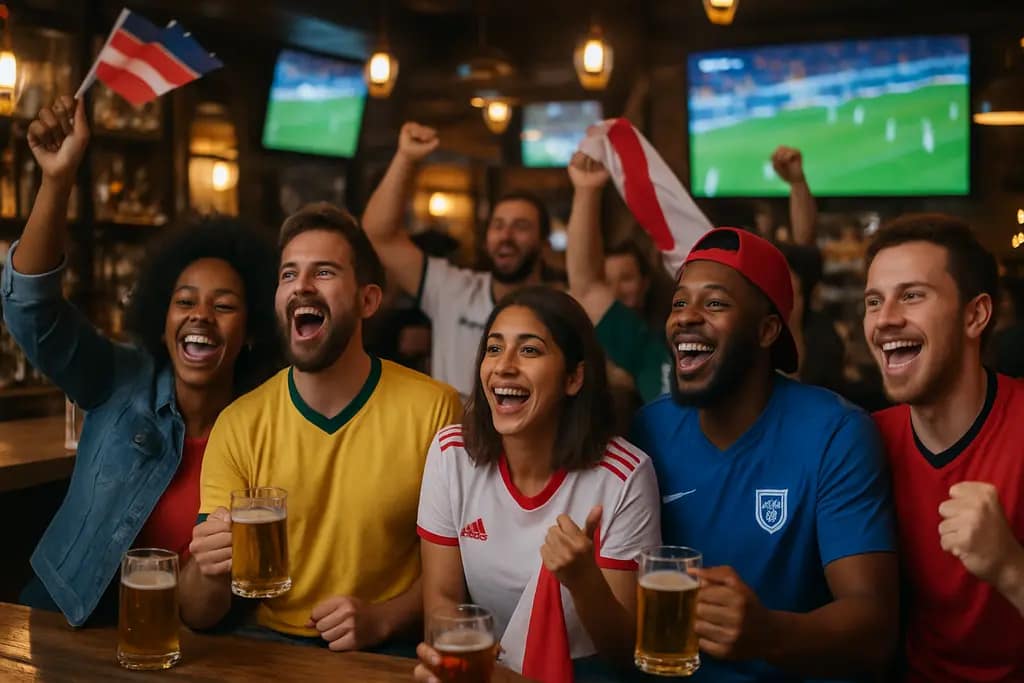
Confirmed: World Cup streaming became one of the clearest audience stories of the FIFA World Cup 2026, which concluded on July 19, 2026. The strongest available Nielsen-linked evidence shows that the tournament did not only lift match telecasts; it also changed the scale of summer TV usage, streaming attention, and bilingual fan engagement across FOX, NBCUniversal, Telemundo, and Peacock.
Market-analysis: For event marketers, the more useful lesson is not that a global soccer tournament drew a large audience. That was expected. The sharper signal is that live sport helped audiences move fluidly across broadcast, cable, Spanish-language television, and streaming. That behavior matters because sports rights owners, advertisers, and media brands are trying to hold attention after major events end, rather than treating a tournament as a short ratings spike.
What World Cup Streaming Changed In June Viewing
Why World Cup Streaming Mattered To Nielsen’s Gauge
Confirmed: During the June 2026 measurement period from June 1 through June 28, the FIFA World Cup 2026 generated more than 84 billion minutes of viewing across FOX and NBCUniversal properties, and those two companies posted the only positive gains in Nielsen’s Media Distributor Gauge for that month, according to Nielsen’s June Gauge report. Nielsen also reported that streaming accounted for 48.5% of total TV watch-time in June after rising about 3% from May.
Market-analysis: That combination is significant because it places live soccer inside a broader viewing shift rather than treating it as an isolated sports success. A tournament can drive appointment viewing, but in June 2026 it also fed the distributors that owned the rights and supported a wider streaming share. For platforms, that makes live sport a retention tool and an acquisition signal at the same time.
Confirmed: Nielsen’s June data also showed a 73% increase in TV viewing for FOX affiliates tied to World Cup coverage. Market-analysis: That figure points to a distribution pattern that is easy to miss in streaming-first conversations. Broadcast did not disappear during the tournament. Instead, it worked beside streaming and Spanish-language coverage, giving fans multiple entry points depending on language preference, household habits, and device access.
How Shared Viewing Shaped The Audience Surge
Market-analysis: The June data suggests that World Cup streaming should be read as part of a mixed-screen behavior. Fans did not move in one clean direction from traditional television to apps. They followed matches through the channels available to them, then used streaming, highlights, social clips, and shoulder coverage to stay connected outside the live window.
That pattern has cultural implications. Soccer fandom in the United States has often been split by language, league preference, club allegiance, and national-team identity. The 2026 tournament gave those communities a shared calendar. For Spanish-speaking households, bilingual households, casual viewers, and long-time soccer fans, the event created a common set of match moments while still allowing each audience segment to choose a preferred platform.
Spanish-Language Coverage And Fan Identity
The Telemundo And Peacock Signal
Confirmed: NBCUniversal said Telemundo’s Spanish-language World Cup coverage, combined with Peacock streaming, averaged about 2.6 million viewers on an Average Minute Audience basis, and reported sharp growth compared with 2022, including 143% growth in combined Spanish-language viewership, 79% growth in Nielsen-measured linear viewing, and nearly 300% growth in Adobe-measured streaming, in NBCUniversal’s Telemundo release.
Market-analysis: Those numbers suggest that language strategy was not a secondary packaging decision. It was a central audience-engagement driver. Spanish-language coverage can carry cultural context, emotion, commentary rhythms, and community memory that are not interchangeable with an English-language simulcast. For media companies, the business implication is direct: bilingual and Spanish-language fans are not a niche audience to be served after the fact. They are a core rights and product strategy.
Market-analysis: Peacock’s role also matters because streaming can reduce some of the friction around time, location, and device choice. It can serve households that use connected TVs, mobile screens, or shared devices. It can also pair live games with related programming and re-engagement prompts. That does not mean every streaming viewer becomes a long-term subscriber because of one tournament. It means the tournament gave NBCUniversal more occasions to present Peacock as part of normal soccer viewing behavior.
Audience Belonging Beyond The Match
Opinion: The most durable fan engagement rarely comes from access alone. It comes from a feeling that the coverage understands the audience. Spanish-language World Cup coverage has a distinct ability to carry family viewing, national identity, diaspora ties, and regional soccer knowledge in ways that deepen emotional involvement. That helps explain why the growth figures deserve cultural analysis, not only ratings analysis.
Market-analysis: Brands working around soccer should treat this as a caution against generic tournament messaging. A fan watching Argentina, Mexico, Spain, Brazil, or the United States may be responding to different cultural cues, family histories, and media habits. The same match can be a sports event, a national ritual, a social-media moment, and a living-room gathering. Strong activation plans respect those differences rather than flattening them into one broad soccer audience.
What The Audience Surge Means For Event Marketing
Rights Holders Need A Post-Event Plan
Market-analysis: World Cup streaming proved valuable because it sat at the intersection of live rights, platform habit, and community attention. Yet the event ended on July 19, 2026. That timing matters. Media companies and sponsors that gained reach during the tournament had to shift quickly from live-match promotion to fan retention. Without a post-event plan, tournament attention tends to fade into scattered highlights, club-season chatter, and national-team waiting periods.
This is where audience strategy should become practical. Rights holders can segment casual viewers, returning soccer fans, Spanish-language audiences, and streaming-first viewers based on behavior. They can then follow with match recaps, player explainers, newsletters, shoulder programming, creator partnerships, and local watch-community content. SiteBob’s related analysis of soccer’s TV ceiling made a similar point: World Cup viewership is not only a ratings story; it is a test of how far soccer can scale across language and platform habits in the United States.
Fan Engagement Depends On Lower Friction
Market-analysis: The tournament also showed why friction is an event-marketing problem. If a fan cannot find the match, identify the language feed, understand the schedule, or move from highlights to a live window, engagement weakens. Streaming can solve some of that by putting live and related content in one interface, but it can also create confusion when rights are split or when casual fans do not know which service carries which match.
For major event marketers, the practical checklist is simple but demanding:
- Confirmed data should guide audience segmentation, not assumptions about soccer fans.
- Spanish-language and bilingual content should be planned from the start of the campaign.
- Streaming promotion should explain where live matches, replays, and shoulder content can be found.
- Post-event content should convert short-term attention into repeatable fan habits.
Market-analysis: Large events also depend on off-screen systems: travel, timing, venues, staffing, and audience movement. For those involved in planning around such circumstances, Pilot Pointer serves as a related site within the network, offering specialized information to support major live-event logistics without overshadowing the core media experience.
World Cup Streaming And Audience Engagement
Market-analysis: The 2026 data points to a measured but meaningful shift. World Cup streaming did not replace television; it expanded how fans entered the tournament and how distributors captured attention. Nielsen’s June findings showed huge viewing volume across FOX and NBCUniversal properties, while NBCUniversal’s Telemundo and Peacock figures showed the strength of Spanish-language and streaming growth.
For media analysts, the key reading is that the audience surge was both technological and cultural. Technology provided more access points. Culture gave those access points meaning. Fans watched because matches mattered, but they also watched through the services, languages, commentators, and communities that made the tournament feel relevant to them.
Market-analysis: The next challenge for networks, streamers, sponsors, and soccer organizations is retention. The FIFA World Cup 2026 created a high-attention moment that ended on July 19, 2026. The value of that moment now depends on whether media companies can turn short-term reach into recurring engagement through clear distribution, trusted language strategy, and content that respects how soccer fandom actually behaves. In that sense, World Cup streaming was not just a viewership spike. It was a test of how live sport can connect fragmented audiences without erasing the cultural differences that make those audiences valuable.


