Men in Blazers did not need match broadcast rights to become one of the most useful case studies in World Cup fan engagement. During the first stretch of the 2026 FIFA World Cup, Roger Bennett’s soccer media company showed how “shoulder programming” can turn pregame shows, creator-led commentary, live events, social clips, sponsor activations, and fan emotion into a measurable engagement engine. Business Insider reported that Men in Blazers generated 24.2 million likes, shares, and comments from June 11 to June 27, 2026, across Instagram, TikTok, YouTube, and X, according to Blinkfire data.
For sports brands, the lesson is practical. A campaign does not have to own the game to own a valuable slice of the conversation. Men in Blazers built attention around the moments that surround the match: anticipation, travel, watch parties, fan identity, creator personality, sponsor relevance, city pride, and emotional reaction. That is exactly where modern event marketing is moving.
Why Shoulder Programming Works When The Main Event Is Too Big To Own
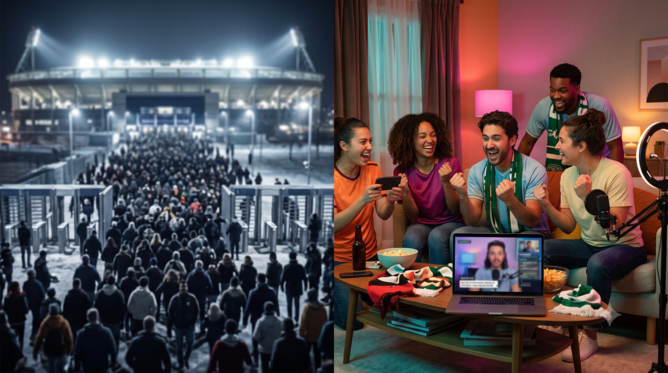
Shoulder programming is the content ecosystem around a live event. It includes pregame analysis, roadshows, postgame reactions, podcasts, interviews, social edits, behind-the-scenes videos, fan meetups, city guides, sponsor segments, and live community experiences. For a global event such as the FIFA World Cup, the match itself is protected by media rights, but the surrounding attention is wide open to brands that know how to earn it.
Men in Blazers has built its model around that open space. Business Insider described the company as a soccer media business that began as a podcast 16 years ago and has grown into a 100-person company. During the World Cup, the outlet can repost official Fox clips on X, but its heavier focus sits on Instagram and YouTube, where the product is not match footage. The product is Bennett, the fans, and the reaction to what everyone watched somewhere else.
That distinction matters for sports event coordinators. The most valuable content is not always the most exclusive footage. Sometimes it is the clearest emotional translation of the moment. Fans may watch a match on Fox, Telemundo, Peacock, or a public screen, then open social platforms to see how their community is processing the result. Men in Blazers understands that second-screen behavior and builds programming for it.
For brands planning around major events, shoulder programming can become a safer and more flexible strategy than trying to compete with rights holders. A sponsor, local organizer, or event promoter can build content around fan preparation, travel, food, chants, creator commentary, local venues, charity tie-ins, merchandise culture, and post-match reaction without pretending to be the official broadcast.
What The 24.2 Million Interactions Reveal About Engagement Depth
The headline number is impressive, but the more useful insight is efficiency. Business Insider reported that Men in Blazers generated fewer total interactions than Fox Sports from June 11 to June 27, yet did so with an audience roughly one-sixth the size. On Blinkfire’s engagement-per-follower ranking, Men in Blazers came in first and nearly doubled Fox.
That is the difference between broad reach and deep attention. A large broadcaster can dominate awareness through rights, highlights, studio coverage, and paid distribution. A smaller media company can win a different metric by making fans feel seen. Men in Blazers built its personality around humor, vulnerability, deep soccer literacy, and a feeling of belonging for American fans who have followed the sport through decades of uneven mainstream attention.
For SiteBob’s audience, this is a reminder that engagement rate can be more meaningful than follower count. A regional sports promoter may never match the reach of a national network, but it can build a tighter community around a tournament, rivalry game, watch party, youth showcase, or fan festival. The question is not only “How many people saw the post?” The better question is “How many people cared enough to respond, share, show up, or come back?”
That logic connects directly with SiteBob’s broader sports content marketing approach. Content should not be treated as a decoration around the event. It should guide fans from awareness to emotion, from emotion to action, and from action to repeat participation.
How The Roadshow Turned Cities Into Content
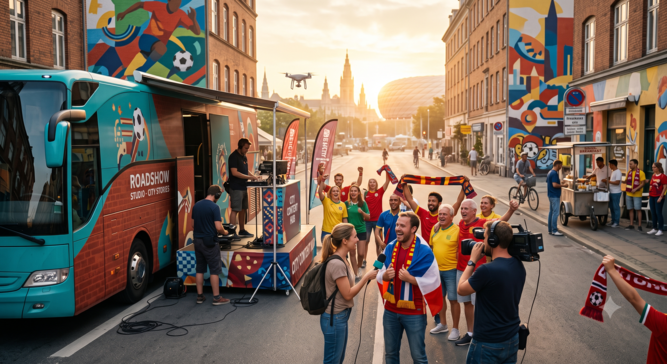
Men in Blazers did not build its World Cup engagement only from a studio. The company announced a Tour of America around World Cup host cities, with live shows, city-focused storytelling, online streams, and matchday programming. Sports Video Group reported that the tour included Countdown Shows and Match Day Live events built around host-city identity, fan participation, and digital distribution.
That city layer is one of the smartest pieces of the model. The World Cup is global, but fans experience it locally. A supporter in Los Angeles does not live in the same tournament as a fan in Seattle, Philadelphia, Atlanta, Boston, Dallas, Houston, Kansas City, Miami, New York/New Jersey, or the San Francisco Bay Area. Each host market has its own soccer history, immigrant communities, local venues, food culture, supporter groups, and sponsor opportunities.
Men in Blazers turned that variation into content. Sports Video Group reported that the company planned host-city guides shaped by insider tips from its audience and local fan experts, covering everything from places to visit to local soccer culture.
That is a major lesson for smaller sports brands. A local event can feel larger when it frames the surrounding place as part of the experience. A soccer tournament can spotlight neighborhood restaurants, youth clubs, pickup fields, murals, supporter bars, alumni stories, and family traditions. A marathon can build content around the route, volunteer crews, training groups, recovery spots, and community nonprofits. The event becomes a map of participation, not just a schedule.
Why Sponsor Activations Worked Better As Fan Utility
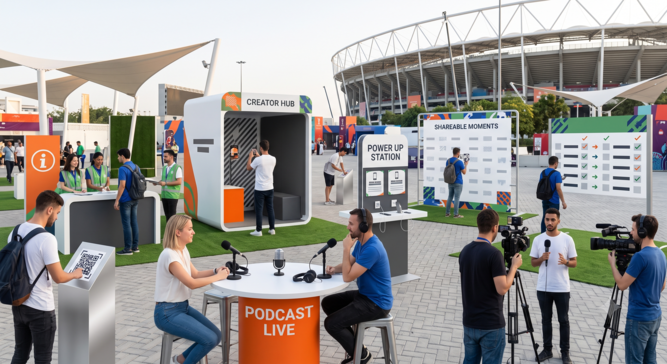
The Men in Blazers World Cup model also shows how sponsorship can feel useful instead of forced. Marketing Dive reported that The Home Depot partnered with Men in Blazers Media Network on a traveling activation tied to the 2026 FIFA World Cup, including a branded bus that served as a mobile studio for content around the tournament. The Home Depot is the official home improvement retail supporter of the tournament in North America.
That structure works because it gives the sponsor a role in the content system. A mobile studio is not just a logo placement. It creates a physical production space, a tour asset, a social backdrop, and a reason for fans to gather. It can generate podcasts, short-form clips, interviews, creator segments, behind-the-scenes content, and city-specific storytelling.
For event marketers, the idea is not to copy the bus. The idea is to design sponsor value around fan behavior. A local sponsor could support a creator booth, postgame interview wall, fan photo setup, hydration station, community prediction board, youth clinic, live recap desk, or volunteer storytelling area. The activation should produce content, not sit passively at the edge of the venue.
The stronger sponsor question is: what does this partner help fans do? If the answer is “notice a logo,” the activation is weak. If the answer is “share a moment, meet other fans, learn the city, support a cause, enter a challenge, capture a memory, or follow the story after the event,” the sponsor becomes part of the campaign architecture.
What The World Cup Scale Adds To The Model
FIFA World Cup 2026 gives Men in Blazers an unusually large canvas. FIFA’s official schedule lists 104 games in the expanded 48-team tournament across Canada, Mexico, and the United States. That volume creates daily storylines, upset reactions, travel content, local crowd scenes, group-stage pressure, knockout drama, and sponsor windows across more than a month of competition.
The scale matters for content planning. A one-off event may create a short burst of attention, but a tournament creates habits. Fans return each day for fixtures, tables, reactions, clips, predictions, and community commentary. Men in Blazers benefits from that rhythm by turning the tournament into serialized programming rather than isolated posts.
Sports brands can borrow the same structure at smaller scale. A weekend tournament can become a three-day content arc. A high school rivalry week can become a seven-day campaign. A youth league season can become a rolling story with weekly player spotlights, parent guides, sponsor features, highlight packages, and community recaps.
The model works best when the content calendar matches the emotional calendar. Before the match, fans want anticipation. During the match, they want fast reaction. After the match, they want meaning. Between matches, they want belonging. Men in Blazers understands those different fan states and programs against them.
The Fan Engagement Model Sports Brands Can Reuse
The Men in Blazers playbook can be turned into a clear model for sports marketers who need more than a few game-day posts.
| Engagement Layer | Men In Blazers Example | Sports Brand Application |
|---|---|---|
| Personality | Roger Bennett as emotional host and cultural translator | Use a trusted host, creator, athlete, coach, or community voice |
| Place | Host-city shows and fan-driven guides | Build local venue, food, travel, and supporter content |
| Format | Podcasts, YouTube, Instagram, TikTok, X, live events | Repurpose one event story across several platforms |
| Sponsor Utility | Mobile studio and branded tour activation | Let sponsors support fan tools, creator spaces, or shareable moments |
| Measurement | 24.2 million interactions and engagement-per-follower ranking | Track comments, shares, saves, clicks, signups, redemptions, and return visits |
This table shows why the model is durable. It is not dependent on one platform or one viral clip. It combines human voice, event timing, physical presence, social distribution, sponsor function, and measurable interaction. That gives the campaign more ways to succeed.
A smaller organization can start with the same skeleton. Pick a recognizable voice. Build a simple content calendar. Create one fan hub. Give sponsors a useful role. Capture the local story. Track the actions that matter. Repeat the process after each event and refine it.
Why This Could Outlast The U.S. World Cup Run
Business Insider noted that Men in Blazers faced a key test: whether the party would continue if the U.S. left the tournament and casual interest faded. That is the right question for any event-based campaign. The strongest campaigns do not end the moment the scoreboard stops moving. They convert temporary attention into a community that has a reason to stay.
Men in Blazers has a better chance than many event-driven media brands because its identity was built before the tournament. The World Cup gave it scale, but the relationship with fans came from years of podcasting, Premier League coverage, interviews, humor, cultural translation, and emotional consistency. The tournament amplified the brand rather than inventing it.
Sports brands should treat that as the final lesson. Real-time fan campaigns work best when they are rooted in a clear voice before the big moment arrives. If a team, event, sponsor, or promoter waits until the event week to build community, the content may still perform, but it will not have the same depth.
Men in Blazers turned World Cup shoulder programming into a 24.2 million-interaction case study by respecting how fans actually behave. They watch the match somewhere else. They process it together online. They look for a voice that understands the emotion. They reward content that feels specific, funny, local, and communal. They respond when a brand gives them more than a broadcast recap.
That is the shift sports marketers should study. The future of event engagement is not only about controlling rights, owning highlights, or buying reach. It is about building the most useful place for fans to gather around the thing they already love.