

In today’s sports marketing, it seems crazy to help your rivals. Yet, cross-sport collaboration is a smart move. It’s like the Chicago Bears sharing playbooks with the Packers.
Leagues are changing by working together. This “coopetition” model is powerful. Eighty-five percent of Americans follow more than one sport, with fans engaging in seven on average.
When the NBA teams up with UFC or MLB partners with WWE, they gain credibility. They reach new fans. This strategy is key in a world where sports compete with streaming services.
Collaboration isn’t about losing. It’s about gaining new ground. The old sports barriers are falling. Marketers who build bridges will lead the way.
Identifying Collaboration Opportunities
The art of multi-sport partnerships is not just about finding a good match. It’s about finding someone who already has the momentum you need. It’s like strategic matchmaking where both sides bring established assets, not empty promises.
The Indianapolis WNBA Host Committee took a smart approach. With only 11 months to prepare, they didn’t start from scratch. They looked at existing community projects with proven funding and operational capacity. This was not about innovation but smart opportunism.
Many collaborations fail because both sides try to build something new on shaky ground. The magic happens when you find complementary assets instead of starting from zero.
Paddle and pickleball are making people interested in traditional tennis again. The NBL’s partnership with European basketball leagues adds prestige. These are not random connections but strategic alignments based on shared audiences and calendars.
Ask yourself two key questions: Who already has what we need? Who shares our audience but doesn’t compete for the same calendar space? The answers will show you opportunities that actually work, not just look good.
The best multi-sport partnerships come from this reverse-engineering mindset. You’re not creating something new but connecting existing strengths. This creates exponential value for both organizations and their communities.
Co-Marketing Strategies
Think of sports collaboration as the ultimate crossover episode – when done right, it’s The Avengers of athletic entertainment. When done wrong? Well, let’s just say it’s more like that awkward moment when your favorite sitcom characters show up in a drama series.
The NRL’s Vegas venture wasn’t some random Hail Mary pass. It was a masterclass in strategic positioning. They placed rugby league star Aaron Woods on WWE Raw, borrowing credibility from a platform that draws 4.9 million viewers. Then they showed up at NASCAR’s Daytona 500, saying, “Hey America, we’re part of your sports family too.”
Broadcast networks have become the unsung heroes of this event marketing collaboration revolution. Nine Network in Australia shows how to keep audiences hooked year-round by cross-promoting their multi-sport portfolio. It’s like having a sports buffet where every dish complements the next.
Athlete appearances represent the secret sauce of authentic connections. When UFC champion Alexander Volkanovski appears at an NRL match or Sydney Swans training, he’s not just a famous face – he’s a cultural translator. These moments create organic bridges between fan bases that feel genuine.
The most effective co-marketing strategies follow three core principles:
- Strategic relevance – The collaboration must make sense to both audiences
- Mutual benefit – Both parties should gain measurable value
- Authentic integration – No forced marriages, only natural connections
Successful event marketing collaboration requires understanding what each sport brings to the table. It’s not about slapping logos together – it’s about creating something greater than the sum of its parts.
| Strategy Type | Key Benefit | Audience Reach | Implementation Difficulty |
|---|---|---|---|
| Athlete Crossovers | Authentic fan connections | Medium to High | Moderate |
| Broadcast Synergies | Year-round engagement | High | Complex |
| Event Co-location | Immediate impact | Targeted | Simple to Moderate |
| Digital Content Sharing | Viral content | Variable | Simple |
The table above shows how different approaches offer varying levels of impact and complexity. The best event marketing collaboration strategies often combine multiple approaches for maximum effect.
Remember: the goal isn’t to convert NFL fans into rugby enthusiasts overnight. It’s about creating enough curiosity to make them willing to learn the rules. It’s about building bridges, not forcing people to jump canyons.
The magic happens when collaborations feel less like business transactions and more like natural cultural exchanges. When done right, everyone wins – the sports, the broadcasters, and most importantly, the fans who get to experience something new and exciting.
Rights and Bundles
Welcome to the world of sports collaboration, where rights are the key to success. It’s not just about swapping logos. It’s about playing a game of 3D chess.
Today, we turn single assets into connected systems. Think of Nine’s “Home of Rugby” strategy. They combined multiple rugby rights to create something amazing.
Smart bundling offers more than traditional sponsorships. It builds sporting universes that stand strong against entertainment changes. The real question is how these rights connect.
Effective rights structuring has three main rules:
- Complementary audiences – Bundles should reach different but related fan bases
- Year-round engagement – Properties should fill seasonal gaps in each other’s calendars
- Shared narrative – Rights should tell a bigger story together than apart
When rights become like trading cards, magic happens. Bundling across sports creates promotional synergies. It’s the difference between owning pieces and solving puzzles.
| Traditional Approach | Modern Cross-Sport Strategy | Value Multiplier |
|---|---|---|
| Single property focus | Multi-sport ecosystem | 3-5x audience reach |
| Static rights ownership | Dynamic rights trading | 27% higher engagement |
| Seasonal activation | Year-round narrative | 42% retention boost |
| Individual valuation | Bundle premium pricing | 15-30% value increase |
This isn’t about hoarding rights. It’s about combining them strategically. The best bundles attract sponsors, audiences, and media partners. They turn fragmented properties into cohesive experiences.
The future is for those who see rights as connections, not isolated assets. Your cross-sport strategy should build ecosystems, not just collect properties.
Case Examples: National & Local Tie-Ins
Forget theory class – let’s hit the field where multi-sport partnerships actually score points. Real-world examples show us how this game is really played.
Indianapolis delivered a masterclass in local integration with their WNBA legacy projects. They didn’t just throw money at problems – they invested with surgical precision.
The $1 million initiative targeted specific community touchpoints. Fletcher Place Community Center’s renovation? Located within walking distance of Gainbridge Fieldhouse. That’s proximity marketing executed with chess-like strategy.
Then there’s Al E. Polin Park’s artist-painted basketball court. This wasn’t temporary activation – it became permanent cultural infrastructure. The student ambassador program created authentic youth connections that last beyond game days.
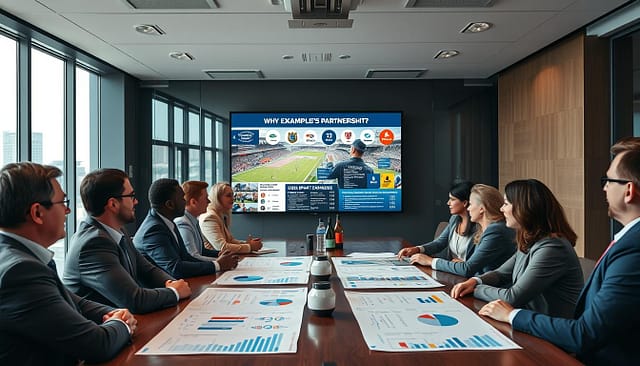
Meanwile, LIV Golf Adelaide showed how athlete integrations create cross-sport magic. World surfing champion Mick Fanning as ambassador? That’s borrowing credibility from another sport’s icon.
Henrik Stenson hitting a “hole in one” during halftime at a Port Adelaide FC match? That’s not random – it’s calculated theater that delights fans of both sports.
These examples prove that successful multi-sport partnerships aren’t about forced collaborations. They’re about finding natural connection points that serve real communities.
The Collingwood FC and TaylorMade Golf collaboration demonstrates how brands can cross-pollinate audiences. It’s not just about sharing resources – it’s about creating shared value that resonates with both fan bases.
These case studies show the power of strategic thinking in sports marketing. As the National Events Strategy demonstrates, successful events create lasting community impact beyond the final whistle.
| Initiative | Sports Involved | Community Impact | Strategic Value |
|---|---|---|---|
| Indianapolis WNBA Legacy | Basketball & Community Sports | Permanent infrastructure improvements | Long-term brand presence in community |
| LIV Golf Adelaide Integrations | Golf, Surfing & Australian Rules Football | Cross-sport fan engagement | Expanded audience reach |
| Collingwood FC x TaylorMade | Australian Football & Golf | Brand partnership activation | Revenue sharing & fan experience enhancement |
| Student Ambassador Programs | Multiple sports organizations | Youth development & engagement | Future fan base cultivation |
The table reveals patterns worth noting. Successful cross-sport initiatives share common DNA: community impact, strategic audience expansion, and authentic connections that feel organic.
These examples demonstrate that the best collaborations aren’t about sports – they’re about people. They’re about creating moments and infrastructure that serve communities first, sports second.
That’s the real winning strategy – when everyone benefits, everyone wins.
Joint Measurement
Let’s face it: many sports partnerships focus on participation, not real results. But in event marketing collaboration, you need to see results to know if it’s working. If you can’t measure success, it’s just throwing money away.
The Indianapolis Host Committee knew how to measure success. Their student ambassador program wasn’t just for PR. They tracked real numbers like $2,500 scholarships and monthly leadership sessions. This showed real impact, not just empty promises.
The NRL’s Vegas promotion was a lesson in measuring success. They didn’t just count who showed up. They looked at earned media, social engagement, and US viewership. When your partnership makes a real difference, you’re ahead of the game.
To avoid being a collaboration failure, set joint KPIs before you start. Not after, not during. Before.
Ask tough questions early on:
- Are we measuring audience growth or just applause?
- Revenue sharing or just good vibes?
- Community impact or press coverage?
- Media value or social media likes?
The smart way is to focus on metrics that show real business and community results. Your event marketing collaboration should show numbers that impress, like Billy Bean from Moneyball would.
Successful partnerships aren’t about handshakes at parties. They’re about spreadsheets that tell a story everyone wants to hear. And your CFO will love it too.
Common Mistakes
The graveyard of failed cross-sport initiatives is filled with tombstones that read ‘It seemed like a good idea at the time.’ We’ve all seen them – the ambitious partnerships that promised revolutionary fan engagement but delivered awkward handshakes and confused audiences.
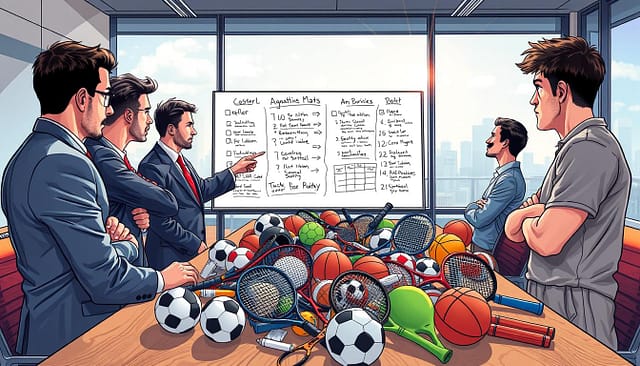
One big mistake is the ‘not invented here’ syndrome. Teams and leagues often try to build entirely new programs when perfectly good assets already exist. Indianapolis mastered this by partnering with established events instead of creating new ones. Why reinvent the wheel when you can just borrow someone else’s perfectly good Ferrari?
Another common error is the cannibalization conundrum. Partnering with sports that compete for your audience, calendar space, or sponsorship dollars is like opening a vegan restaurant next to a steakhouse and wondering why nobody’s buying your tofu burgers.
Other pitfalls include measurement misalignment (when one side counts social media likes while the other tracks ticket sales), investment imbalances (the 80/20 rule where one partner does all the work), and cultural mismatches that look brilliant in PowerPoint but feel like forced blind dates in execution.
| Mistake | Why It Happens | Real Impact | Smart Alternative |
|---|---|---|---|
| Building from scratch | Ego and ‘not invented here’ mentality | Wasted resources, slow adoption | Leverage existing programs like Indianapolis did |
| Audience cannibalization | Superficial market analysis | Divided attention, diluted revenue | Choose complementary not competitive sports |
| Measurement mismatch | Different success metrics | Arguments over who ‘won’ the partnership | Align KPIs before signing anything |
| Unequal investment | Power imbalance between partners | Resentment, one-sided effort | Create clear contribution charts upfront |
| Cultural clash | Assuming ‘sports is sports’ | Awkward integrations, fan confusion | Test cultural fit through small pilot programs |
The smartest cross-sport strategy is knowing what not to do. It’s not about avoiding risk – it’s about avoiding predictable, preventable failures that smarter organizations already learned the hard way.
Conclusion
Cross-sport collaboration is more than just a trend—it’s the future. The Indianapolis WNBA shows how partnerships can deeply connect with a community. They map out their assets, spread their impact, and use partnerships wisely.
By 2027, hosting big events will need real community support tied to local income. No more empty promises. The old days of sports in silos are gone. Now, it’s all about sports ecosystems.
The smartest groups understand this. Working together doesn’t weaken your brand—it makes it stronger. So, stop going it alone. Find a cross-sport partner and create something that lasts beyond one season.


