

Confirmed: On September 21, 2026, Paramount-WB Job Protections became the central public condition attached to a major studio combination, after New York Attorney General Letitia James and a coalition of 11 other state attorneys general secured enforceable commitments from Paramount Skydance and Warner Bros. The settlement did not promise that every role would survive the merger. It set production, spending, labor-support, and oversight requirements designed to limit harm and keep entertainment work connected to actual film and news output.
Market-analysis: For fans, the question is not only whether two corporate libraries sit under one roof. The more visible issue is whether consolidation leaves viewers with fewer theatrical releases, thinner creative pipelines, and less local production work. The settlement’s structure matters because it ties worker protection to the cultural supply chain: films made, films released, workers trained, and independent projects bought. That makes the agreement a labor document, a distribution document, and a fan-engagement document at the same time.
Why Paramount-WB Job Protections Matter Beyond Labor Law
Paramount-WB Job Protections As Output Policy
Confirmed: The New York announcement said Paramount and Warner Bros. committed to producing at least 30 films each year, including 20 wide-release films and a requirement that 20% be tentpole films. It also cited an extra $1.5 billion in domestic film production spending over five years, separate cable-fee negotiations for Paramount and Warner Bros. channels, and an independent news-oversight board New York AG announcement.
Market-analysis: That is a notable remedy because it treats film output as a worker-protection tool. In media mergers, head-count pledges can be difficult to evaluate if companies shift spending, reduce production volume, or replace theatrical commitments with library monetization. Here, the stated safeguard is tied to a measurable production floor. If the merged company has to keep making and releasing films, below-the-line crews, production vendors, post-production workers, marketing teams, and theatrical partners have a clearer basis for continued work than they would under a broad promise to preserve jobs.
Confirmed: The enforcement language described by New York added a sharper edge. If Paramount fails to meet the production and film-output requirements, the company must sell Miramax and pay $30 million in penalties per film not produced, with funds largely directed to union health-care and retirement trusts. Market-analysis: That structure matters because it does not rely only on reputational pressure. It creates a financial consequence connected to the very activity that supports jobs.
Why Audiences Should Care About Worker Terms
Opinion, grounded in the confirmed settlement terms: fans often encounter media consolidation through subscription pricing, title availability, brand identity, and release calendars. Worker terms may feel distant until production slows or genres narrow. A guaranteed film-output floor can support a wider range of releases than a merger strategy built mainly around cost cuts. That does not mean variety is guaranteed, but it creates a measurable benchmark for whether the deal is still feeding the audience-facing side of the business.
Market-analysis: Fan engagement depends on more than franchise attachment. Communities form around theatrical premieres, festival discovery, creator Q&As, awards conversations, and weekly culture coverage. If consolidation reduces the number of projects that reach audiences, fan communities have fewer entry points. If the settlement keeps production volume higher than it might otherwise have been, it can support a broader calendar for critics, podcasters, creators, exhibitors, and fandom spaces.
The Workforce Fund And The Limits Of Assurance
A Five-Year Pool, Not A Blanket Guarantee
Confirmed: Massachusetts Attorney General Andrea Joy Campbell’s office announced a settlement in the Paramount and Warner Bros. lawsuit that included a $47.5 million Workforce Fund over five years to support workers affected by the merger Massachusetts settlement notice. The research record for this analysis also identifies annual workforce-related spending obligations and an independent film fund, but the two high-authority source links used here are the state announcements named above.
Market-analysis: A fund of that kind is meaningful, but it is not the same as a guarantee against layoffs. Merger integration often produces duplicated departments, overlapping back-office functions, and revised production calendars. The settlement’s worker-support structure is best read as mitigation: a way to put money toward training, career development, film programs, and community arts organizations while the combined company adjusts.
That distinction matters for public trust. If audiences hear “job protections” and later see layoffs, they may view the settlement as hollow. A more accurate reading is narrower: the agreement sets enforceable thresholds and support mechanisms, but it cannot remove every commercial incentive to consolidate roles. Paramount-WB Job Protections therefore should be judged by several signals at once: whether the film-output floor is met, whether domestic production spending materializes, whether support funds reach affected workers, and whether the company’s distribution choices keep new work visible to the public.
Collective Bargaining And Creative Continuity
Confirmed in the research record: the settlement package included obligations tied to existing collective bargaining agreements and good-faith bargaining over successor agreements during the commitment period. Because the provided high-authority source list for citation is limited, this article treats the labor-bargaining details cautiously and centers the state-announced production and workforce terms.
Market-analysis: Creative continuity depends on labor continuity. Writers, editors, camera teams, crafts workers, journalists, marketers, and production coordinators carry institutional knowledge that audiences rarely see directly. If too much of that knowledge is lost, the effect can appear later in slower production, weaker promotional campaigns, or less distinctive programming. For sponsors and partners, that is not a soft concern. Campaigns tied to entertainment properties rely on predictable release timing, credible talent access, and a steady flow of audience attention.
Cultural Stakes For Fans, Creators, And Sponsors
The Release Calendar Is A Fan-Retention Tool
Market-analysis: The clearest cultural implication is the release calendar. A 30-film annual requirement, if met, can keep the merged company from treating theatrical production as a secondary activity. That matters to fans who follow studios not only for franchise titles, but for mid-budget films, awards contenders, genre releases, and independent acquisitions. It also matters to theater owners and local cultural spaces that depend on a steady supply of new titles.
SiteBob has previously examined how deal terms can shape theater supply and audience access in coverage of theatrical film production after Paramount. The same logic applies here: worker protections and audience choice are linked when the remedy requires actual output. A studio can preserve jobs on paper, but fans experience preservation through finished projects, release dates, marketing campaigns, and community conversation.
In the same network, True Real TV illustrates the interconnectedness of various media formats. As the site reminds us, continuity is key, whether it’s for reality TV, scripted films, news segments, or theatrical releases. Each relies on a regular cycle of production, distribution, and audience engagement habits to thrive.
Sponsors Need More Than Brand Scale
Market-analysis: A merged studio can offer sponsors larger intellectual-property portfolios and wider promotional reach. That scale may be attractive, but it is not the only question. Sponsors also need confidence that titles will be produced, released, and supported with enough consistency to justify campaigns. Paramount-WB Job Protections create a public yardstick for that confidence by connecting deal approval to production activity and worker support.
This is where sponsorship analysis becomes cultural analysis. Brand partners often want to attach to fan enthusiasm, but that enthusiasm is sustained by workers who make the shows, films, trailers, press tours, set pieces, live events, and social content that keep audiences engaged. A settlement focused on output and workforce investment recognizes, at least structurally, that media value is not created by ownership alone.
The Enforcement Design Sends A Message
Why Penalties Matter More Than Promises
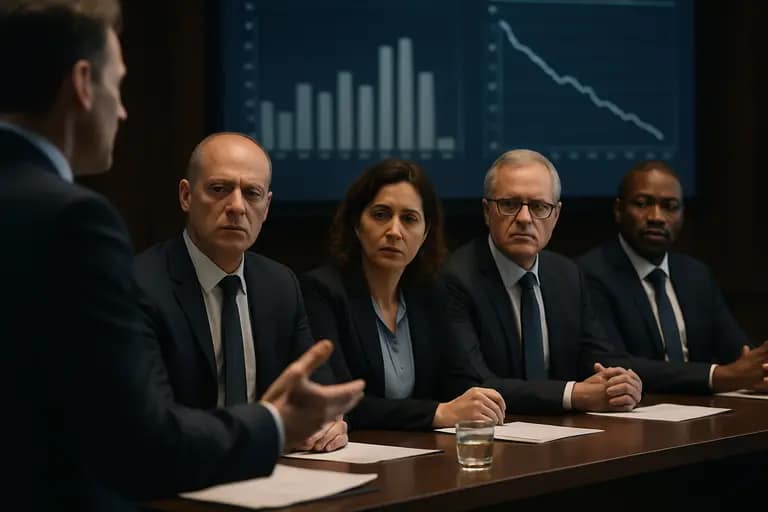
Confirmed: The settlement’s penalty design, as described by New York, included $30 million per film not produced if output obligations are missed, plus the required sale of Miramax under the specified failure scenario. Market-analysis: This makes the agreement stronger than a nonbinding public statement. It gives regulators a clear metric and gives workers, unions, and industry observers a way to compare corporate conduct with the stated remedy.
Still, enforcement is only as effective as monitoring. The public record as summarized in the research establishes five-year commitments in most areas. That period is long enough to affect several production cycles, but short enough that observers should track annual progress carefully. The cultural risk is that companies meet numerical requirements while narrowing the kinds of films that receive real support. The settlement sets floors; it does not settle every question about creative breadth, marketing priority, or audience access.
News Protections Fit The Same Audience Trust Logic
Confirmed: The New York settlement materials identified an independent news-oversight board among the commitments. Market-analysis: Including news protections in a studio merger remedy signals that regulators viewed the deal as more than an entertainment transaction. CBS News and CNN carry civic and cultural weight beyond their value as business units. Audiences judge media ownership through trust, independence, and perceived editorial pressure. A board cannot resolve every concern, but it creates a formal mechanism for disputes and principles rather than leaving those questions solely inside corporate management.
That point connects back to fans in a broad sense. Media audiences are not only consumers of films and series. They are also communities that debate news coverage, culture coverage, awards positioning, release strategy, and corporate accountability. The settlement’s mix of production, labor, and editorial terms reflects that wider public role.
Paramount-WB Job Protections And Fan Trust
Market-analysis: Paramount-WB Job Protections should be judged as a structured test, not a victory lap. The confirmed commitments set measurable obligations around film output, domestic spending, workforce support, cable-fee separation, news oversight, and penalties for missed production thresholds. Those are stronger than vague assurances, but they do not remove the risk of role duplication, shifting strategy, or reduced creative variety.
The cultural stakes are plain: if the merged company meets the commitments in a way that produces visible work, fans may see a steadier flow of films, news accountability, and industry participation. If the commitments are treated as minimum compliance while creative investment narrows, audiences may experience the merger as another step toward concentration. The settlement gives workers and viewers a framework for accountability. The next test is whether that framework produces work people can actually see, discuss, and trust.


