
The Sponsorship Valuation Blind Spot
The global sports marketing and sponsorship sector currently commands a massive valuation of ninety-two billion dollars. Spending allocations continue growing across the industry, pacing toward a projected one hundred fifty-six billion dollars by two hundred thirty-two. Even with this capital velocity, brands struggle with a structural deficit when measuring actual financial output from live sponsorships. Most organizations track campaign health using legacy statistics like broadcast reach, raw impressions, or stadium exposure. These disconnected metrics fail to clarify how real fan loyalty impacts actual retail spending behavior or product sales.
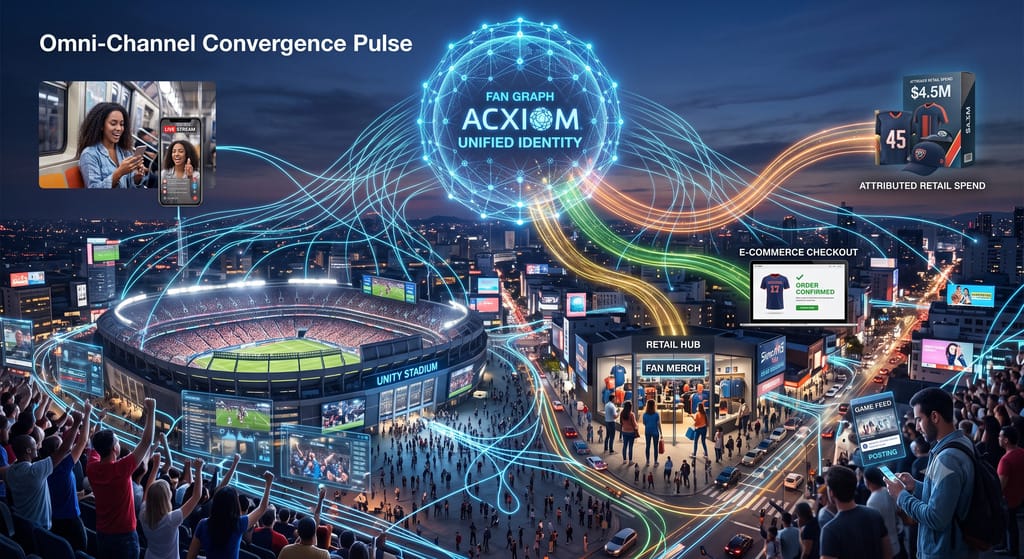
Data fragmentation distorts modern sports consumer tracking. A single consumer streams a live matchup on a mobile device, checks real-time statistics via fantasy applications, updates social media profiles from a stadium seat, and purchases team apparel through an e-commerce storefront. Traditional tracking architectures view these actions as separate individuals. This detachment forces brands to deploy marketing investments based on loose assumptions. Enterprise brands require direct attribution data linking live visibility to actual commerce results.
On June twenty-three, two thousand twenty-six, Omnicom Group introduced a dedicated data framework to solve this specific measurement gap. The agency network launched its new sports intelligence ecosystem to connect distinct consumer behaviors under a unified identity framework. This structural deployment shifts the analytical focus away from aggregated media impressions. Marketers obtain clear tracking visibility that ties digital sport interaction directly to final transactional outcomes.
Unifying Broken Data Identity Structures
The core architecture relies directly on specialized customer data resolution networks. Operating under the name Acxiom Fan Graph, the framework integrates multiple isolated data flows to construct a comprehensive view of viewer habits. The engine standardizes identity resolution by pulling disparate signals into a unified profile. These signals include live ticket transactions, venue attendance logs, retail purchase histories, social media commentary streams, and digital broadcast consumption habits.
Scale determines the ultimate accuracy of modern data profiling systems. This system unifies tracking profiles for two hundred sixty million distinct residents within the United States. On an international scale, the footprint covers over two billion individual profiles. The matching engine functions through the Acxiom Data Architecture identity resolution framework, utilizing privacy-compliant identifiers to link individuals across platforms. Brands map individual consumer habits across multiple personal devices without violating changing privacy mandates.
This consolidation limits the reliance on tracking cookies or broad programmatic approximations. When a consumer buys a ticket to an arena event, the system immediately pairs that location record with the user’s home streaming history and past brand interactions. Marketing teams bypass the traditional latency that routinely ruins live campaign adjustments. Immediate access to precise customer tracking metrics replaces the old method of post-campaign analysis.
From Reach to Direct Conversion Routing

Connecting identity files remains ineffective without immediate deployment pipelines. The fan architecture operates as an embedded operational system inside Omni, the agency’s primary intelligent marketing interface. This positioning permits data planners to shift consumer insights directly into active advertising auctions. Creative production teams sync localized messaging with specific fan subsets based on immediate game actions.
The operational footprint of the agency network dictates the immediate reach of this toolset. The organization manages nine point nine billion dollars in corporate sponsorship investments. Statistics reveal the firm oversees approximately one out of every three dollars spent inside sports media channels. This scale provides the underlying database with continuous real-time data from over twenty thousand distinct sporting matches every year.
Enterprise users utilize this data volume to adjust targeting criteria during major events. For instance, brands track real-time fan sentiment shifts when a scoring event alters fan attention. Instead of blasting uniform creative messages to millions of mixed viewers, optimization engines route distinct creative content variants to specific customer brackets. High-value loyalty club members receive precise commerce promotions, meanwhile casual local viewers see localized awareness messaging. Marketers examine these shifts via specialized sports audience tracking tools to gauge immediate performance fluctuations.
Strategic Execution Across Multi-Screen Audiences
Evaluating cross-channel behaviors requires analyzing how distinct media platforms perform during a live broadcast window. Fans interact with secondary screens throughout an event, creating distinct tracking pockets that traditional media plans miss completely. Managing these distinct touchpoints requires a clear view of platform advantages, customer expectations, and deployment risks.
The structural framework categorizes these behaviors to allow instant optimization during live television broadcasts. Marketers segment fan groups by their current physical presence, active digital footprint, and immediate spending capability. This categorization prevents marketing funds from being wasted on unengaged automated audiences.
| Engagement Signal | Primary Platform Source | Attributable Action Metric | Targeting Longevity |
| In-Stadium Presence | Digital Ticketing Systems | Venue Check-In / Retail Purchase | Short-Term Live Window |
| Second-Screen Social | Live Chat Networks | Sentiment Shifts / Real-Time Posts | Micro-Moment (Minutes) |
| Streaming Consumption | Connected Television Apps | View Duration / Ad Interactivity | Medium-Term Series Span |
| Fantasy Integration | Specialized App Portals | Lineup Shifts / Player Affinity | Season-Long Retention |
Deploying campaigns based on these parameters demands strict coordination across active marketing teams. The launch announcement at the Cannes Lions festival highlighted how unified visibility removes the old barrier between creative positioning and tactical media buying. Brands avoid the common pitfall of running identical national ad copy when local regional data suggests a different consumer mood.
Evaluating Sports Sponsorship Accountability

Accountability metrics undergo a permanent shift when individual identification replaces fuzzy panel ratings. George Manas, the chief growth and solutions officer at the corporation, stated that sports platforms represent a massive commercial force, yet connecting fan interaction directly to final business performance remains a persistent struggle. The new system updates this process by introducing data tracking methods that isolate exact financial contributions from sports investments.
This tracking advancement alters how partnership contracts are evaluated during renewal cycles. Corporate sponsors can demand explicit confirmation that an expensive jersey patch or stadium naming right triggered a real uplift in localized sales. The database matches regional sales increases directly with the known density of identified fans exposed to the live signage. This factual connection removes guesswork from corporate marketing investments.
Analyzing how data inputs compare across legacy models and modernized identity graphs reveals distinct operational boundaries. Brands track the transition of a casual follower into a dedicated brand advocate by measuring clear behavioral adjustments over time. This metric tracking defines long-term corporate campaign value.
| Strategic Metric Area | Legacy Measurement Model | Modern Identity Graph Model |
| Audience Counting | Sample Panel Ratings / Estimated Reach | Direct Consumer Authentication |
| Attribution Path | Post-Campaign Mixed Modeling | Multi-Device Transaction Matching |
| Operational Speed | Weeks After Event Completion | Real-Time Live Ad Bidding |
| Financial Validation | Correlated Store Footwear Spikes | Verified Closed-Loop Direct Purchases |
Firms shifting toward deterministic identity profiles secure a clear advantage over competitors stuck tracking raw impression totals. The ability to verify clean customer data across media touchpoints protects ad budgets from programmatic fraud and bot saturation. As brand investments face closer scrutiny from corporate financial officers, data validation platforms become the definitive standard for assessing corporate sports marketing success.


