

News integrity became a central public-interest issue on October 6, 2026, when Paramount’s acquisition of Warner Bros. Discovery closed and created a combined company named Skydance. Confirmed reporting described a company that brought major film studios, CBS, HBO, CNN, cable networks, and streaming services under one corporate structure. That structure matters beyond balance sheets because it joined CBS News and CNN, two of the country’s most visible news organizations, under common ownership.
For audience analysts, the deal is not only a consolidation story. It is a trust story. Viewers do not evaluate news brands only by reach, production quality, or app placement. They also ask whether editorial decisions appear insulated from corporate pressure, political incentives, advertising interests, and cross-brand promotion. The merged company entered public life with a large entertainment portfolio, but its most sensitive cultural test may be whether audiences believe its newsrooms can report independently on the powerful institutions around them, including their own owner.
Why News Integrity Became The Central Test
News Integrity As A Public Trust Signal
Confirmed: the combination placed CBS News and CNN inside the same corporate group, a point raised in Associated Press coverage of the takeover’s implications for streaming, film, and news AP analysis. That does not prove interference, bias, or newsroom failure. It does create a higher burden of proof for the company, because viewers often read ownership concentration as a signal about who has power over editorial priorities.
Market-analysis: audience trust tends to be cumulative. A viewer may not follow corporate governance details, but they notice patterns: story selection, corrections, anchor framing, investigative targets, and how networks cover their parent company’s business interests. If two major news brands appear coordinated in tone or omission, even without direct evidence of pressure, public suspicion can grow. That is why governance commitments must be visible enough for audiences, journalists, advertisers, and civic groups to understand.
The deal also arrived after a period in which media companies increasingly used scale to compete in streaming, live programming, sports rights, franchises, and global licensing. Entertainment scale can help fund ambitious work, but the economics of news are different. A newsroom’s value depends heavily on credibility. For audiences, news integrity is not an abstract principle; it is the reason a report is shared, trusted, challenged, or dismissed.
Why Ownership Concentration Changes Fan And Viewer Behavior
Entertainment fandoms often react to mergers through the lens of favorite franchises, release calendars, streaming availability, and creative jobs. News audiences react differently. They may ask whether a corporate owner will protect investigative reporting that causes political or commercial discomfort. They may also ask whether news brands will be used to defend corporate strategy during controversies. These questions are especially sharp when a combined company contains both entertainment assets and public-affairs outlets.
Confirmed: opposition to the transaction included concerns from industry professionals, labor groups, and some attorneys general about reduced competition, job loss, content diversity, and journalistic standards. Those concerns did not stop the closing, but they shaped the public meaning of the deal. A large media merger can be cleared legally and still face a long audience-confidence test after the papers are signed.
What Regulators Cleared And What They Did Not Settle
The DOJ Finding Was About Competition Harm
Confirmed: the U.S. Department of Justice Antitrust Division said it closed its investigation after finding the merger was “not likely to result in harm to competition or American consumers” in streaming, linear television, or theatrical film production and distribution DOJ statement. That finding is significant, especially because antitrust review examined whether content output and demand for creative labor were likely to fall.
Market-analysis: an antitrust clearance does not answer every public-interest question. Competition law can assess market structure, consumer harm, and output incentives, but audience trust in journalism has a different time horizon. A regulator can conclude that a merger is unlikely to reduce competition while audiences still demand proof that editors retain authority over coverage decisions. The two issues overlap, but they are not identical.
Confirmed from the research record: California Attorney General Rob Bonta negotiated conditions tied to dropping antitrust opposition, including film-output commitments, added U.S. production spending, preservation of physical studio lots, and a board intended to support editorial independence at CNN and CBS News. Because the supplied high-authority source set for this article is limited, those conditions should be read here as part of the researched record rather than as independently re-reported beyond the provided notes.
Those conditions show why cultural policy and media business policy increasingly meet in the same negotiations. Film output speaks to jobs, theatrical access, and creative supply. Editorial governance speaks to public trust. Together, they signal that large entertainment deals now face questions not only about subscriber counts and distribution power, but also about whether civic institutions inside media companies can remain credible.
Audience Trust, Fandom, And News Brands
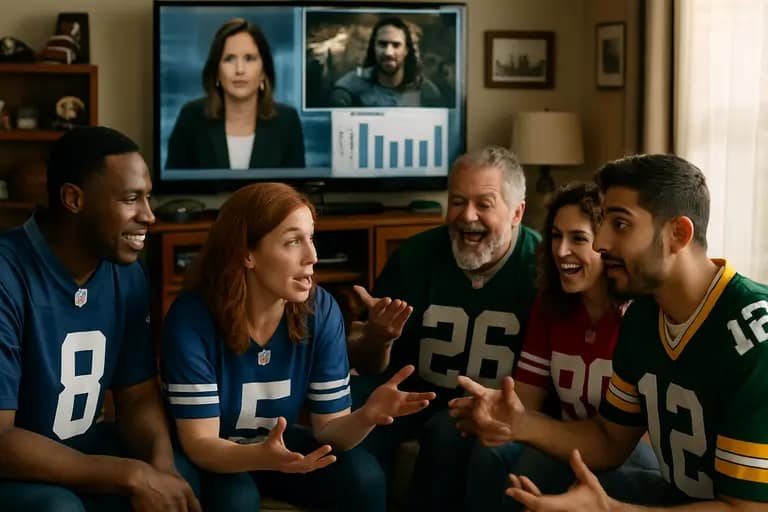
Entertainment Fans And News Viewers Share One Concern
Entertainment fans and news viewers are not the same audience, but they share a basic concern: whether consolidation narrows choice. For film and television fans, that concern may involve fewer theatrical releases, less room for smaller projects, or franchise decisions driven by platform strategy. For news viewers, it may involve fewer independent editorial centers and less perceived distance between corporate strategy and public reporting.
Market-analysis: the post-close period will test whether Skydance can separate brand logic from newsroom logic. Entertainment brands often benefit from coordination across studios, streamers, marketing teams, and consumer products. News brands often benefit from distance, friction, and editorial autonomy. A company can damage trust if it treats news as another promotional asset inside a large content system.
That distinction is also relevant to event marketing and audience engagement. A merged company can use premieres, sports-adjacent programming, streaming bundles, and cross-platform promotion to build attention. But if news divisions are folded too visibly into corporate messaging, viewers may question whether the reporting function is independent. The smarter audience strategy is to make independence tangible: clear editorial standards, transparent correction practices, public-facing ombuds processes where applicable, and governance structures that are more than symbolic.
For readers tracking how consolidation affects screen culture beyond news, related analysis of Paramount-WB job protections connects labor commitments with the broader question of whether promised safeguards produce measurable results. For adjacent coverage of online video distribution and media consumption, be sure to check out Internet Video Magazine, which offers a related network perspective.
News Integrity After The Paramount-Warner Deal
The Paramount-Warner Bros. deal reinforced a basic rule of modern media power: scale creates both capacity and suspicion. A larger company may be able to finance major reporting, sustain global bureaus, support documentary work, and distribute journalism across more platforms. The same scale can lead audiences to worry that fewer owners control more of the public conversation.
Opinion, grounded in the confirmed deal structure: the company’s most important audience task is not persuading everyone that consolidation is harmless. It is showing, repeatedly, that editorial independence has operational force. That means newsroom leaders must be able to make news judgments that do not simply mirror corporate priorities. It also means the company should expect skepticism rather than treat it as bad faith.
Market-analysis: news integrity will be measured through patterns rather than promises. Viewers will watch how CBS News and CNN cover media regulation, streaming competition, labor disputes, political pressure, theatrical commitments, and controversies involving the parent company. Advertisers, journalists, creators, and public officials will do the same. The trust test will not be passed by a single board, one policy statement, or one executive assurance.
Confirmed legal clearance gave the transaction a path to close on October 6, 2026. It did not end the cultural debate. The merged company now has to prove that consolidation can coexist with independent journalism. If it succeeds, the deal may become an example of how governance, transparency, and editorial distance can protect news brands inside a large entertainment group. If it fails, the backlash will not come only from media critics. It will come from audiences who decide that ownership structure has made the reporting harder to trust.


