

U.S. Soccer’s decision to keep Mauricio Pochettino through 2030 is more than a coaching move. It is a fan-trust test after a World Cup cycle that gave the U.S. Men’s National Team visibility, excitement, frustration, and unfinished expectations in the same summer. On August 3, 2026, the federation announced that Pochettino had agreed to a new contract that keeps him as USMNT head coach through the 2030 World Cup, giving him a full cycle after the team’s 2026 Round of 16 exit.
For sports organizations, the marketing lesson is clear. Keeping a high-profile coach after a disappointing knockout loss is not only about tactics. It is about communication, audience confidence, long-term storytelling, player development, sponsor stability, and the ability to keep fans emotionally invested when the tournament spotlight fades.
Why The Decision Needed More Than A Coaching Announcement
U.S. Soccer confirmed the new deal in an official federation announcement, framing the extension as a new chapter for the senior men’s team and the wider U.S. Soccer ecosystem. That wording matters. The federation is not only asking fans to accept one more cycle with the same coach. It is asking them to believe that continuity can produce the progress that a short runway could not.
Pochettino arrived in September 2024 with one of the strongest résumés ever attached to the USMNT job, having previously managed clubs including Tottenham Hotspur, Paris Saint-Germain, and Chelsea. His first contract was built around the 2026 World Cup, where the United States won its group, created national enthusiasm, and then exited in the Round of 16 after a 4-1 loss to Belgium.
That combination creates a delicate communication challenge. The federation cannot pretend the exit was satisfying, but it also cannot reduce the cycle to one bad night. A fan-trust reset plan has to hold both ideas at once: the World Cup showed progress in visibility and urgency, but the final result did not match the ambition of a co-host nation.
Sports federations often treat coaching announcements as internal performance decisions. Modern fans read them as brand signals. Keeping Pochettino tells supporters that U.S. Soccer values continuity, elite coaching, and a longer development arc. The next step is making that story specific enough for fans to follow.
Why Fan Trust Drops When The Plan Feels Vague
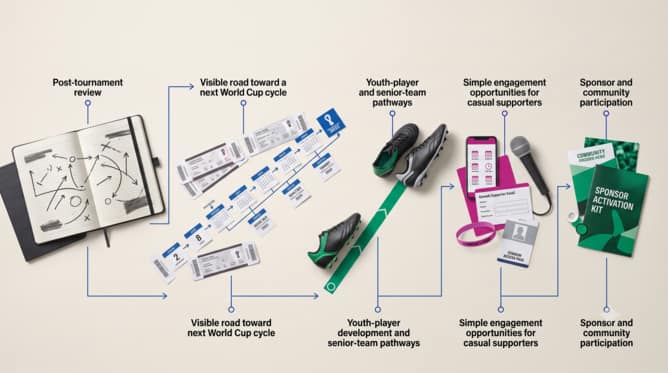
A federation loses trust fastest when fans cannot tell what the plan is. After a major tournament exit, supporters want more than optimism. They want to understand what changes, what stays, who owns the next phase, and how the organization will measure progress.
The Pochettino extension gives U.S. Soccer a chance to answer those questions in public. FIFA’s coverage of the deal said the Argentine manager will remain with the U.S. through the 2030 World Cup, giving him a longer path with the 2026 co-hosts after a tournament that brought major attention to the program through the expanded North American event. The federation now has to turn that longer path into a clear fan-facing narrative, not just a contract headline.
That narrative should include the senior team, youth development, player evaluation, coaching education, professional league collaboration, and the next competitive milestones. Fans do not need every internal detail, but they do need visible markers. Which tournaments matter before 2030? Which younger players are being integrated? How will the federation connect the post-World Cup audience to the next cycle? How will progress be explained before the next major tournament arrives?
This connects directly with SiteBob’s earlier analysis of soccer fan retention, where the core challenge was turning World Cup attention into long-term participation. A coaching extension is part of that same retention problem. If fans understand the next chapter, they are more likely to stay engaged. If the story feels abstract, casual supporters drift away.
How Federations Should Communicate Continuity After Disappointment
Continuity can sound passive if it is not explained well. “We are keeping the coach” is not enough after a tournament exit. The message has to become “Here is why continuity gives this program a better chance to grow, and here is what fans can watch next.”
U.S. Soccer has a useful starting point. Pochettino did not receive a full four-year cycle before the 2026 World Cup. He inherited a compressed timeline, a young player pool, high public expectations, and the pressure of hosting. Extending him through 2030 lets the federation argue that the real evaluation should come after a full cycle, not after a rushed preparation window.
That message should be paired with accountability. A fan-trust reset plan should avoid sounding like an excuse. The federation can acknowledge that the Belgium loss hurt, explain what the staff learned, and outline how the next cycle will be different. That is stronger than asking fans to “trust the process” without details.
For sports brands, this is a broader campaign lesson. When an organization chooses continuity after disappointment, the communication should include three parts: what happened, why the decision makes sense, and what will be different next. Missing one of those pieces can make the announcement feel defensive.
Why The 2030 Timeline Gives U.S. Soccer A Content Roadmap

The 2030 World Cup timeline gives U.S. Soccer something every sports marketer needs: a long runway. A federation can use that runway to build an audience rhythm around roster evolution, player stories, youth development, tactical identity, behind-the-scenes access, and competitive milestones.
FIFA’s 2030 World Cup coverage frames Pochettino’s new deal as a commitment through the next global cycle. For fans, that means the story should not go quiet until the next major tournament. U.S. Soccer can build a rolling content calendar that makes the cycle feel active rather than distant.
That calendar should include short-form explainers after roster announcements, player pathway videos, coach-led tactical breakdowns, youth-team spotlights, local club connections, fan Q&A sessions, behind-the-scenes camp coverage, and matchday community activations. The federation does not need to reveal its sensitive strategy. It needs to show enough work to keep supporters emotionally connected.
The strongest federations understand that modern sports fans follow progress between games. They follow training clips, player development, selection debates, podcast analysis, tactical threads, documentary content, and social reactions. If U.S. Soccer wants fans to believe in the 2030 plan, the federation has to make that plan visible in small pieces long before the next World Cup begins.
What A Fan-Trust Reset Plan Should Include
A fan-trust reset plan is not a press release. It is a structured communication system that helps supporters understand the next phase of the program. For U.S. Soccer, that means linking Pochettino’s extension to specific audience needs.
| Fan Concern | Federation Response | Marketing Action |
|---|---|---|
| The World Cup exit felt disappointing | Acknowledge the result without dismissing progress | Publish a clear post-tournament review |
| The next cycle feels far away | Show the road to 2030 in stages | Create a milestone-based content calendar |
| Fans want player development clarity | Explain how young players enter the senior team picture | Produce player pathway features |
| Casual fans may drift after 2026 | Give them simple next steps | Promote schedules, newsletters, watch guides, and local events |
| Sponsors need confidence | Show long-term direction and measurable engagement | Share audience growth and campaign reports |
The table matters because trust is rarely rebuilt by one message. It comes from repeated proof. Fans want to see that the federation heard the criticism, learned from the tournament, and has a visible route forward.
A strong reset plan should start with candor. The federation should avoid acting as if keeping Pochettino is automatically popular with every supporter. Some fans will want a new voice. Some will question Belgium’s performance. Some will worry that continuity becomes comfort. Naming those concerns respectfully can make the next message stronger.
The second step is clarity. Fans should know the next major matches, competitions, roster-building windows, and development priorities. The third step is participation. Give fans ways to stay involved through content, ticket access, email updates, watch parties, youth programming, and local soccer partnerships.
Why Sponsors And Partners Need The Reset Too
Fan trust is not only a federation problem. It affects sponsors, media partners, local organizers, youth programs, and soccer brands trying to benefit from the post-World Cup environment. If fans believe the national-team project has direction, the wider soccer ecosystem gains stability. If the mood turns cynical, campaigns tied to the team become harder to activate.
A sponsor does not want to attach itself only to disappointment. It wants a forward-looking story. Pochettino’s extension gives partners a narrative they can use: continuity, development, ambition, and a longer-term American soccer project. The challenge is making that narrative useful instead of vague.
Sponsors can support fan-trust rebuilding by funding youth clinics, player storytelling, creator-led explainers, community watch parties, bilingual content, local club partnerships, and fan education campaigns. Those activations should not feel like damage control. They should feel like invitations into the next chapter.
This is where sports marketing moves beyond logo placement. A sponsor can help fans understand the program, meet the players, attend events, access content, or participate in youth soccer. That kind of value makes the sponsor part of the solution rather than a brand sitting beside the disappointment.
How U.S. Soccer Can Keep Casual Fans From Leaving
The biggest retention risk after 2026 is not losing the most committed soccer fans. They will follow the USMNT through qualifiers, friendlies, Nations League matches, Gold Cup cycles, transfer news, and roster debates. The bigger risk is losing casual fans who joined during the World Cup but need a reason to keep watching.
Those fans need simpler entry points. U.S. Soccer can create “what comes next” guides that explain upcoming matches, player storylines, young prospects, how the 2030 cycle works, and where fans can watch. The federation can use email, TikTok, YouTube, Instagram, podcasts, local partners, and matchday activations to keep the story moving.
The tone should be accessible without being shallow. Casual fans do not need to be treated as outsiders. They need clear context. Explain why a September friendly matters. Explain why a young midfielder’s club season affects the national team. Explain how Pochettino’s staff is evaluating depth. Explain why youth tournaments connect to the senior program.
That kind of content turns a complex development cycle into a fan journey. It helps people feel that they are not just waiting four years for another World Cup. They are watching a team being built.
Why The Next Cycle Starts With Communication
Keeping Mauricio Pochettino through 2030 gives U.S. Soccer continuity, but continuity alone will not rebuild trust. The federation has to explain the decision, show the work, and invite fans into the next phase of the project.
That is the bigger lesson for any sports federation or event brand. After a disappointing result, silence creates space for frustration. A vague message creates space for doubt. A clear retention plan gives fans a reason to keep paying attention.
U.S. Soccer has a rare opportunity. The 2026 World Cup expanded the country’s soccer audience, pushed the national team into mainstream conversation, and gave the federation a larger base to speak to. Pochettino’s extension now gives that audience a central storyline through 2030.
The next challenge is making the storyline credible week by week. Fans need to see development, hear accountability, understand milestones, and feel that the federation is building toward something larger than one tournament result.
A coaching contract can start the reset. Consistent communication will decide whether fans believe it.


