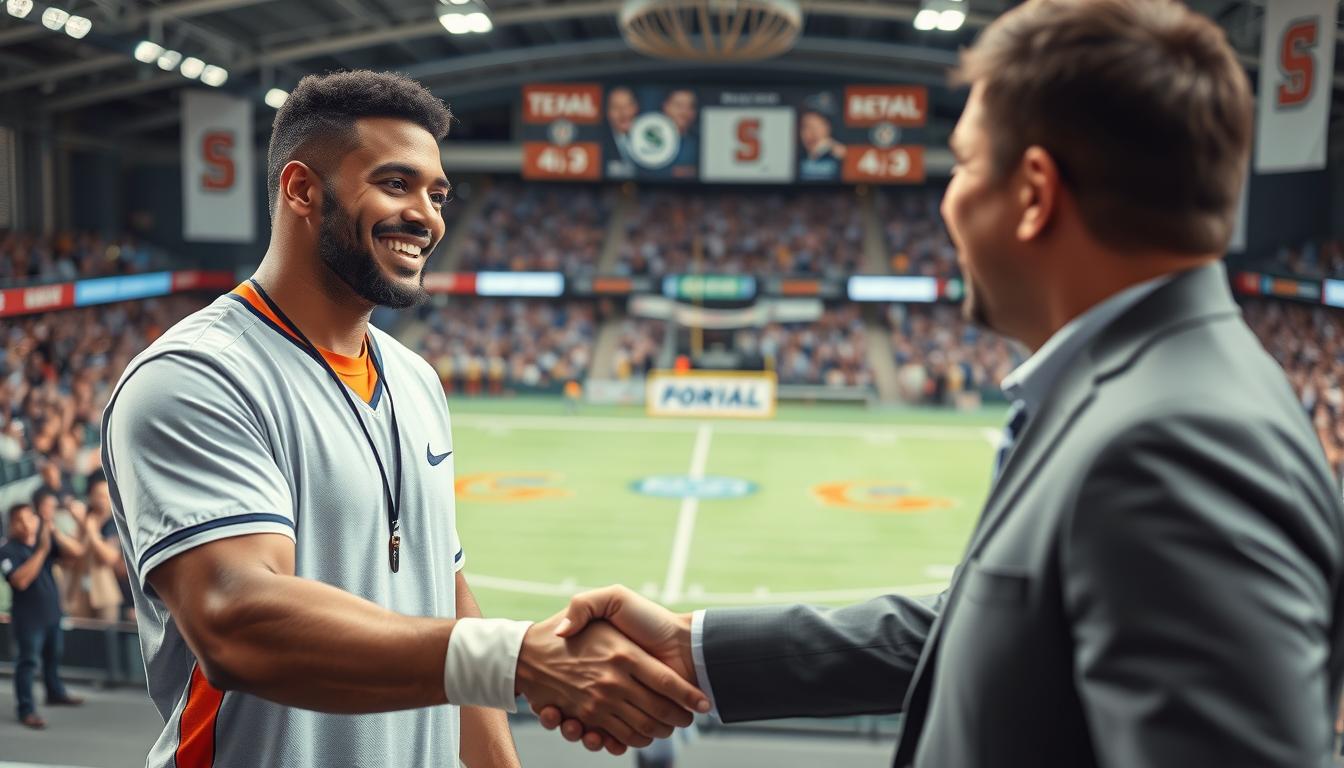
Let’s be honest – putting your logo on a jersey isn’t just marketing. It’s a big investment in someone’s emotional space. The global sports sponsorship market is expected to hit $116.7 billion by 2027.
Sports partnerships are different from traditional ads. They whisper “believe in me” instead of “buy me.” This creates a special connection between your brand and fans, known as the “emotional uplift.”
Brands that partner with sports are 10% more likely to be chosen by fans. It’s not just about being seen. It’s about being felt by people.
In today’s fast-paced world, sports sponsorship builds lasting relationships. These grow with every season, every game, and every win.
This isn’t just marketing. It’s a smart move to connect emotionally with people. It creates loyalty that traditional ads can only dream of.
Identifying Influential Partners
Finding the right sports partner is not like swiping right on a dating app. It needs more than just a good look. You’re searching for someone who matches your brand’s soul.
The research phase is key. It’s like combining Moneyball’s data with Ted Lasso’s heart. You must look at three main areas: audience overlap, value alignment, and market relevance.
Do you want a global star like LeBron or a local hero? That 10% boost in fan interest comes from doing your homework.
Here are the key points for your athlete partnerships strategy:
- Audience Demographics: Know who follows the team or athlete. Look at age, income, location, and values.
- Value Alignment: Does their story match yours?
- Market Relevance: Are you reaching people who might care about your product?
The magic happens when these factors meet. Team sponsorships work best when they feel natural, not forced. A local star might connect more with your community than a national celebrity.
Local sports marketing is where pros shine. A hometown hero who supports local businesses and values is priceless. This is real authenticity that big campaigns can’t match.
Remember, it’s not just about buying ad space. You’re building a relationship with a community. Get it right, and you’ll create something stronger than any ad.
Approaching Local Teams & Athletes
The way you approach local sports marketing is like a dance, not a sales pitch. You’re not just selling space on a jersey. You’re building a partnership where both sides grow together.
For community teams and minor leagues, think town hall meetings, not corporate boxes. These team sponsorships are all about grassroots connections and real community involvement. Show up at games, learn their culture, and show how your partnership helps them financially.
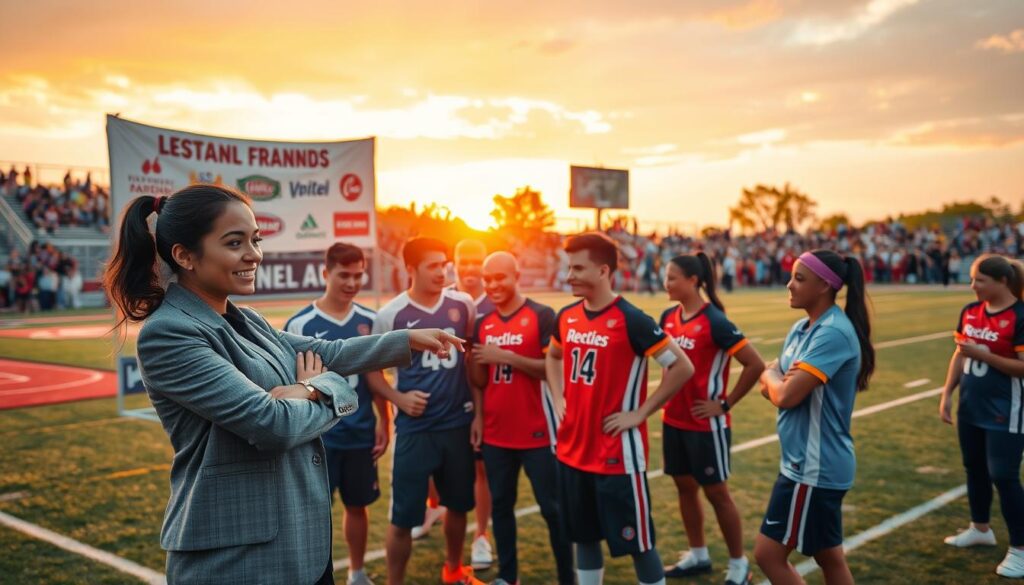
When you’re after athlete partnerships with big names, it’s a delicate dance. You must avoid looking like just another brand trying to buy authenticity. Local teams want your support at events, while star athletes value your respect for their brand.
Customized proposals are key. A generic packet gets ignored fast. Your proposal should show you really get what the organization is about, not just offer money for a logo.
SportFIVE’s global agencies know how to have these detailed conversations. They understand the importance of knowing a team’s needs, community goals, and even their team dynamics. It’s more about research and understanding than just making a call.
The best local sports marketing strategies see it as more than just funding. They’re about investing in community identity. Your proposal should show you get the difference between supporting a local league and a big league team.
Remember, the goal is more than just sponsorship. It’s about building relationships where both sides can grow. This requires careful planning, not just quick decisions.
Crafting Mutually Beneficial Deals
Negotiating sports partnerships should be about building strong alliances, not just collecting names. It’s about creating deals where both sides feel they got the best deal. This is the art of negotiation.
It’s like Moneyball, not Monopoly. Successful sponsorships mean more than just buying fans’ attention. They’re about gaining emotional support, cultural respect, and trust. Your brand offers financial support, marketing skills, and a bigger platform.
Financial deals should match the real value given, not just hopes. Here are some key negotiation strategies:
- Duration matters: Match sponsorship times with marketing and sports seasons
- Value beyond cash: Add cross-promotions, product swaps, or services
- Performance metrics: Set goals that justify the investment for both sides
The best partnerships make big, memorable moments. These moments are what fans remember and media talks about. This creates a win-win situation.
Top brands make their local sports marketing deals work like this:
| Deal Component | Team/Athlete Gets | Brand Gets | Win-Win Factor |
|---|---|---|---|
| Financial Investment | Stable income | Clear ROI | Shared growth goals |
| Content Creation | Professional content | Real stories | Better online presence |
| Community Events | Deeper fan connection | Local reach | Stronger ties |
| Product Integration | Access to resources | Real endorsements | True brand fit |
The goal is not to “win” but to create a partnership where both feel lucky. That’s when you know you’ve made something special.
These partnerships succeed because they’re based on respect, not just deals. The financial side is less important than the shared vision. That’s when the magic happens in local sports marketing.
Co-Promotional Campaigns
Welcome to the major leagues of marketing. Just slapping your logo on a jersey won’t cut it anymore. Today’s campaigns need creativity and integration.
Think about it: when did you last buy something just because of a logo? Never, right? Fans today want experiences, not ads. They seek authenticity more than anything.
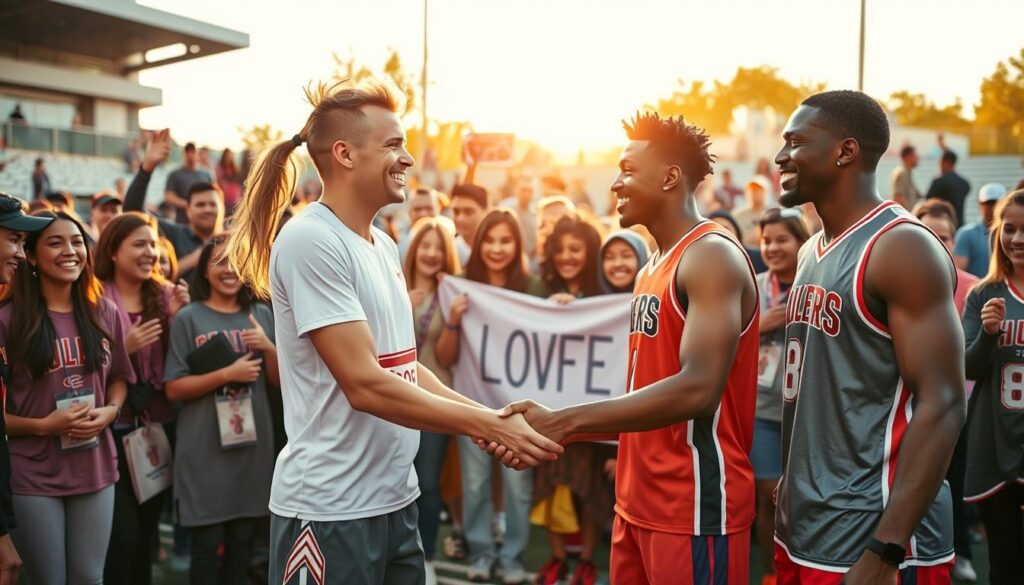
The smartest athlete partnerships today are like cultural movements. Jersey sponsorships have turned into fashion statements. Remember when Drake made the Raptors’ OVO jersey a hit in Toronto? That’s the power of good team sponsorships.
Stadium naming rights are the ultimate marketing play in local sports marketing. It’s not just about putting your name on a building. It’s about creating a landmark that becomes part of the city’s identity. When people say “I’m going to the Lumen Field” instead of “the Seahawks stadium,” you’ve hit marketing gold.
Exclusive product lines are the secret weapon of smart brands. Limited edition sneakers and co-branded apparel create excitement. These drops are more thrilling than a game-winning touchdown in overtime.
The best campaigns mix digital and physical experiences:
- AR filters that let fans virtually try on jerseys
- Behind-the-scenes content that breaks the fourth wall
- Fantasy sports integrations with real-world rewards
- Social media takeovers that feel authentic, not scripted
These strategies turn passive spectators into active participants. They create communities that last beyond the season.
Let’s look at how co-promotional strategies have evolved:
| Traditional Approach | Modern Strategy | Impact Difference |
|---|---|---|
| Static logo placement | Interactive digital experiences | 300% higher engagement |
| Generic advertisements | Personalized content creation | 5x recall rate |
| One-way communication | Community building | 42% higher loyalty |
| Seasonal campaigns | Year-round integration | Continuous brand exposure |
The magic happens when campaigns feel organic. When LeBron shares your product because he genuinely loves it, not just because he has to. That authenticity turns skeptics into believers.
Successful co-promotional campaigns don’t just sell products – they create cultural moments. They turn customers into communities and transactions into traditions. They make your brand part of the game-day ritual, the water cooler conversation, and the shared experience that defines fandom.
In the end, the best campaigns don’t sell to fans – they become part of the fandom. And that’s a whole different ball game.
Compliance & Endorsement Guidelines
The world of athlete endorsements is full of rules, more than the NFL has. Ignoring these rules can lead to penalties quickly. This is the world of compliance, where dreams of brand partnerships meet legal reality.
League regulations act as gatekeepers. Each sports organization has its own rules for team sponsorships and endorsements. The NBA, NFL, MLB have specific rules about logos, promotions, and athlete representation. Getting it wrong can be costly.
Athlete contracts also have limits. Many players can’t endorse certain brands or appear in certain ways. It’s like trying to date someone who’s already committed.
Disclosure rules are strict, thanks to the FTC. The rules around #ad and proper disclosure are not suggestions. They are mandatory. Not following them can lead to fines that dwarf a superstar’s salary.
Ethical considerations are key. Athlete partnerships should feel natural, not forced. Deals that feel transactional, not transformational, are noticed. And they affect sales.
Having a legal team that knows sports law is essential. It means having compliance checklists and approval processes. This isn’t just red tape; it’s protection against big mistakes.
The penalties for not following rules are severe. They can range from contract termination to legal action to damage to your brand’s reputation. Nothing hurts credibility more than a questionable partnership. It’s like getting caught cheating in marketing.
Compliance isn’t about stifling creativity. It’s about setting up a structure for great local sports marketing to flourish without legal issues. Do it right, and your partnerships will succeed. Do it wrong, and you’ll be watching from the sidelines.
Measuring Credibility Boost
Forget vanity metrics – the true value of team sponsorships shows up in real data. This data tells a story that warms your heart. We’re not just counting likes; we’re measuring cultural currency.
Brand awareness shifts are your first clue. You’re not just another logo anymore. You’re part of the local sports conversation. It’s like going from benchwarmer to starting lineup in the community’s consciousness.
Audience engagement metrics show fans aren’t just seeing your brand – they’re interacting with it. Comments, shares, saves – these aren’t just numbers. They’re digital high-fives from people who now see you as part of their team.
Fan base growth shows you’re gaining real followers, not just casual observers. These aren’t fair-weather fans; they’re the die-hards who’ll stick with you through winning seasons and rebuilding years.
The conversion rates tell the most beautiful story. Engaged fans become actual customers. That emotional connection? It translates directly to sales. The ROI calculations prove this isn’t vanity spending – it’s strategic investment in community credibility.
Social media analytics show the conversation happening around your partnership. Brand sentiment analysis reveals whether you’re becoming more likable or just more visible. Are people talking about you like you’re the hometown hero or the visiting rival?
Partnership impact assessment determines if both brands are actually benefiting. This isn’t a zero-sum game; it’s the sports equivalent of a perfect alley-oop where both players look good and the team scores.
This isn’t just number-crunching; it’s understanding the cultural capital you’re building through local sports marketing. The data doesn’t lie – it just tells the story of how athlete partnerships transform brands from spectators to players in the game of community trust.
Case Studies
Let’s look at real game footage instead of theory. What makes the majors different from the minors? It’s the results, not just “what ifs.” We see real evidence that these partnerships make a difference.
The NHL’s Garden of Dreams Foundation shows how to do philanthropy right. Their work with Make-A-Wish and Ronald McDonald House is more than just good deeds. It’s about building trust and making a real impact in the community.
Then, there’s the data revolution. Brands used to wait until the end of the season to see if their campaigns worked. Relo Metrics changed that. Now, brands can see how well their sponsorships are doing in real-time.
Let’s look at some real successes:
- Local little league sponsorships that changed community relations overnight
- Global athlete endorsements that changed how people see a brand fast
- Partnerships that made people 10% more likely to buy what they’re promoting
- Campaigns that turned casual fans into loyal customers through real connections
These aren’t just ideas. They’re real wins in sports marketing. The best athlete partnerships are about telling stories that people can relate to.
One auto dealership’s local sports marketing campaign with a minor league team did more than just get them noticed. It gave them valuable data that changed their marketing strategy. They found out people cared more about helping the community than just low prices, which doubled their engagement.
Another brand’s partnership with a basketball star got more social media attention than their whole ad budget. The key was being real. The athlete actually used the product, making the content feel genuine.
These stories show something important: the best sports marketing doesn’t feel like marketing. It feels like being part of a community, sharing a passion, and making real connections. In today’s world, that’s the only marketing that really works.
Conclusion
Athlete and team partnerships are more than just marketing. They are investments in culture, credibility, and community. We’ve moved from simple logo placements to deep emotional connections.
Successful partnerships mix strategy with heart. They need careful planning and true authenticity. It’s a game where everyone wins when played right.
Local sports marketing is special. It uses community pride and passion for a real brand presence. These partnerships boost reach and build trust.
Athlete partnerships add a personal touch to your brand. They make your brand more relatable and appealing. It’s about making your brand more valuable, not just visible.
In the end, these collaborations are a smart investment. They offer lasting benefits by combining reach with real connections. Now, go partner like your brand’s credibility depends on it—because it does.