
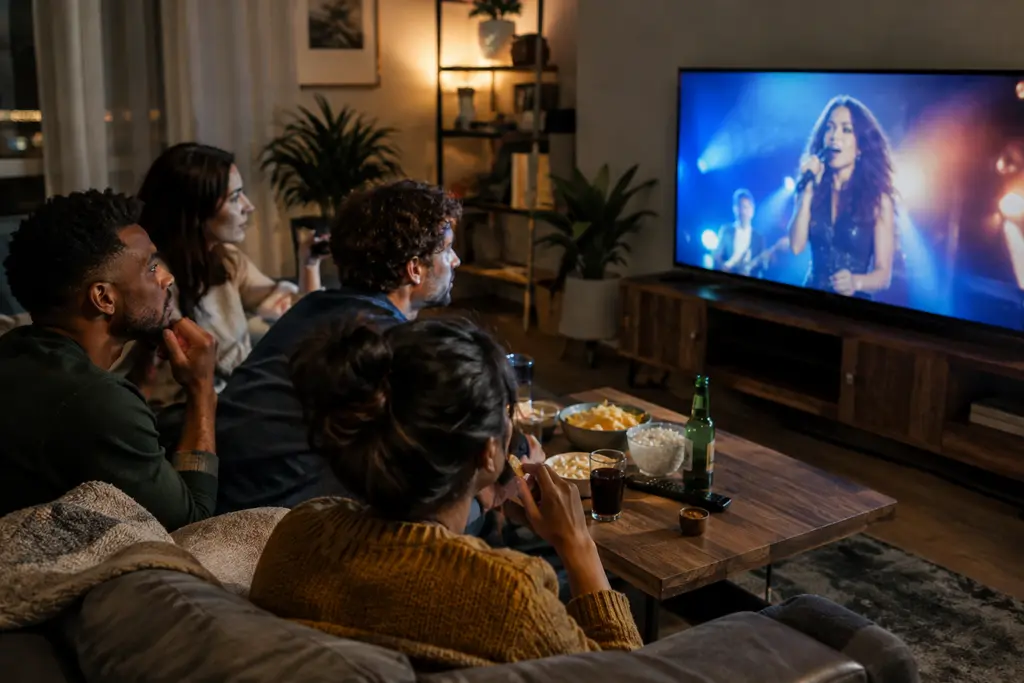
FAST channels now sit closer to the center of streaming behavior than many subscription-first models assumed a few years ago. The confirmed data available through mid-2026 points to a simple but significant shift: free, programmed, ad-supported viewing is not only filling gaps around paid services; it is becoming a regular choice for viewers who want lower friction, familiar formats, and less pressure to decide what to watch next.
This is a market-analysis reading, not a claim that subscription streaming is fading. Paid services still shape premium releases, franchise fandom, sports rights, and prestige TV discussion. The change is that free ad-supported streaming has gained enough supply and viewing time to alter how audiences sort their options. For media companies, that affects channel packaging, ad sales, content windows, and the way fan communities encounter older series, live-adjacent programming, and genre-based channels.
How FAST channels Changed Streaming Choice
Confirmed Supply Growth Since July 2025
Confirmed: by July 2026, Gracenote data reported by The Desk counted more than 2,170 FAST channel feeds globally, up 17.5% from roughly 1,850 one year earlier. The same report said the United States had 1,442 feeds, with about 9.4% year-over-year growth. That growth rate was lower than the reported increases in the U.K., Germany, and Canada, but the U.S. base remained large enough to shape how programmers and platforms think about scale.
The audience implication is not just “more channels.” Choice works differently in this format. Subscription video tends to ask users to search a library or select a marquee title. Free ad-supported programmed channels recreate a familiar TV rhythm: enter a feed, accept a schedule, and sample what is already playing. That matters for viewers who feel overloaded by menus, fragmented rights, and rising subscription stacks.
Market-analysis: the larger channel count also raises a discovery problem. If platforms add feeds faster than viewers can understand them, the advantage of simple lean-back viewing can be diluted by clutter. Strong metadata, recognizable channel identities, and clear genre organization become audience-retention tools rather than back-end details.
FAST channels And The New Lean-Back Habit
Confirmed: Amagi’s June 2026 AIRTIME report said viewing hours rose 55% year over year between April 1 and June 15, 2026, while ad impressions increased 53% over the same period. It also reported that the U.S. and Canada accounted for 54% of global viewing hours and 74% of global ad impressions, according to Amagi’s report. Those figures support the view that North America remained a major monetization center for free ad-supported streaming during that reporting window.
The appeal of FAST channels is partly economic and partly behavioral. Free access gives viewers a reason to sample without adding another monthly bill. The scheduled format gives them a reason to stay without making a fresh selection every few minutes. In audience terms, that can make the format useful during passive viewing occasions: background TV, casual weekend sampling, post-work decompression, or fandom maintenance through older episodes and themed feeds.
Opinion, based on the reported data: the format is strongest when it reduces effort without making viewers feel that they are watching leftovers. A channel built around a known series, a clear genre, or a timely programming lane has a better chance of becoming habitual than a vague feed with weak labeling. That is why channel identity now carries cultural weight. Viewers may not describe themselves as loyal to a FAST brand, but repeated low-effort visits can become a form of quiet attachment.
Why Audience Choice Is Not Only About Price
Free Viewing Still Competes On Trust
Price explains part of the shift, but not all of it. Free streaming can attract trial, yet habit depends on perceived quality and ease. If a viewer lands on a channel and finds repetitive scheduling, unclear episode order, weak descriptions, or ads that feel poorly matched to the experience, the free price point may not be enough to hold attention.
Market-analysis: this is where cultural expectations have changed. Streaming trained audiences to expect control, but it also created fatigue around too much control. A programmed free channel offers a compromise: less control than video-on-demand, but less effort too. For some viewers, that trade is useful. For others, it may feel like a return to older television habits. The key point is that audience choice has split into modes. Viewers do not always want the same level of control, even inside the same household.
This helps explain why free ad-supported streaming matters for fan engagement. Older shows, reality formats, sports-adjacent talk, news programming, and genre channels can keep communities active between new releases. A paid streaming premiere may create a spike; a well-programmed free channel can keep light-touch exposure alive for months. For related coverage on how free programmed viewing affects decision fatigue, SiteBob has also examined streaming choice pressure.
Distribution Decisions Now Shape Fandom Contact
For streaming services, FAST channels create another route into audience attention without requiring a new subscription commitment. That has consequences for studios and rights holders. Library programming can be repackaged into themed feeds, older fandoms can be reactivated, and viewers who would not search for a title may still encounter it through a programmed schedule.
At the same time, market-analysis cautions against assuming every title benefits equally. A serialized drama may need careful episode order and promotion. A procedural, unscripted series, comedy block, or news format may adapt more easily to drop-in viewing. Sports programming can also benefit from urgency and routine, though rights, highlights, talk formats, and live-event windows each carry different business constraints.
For readers tracking connected-TV distribution and video business shifts across the same media network, related insights can be found at Internet Video Magazine, which covers developments in online video and streaming services.
What The Ad Growth Means For Platforms

Ad Impressions Follow Attention, But Quality Still Matters
The Amagi data showing 53% growth in ad impressions during the April 1 to June 15, 2026 period is a confirmed signal that monetization capacity expanded alongside viewing. But ad volume alone does not settle the business question. Advertisers need confidence that channels are brand-suitable, audiences are real, content is well-described, and placement data is usable.
Market-analysis: a platform can gain viewing hours and still leave value unrealized if metadata is weak or channel identity is unclear. Audience choice and advertiser confidence are linked. If viewers cannot tell what a channel is, brands may also struggle to judge fit. If channels are labeled clearly, grouped sensibly, and supported by reliable programming data, both discovery and ad planning improve.
There is also a cultural trade-off. Too much ad repetition can make free streaming feel cheap, while too little monetization may not support better programming. The most durable services are likely to treat ad load, channel packaging, and content quality as connected audience-experience decisions. That is not a technical side issue; it directly affects whether viewers return.
Why Scale Can Create A New Sorting Problem
Gracenote’s count of more than 2,170 global feeds by July 2026 confirms that supply expanded quickly. Scale gives platforms more inventory to promote, but it also forces harder decisions about curation. A viewer who sees hundreds of channels may still rely on the first few rails, search results, or familiar brands. That can concentrate attention around better-known feeds while leaving smaller channels harder to find.
Market-analysis: this creates a tension for independent media and niche communities. Free programmed channels can lower access barriers, but discovery still depends on placement, metadata, and platform design. A niche film channel, creator-led feed, or genre-specific service may gain reach if it is surfaced well. If it is buried, the theoretical audience may never encounter it.
- Confirmed data supports rapid growth in channel supply and viewing hours through mid-2026.
- Market-analysis suggests that discovery, metadata, and channel identity will decide which services benefit most.
- Audience behavior appears to favor both control and passivity, depending on the viewing occasion.
FAST channels And Audience Choices In Streaming Services
The cultural implication is that streaming choice is becoming less binary. Viewers are not simply choosing between cable-like bundles and subscription apps. They are building mixed routines that can include paid originals, free programmed feeds, short-form clips, live events, and library viewing. Free ad-supported TV fits that mix because it reduces cost and effort while still giving platforms a way to monetize attention.
For entertainment marketers, the lesson is to treat free streaming audiences as intentional, not merely cost-sensitive. Some viewers may arrive because they want to avoid another subscription. Others may stay because the format feels easy, familiar, or socially low-pressure. A fan may not plan an evening around a library channel, but repeated exposure can revive interest in a series, cast, genre, or franchise.
The confirmed 2026 data shows a sector growing in supply, viewing hours, and ad impressions. The unanswered question is how much of that growth becomes durable habit rather than casual sampling. Based on the evidence available, the services most likely to benefit are those that make the free experience feel organized, credible, and worth returning to without asking viewers to work too hard for a good choice.