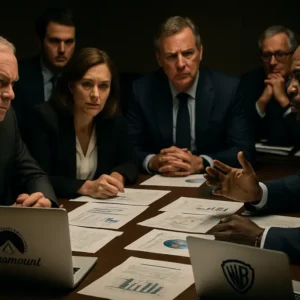
[Confirmed] Local TV Ownership moved into a new regulatory phase on August 6, 2026, when the Federal Communications Commission voted 2-1 to eliminate the national television ownership cap. The prior rule restricted broadcasters from owning stations that reached more than 39% of U.S. television households, and Axios reported that the vote allows station groups to expand beyond that former limit.
[Market-analysis] For viewers, the question is not only whether larger owners can finance local stations more efficiently. The sharper issue is whether scale changes the competitive supply of local news: who reports it, how much of it is produced locally, and whether audiences see distinct editorial choices across stations that appear to compete in the same community.
What Changed In Local TV Ownership
Local TV Ownership Flexibility And The 39% Cap
[Confirmed] Local TV Ownership flexibility now rests on a different FCC posture than the one created by the national reach cap. FCC Chair Brendan Carr said the new approach would allow the agency to approve deals that exceed the prior cap if they serve the public interest, according to the research record supplied for this analysis. That framing matters because it shifts attention from a fixed numerical ceiling to case-by-case review.
[Market-analysis] A case-by-case model can give regulators room to weigh competition, public-interest commitments, and station economics. It can also create uncertainty for rivals, advertisers, unions, consumer advocates, and local audiences if the standards for approval are not clearly understood. In news distribution, predictability matters because ownership decisions can shape staffing, bureau presence, syndication, and carriage negotiations.
Why The Vote Arrived After A Major Merger Fight
[Confirmed] The August vote followed a year in which broadcast consolidation was already under close review. In March 2026, the FCC approved Nexstar Media Group’s $6.2 billion merger with Tegna. The transaction would create a company owning 265 television stations across 44 states and Washington, D.C., as AP reported at the time.
[Confirmed] The research record also states that, in April 2026, a federal judge blocked the Nexstar-Tegna merger until an antitrust lawsuit is resolved, citing concerns about higher consumer prices and reduced local journalism. That sequence shows why the FCC vote cannot be read as a simple deregulatory headline. The agency’s position, judicial review, and antitrust objections are all part of the same distribution fight.
Competition Risks For Local News Distribution
Audience Choice Versus Station Scale
[Market-analysis] For audiences, Local TV Ownership rules affect competition in two ways. First, they influence how many independent owners can set editorial priorities across markets. Second, they affect the business power of station groups in negotiations with distributors, advertisers, network partners, and digital platforms. A larger company may claim it can support stations through shared resources. Critics worry those same shared resources can reduce local distinction.
[Confirmed] The research notes cite a February 2026 study filed with the FCC that found, in most station consolidation cases it reviewed, the quality and diversity of local news decreased, with stations offering essentially the same local news content. Because that finding comes from the research record rather than a source link used here, it should be treated cautiously, but it is directly relevant to the competition question.
[Market-analysis] The audience effect is subtle. Viewers may still see multiple channel numbers, different anchors, and separate broadcast brands. Yet if the assignment desk, story selection, scripts, or video packages become similar, the market can look competitive while offering less editorial variety. That is especially important in local election coverage, school-board reporting, public-safety updates, severe-weather coverage, and civic accountability reporting.
The Distribution Incentive Behind Consolidation
[Market-analysis] Broadcasters have argued that ownership limits are outdated because local stations no longer compete only with nearby broadcasters. They compete with streaming services, social platforms, national cable channels, creator media, podcasts, and digital publishers for audience time and advertising. That argument has commercial force, particularly for stations facing fragmented viewing and pressure on ad revenue.
[Market-analysis] The counterargument is that local television news is not interchangeable with national entertainment or creator video. A community may have many screens but still have few institutions doing routine local reporting. If consolidation helps keep stations operating, audiences could benefit from financial stability. If consolidation replaces local reporting with centralized content, viewers may lose the information that made local stations culturally valuable in the first place.
- [Confirmed] The FCC vote on August 6, 2026, removed the national cap that had been tied to 39% of U.S. television households.
- [Confirmed] Nexstar’s proposed Tegna acquisition was valued at $6.2 billion in the research record.
- [Market-analysis] The central audience question is whether larger ownership groups expand local reporting capacity or standardize output.
Cultural Stakes For Local News Audiences
Why Shared News Content Can Narrow Civic Attention
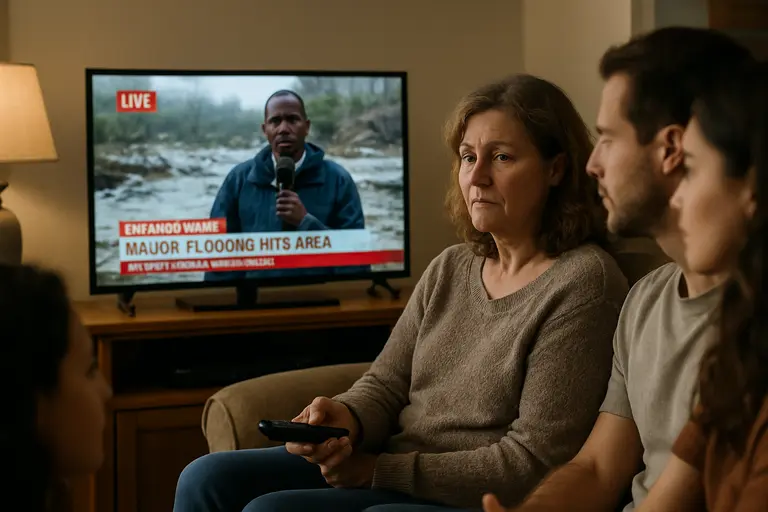
[Confirmed] The research record points to October 2025 research indicating that local stations acquired by Sinclair Broadcast Group reported more frequently on national news at the expense of local topics, with more coverage of polarizing national issues. This claim should be read within the limits of the cited research note, not as proof that every acquisition produces the same result.
[Market-analysis] The cultural implication is clear enough to test. Local news does more than fill airtime. It gives communities a shared account of what is happening nearby. If ownership structures make stations more likely to emphasize national conflict over local reporting, audience engagement may become more polarized and less place-based. That shift would matter for civic trust, not only for ratings.
[Opinion] Viewers rarely discuss ownership caps in everyday terms, but they notice repetition. They notice when multiple stations lead with the same story, use the same package, or give less attention to neighborhood-level issues. Trust can weaken when a station feels less rooted in the community it serves, even if its production values improve.
What Entertainment Media Can Learn From The News Debate
[Market-analysis] The same tension appears across film, television, festivals, and creator platforms: consolidation can finance larger distribution, but it can also narrow the range of voices that reach audiences. Local news is a sharper case because the product is tied to public information rather than only taste or fandom. Still, event marketers and cultural publishers should watch this closely because audience trust is becoming a scarce asset across media categories.
[Market-analysis] Independent cultural spaces often serve as a counterweight when larger distributors standardize output. For related coverage across this site network, Biff Award reflects how smaller media and arts communities depend on visibility, identity, and audience trust. The local news debate raises a similar question: does a bigger distribution system make community media stronger, or does it make local identity harder to protect?
What Local TV Ownership Means For News Audiences
[Market-analysis] Local TV Ownership should be judged by audience outcomes, not only by deal size or regulatory philosophy. The practical tests are measurable: whether local reporting hours rise or fall, whether newsroom staffing changes, whether duplicated content increases, whether communities retain independent editorial voices, and whether viewers face higher costs through distribution disputes.
[Confirmed] As of August 18, 2026, the FCC had voted to remove the national ownership cap, the Nexstar-Tegna transaction had drawn legal and antitrust scrutiny, and consumer advocates were expected to challenge the FCC’s new direction. Those facts point to an unsettled phase rather than a settled policy endpoint.
[Market-analysis] For broadcasters, the opportunity is scale. For regulators, the burden is proof. For viewers, the risk is that competition becomes harder to see because it is not measured only by how many stations appear on a program guide. Real competition in news distribution means distinct editorial judgment, local reporting capacity, and community accountability. If the new ownership policy supports those outcomes, its defenders will have a stronger case. If it produces more uniform local news, the cultural cost will show up first in audience trust.