
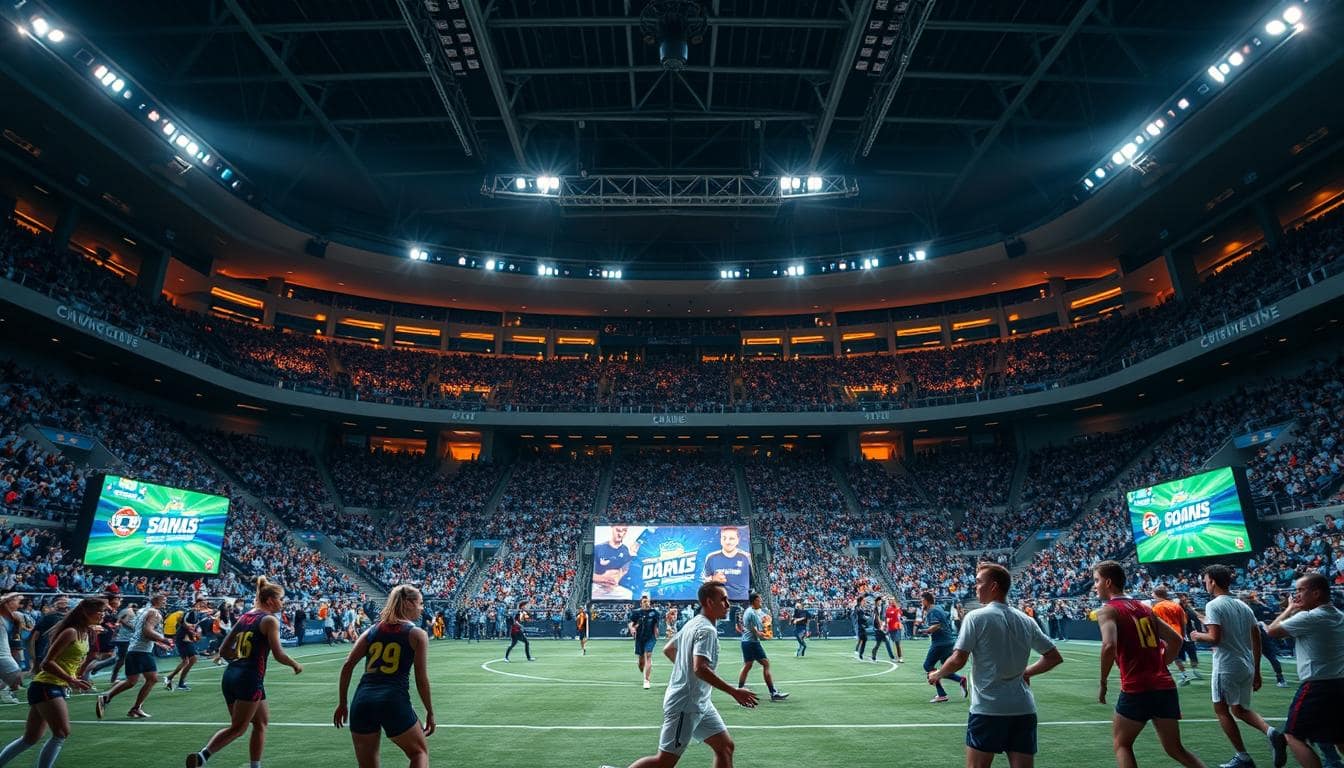
Remember when going to a game was just about cheering? The Philadelphia Eagles changed that with their “Gameday Predictor”. Now, fans can guess the next touchdown, making every guess feel like a win.
This isn’t just about scoring points. It’s a battle against fan boredom. The Golden State Warriors’ “Dub Nation” shows how 73% of fans keep coming back for more. They do it for virtual badges and real perks.
Manchester United and Coachella have their own ways to keep fans engaged. They use data-driven loyalty engines. Even the NBA app lets fans choose halftime shows through polls. It’s like being part of the algorithmic playbook for keeping fans.
The key is mixing FOMO with instant rewards. When your phone buzzes with “You predicted 3 correct plays – claim your reward now,” it’s more than a notification. It’s a digital high-five that keeps fans coming back. Welcome to the new era of fandom, where every click is a chance to connect.
Gamification Concepts Explained
Gamification is like a mix of sports and behavioral science. It uses tracking audience engagement tools to make achievements exciting. For example, the Golden State Warriors’ app turns buying jerseys into a team effort. Fans earn special content by reaching targets.
The Tampa Bay Lightning shows that hybrid events can be simple yet powerful. They offer VR tours that let fans feel like they’re in the locker room. At the same time, fans in the arena get cool stats through QR codes. This isn’t just tech; it’s making digital experiences as meaningful as live events.
Three key factors drive these systems:
- Progression dopamine: Fanzone’s challenges reward fans for their streaks.
- FOMO mechanics: Limited-time badges during playoffs create a sense of urgency.
- Social proofing: Leaderboards show who’s the most active fan at concerts.
When these elements come together, they create engagement loops. Imagine a fan gets points for watching a game, shares a photo, and then gets early ticket access. It’s a mix of business and friendship that works.
Hybrid strategies work best when online and offline experiences are connected. The Lightning’s VR tours make fans feel connected, even from afar. The Warriors’ app turns shoppers into fans, all without needing a headset.
Games that Work for Sports Audiences
Sports fans today want to create excitement, not just watch it. From Silverstone’s surveys to the Netball World Association’s fantasy drafts, fans are part of a collaborative highlight reel. Let’s explore how fans are becoming strategic players.
The Kansas City Chiefs’ “Playcall Predictor” game had fans more engaged than coaches. The Vegas Knights turned their arena into a digital scavenger hunt with an augmented reality puck hunt. It’s a fun twist on hockey night.
What makes a game great? Three key elements:
- Real-time consequences (Milwaukee Bucks trivia winners choose halftime music)
- Social bragging rights (Netball World Association’s shareable dream team leaderboards)
- Physical/digital hybridity (Seattle Kraken’s arena fish tosses unlock NFT collectibles)
| Game Type | Engagement Boost | Tech Used | Brand Example |
|---|---|---|---|
| Live Polling | 47% longer session times | WebRTC platforms | Silverstone F1 surveys |
| AR Scavenger Hunts | 3.2x merch sales lift | ARKit/ARCore | Vegas Golden Knights |
| Trivia Nights | 68% repeat attendance | Custom apps | Milwaukee Bucks |
Virtual watch parties become story generators when fans are involved. The 12,000 Kraken fans who “threw” digital salmon last playoffs were creating history. Your live polling should make fans feel like they’re part of the game, not just spectators.
Why watch when you can create? The Chiefs showed that fans can be part of the game. Give them the right tools and they’ll make it unforgettable.
Building a Points or Badge System
What do fantasy football drafts and Hunger Games tributes have in common? Both use tiered reward systems to turn casual fans into superfans. The key is audience segmentation and targeting. Giving out participation trophies in 2024 is like serving cold beer at a game.
Manchester United got it right with their VIP tiers. They make airline status look basic. Their system includes:
- Bronze Tier: Early merch access (for the “I bought the jersey before it was cool” crowd)
- Silver Tier: Virtual meet-and-greets (where your Zoom background becomes a flex)
- Gold Tier: Pregame tunnel access (because smelling athlete sweat is the new cologne)
But why just give points? The Chicago Bulls’ Legacy Points system turned jersey sales into a market. Earn 500 points? You get a signed basketball. 5,000? Design next season’s alternate uniform. (Spoiler: camo jerseys were not fans’ finest hour.)
For maximizing hashtag campaigns, La Liga’s fantasy game is a lesson. Their #MARCAChallenge made Twitter a virtual stadium:
| Action | Points | Badge Unlocked |
|---|---|---|
| Post lineup prediction | 50 | 🔮 Fortune Teller |
| Tag 3 friends | 75 | 📢 Hype Captain |
| Trending hashtag | 200 | 🚀 Viral MVP |
The Boston Celtics took it further with emoji-based achievements. Spot a 🍀 in their Instagram comments? That’s a “Clover Collector” badge holder. These are the fans who know Larry Bird’s SAT scores by heart.
Pro tip: Want Portland Timbers-level devotion? Their “Lumberjack Legend” tier offers axe-throwing sessions with players. It’s a way to show brand loyalty by learning survival skills from your left midfielder.
Technology Platforms
Imagine a stadium where your phone is the ultimate MVP. It’s not just for Instagram stories. It unlocks hidden experiences even die-hard fans don’t know about. Welcome to the mobile engagement apps sports events revolution. Teams turn stadiums into digital playgrounds smarter than a rookie studying game tape.
The Dallas Cowboys’ app doesn’t just sell tickets. It lets fans “hike” discounts to friends like Prescott audibling at the line. That’s loyalty-building genius. The Toronto Raptors’ chatbot settles debates faster than a coach’s challenge during crunch time. Ask it “Who had more blocks in ’19 – Gasol or Ibaka?” and get stats-backed answers before you finish your poutine.
Three game-changing features dominating modern platforms:
- AR integrations that make concession lines disappear (San Jose Sharks’ virtual goalie game cuts wait times by 40%)
- AI-powered recommendations suggesting merch based on your seat location and browsing history
- Live poll integrations letting crowds vote on music playlists or MVP choices mid-game
Fanzone’s AI tools are the secret weapon here, analyzing fan behavior patterns like a defensive coordinator studying film. The NBA app’s “CourtVision” feature? It’s Moneyball meets augmented reality – showing real-time shot charts and player speeds that make your living room feel like the front office.
But here’s the real power play: chatbots and automated interaction sports strategies that work overtime. These digital assistants handle everything from parking queries to trivia challenges. They free staff to focus on creating moments that can’t be automated – like catching a foul ball or explaining why the refs are always wrong.
Why does this matter? Because in 2024, fan loyalty isn’t won with foam fingers. It’s earned through personalized experiences that blend physical excitement with digital convenience. The teams nailing this balance aren’t just selling tickets; they’re building communities where every interaction feels like courtside access.
Engaging Younger Audiences
Let’s cut through the noise: Gen Z prefers watching games on their phones over sitting in the nosebleeds. Teams like LAFC and Atlanta United are not just posting content. They let fans steer the ship. Remember when TikTok users picked LAFC’s warm-up playlist? That’s not marketing – it’s digital democracy.
Smart clubs use influencer partnerships for event reach like chess masters. Spain’s C.D. Leganés created a viral memory game with local TikTok stars. Finland’s HIFK hockey team lets fans vote on post-match content through Instagram polls. The play? Turn spectators into co-creators.
Twitch streams where fans control camera angles (shoutout to Atlanta United’s interactive broadcasts) aren’t gimmicks. They’re participation trophies Gen Z actually wants. And let’s not sleep on Discord: Washington Capitals’ “Ovi’s Office Hours” turns Alex Ovechkin’s Q&A sessions into digital locker room hangouts that outdraw actual power plays.
| Platform | Tactic | Result |
|---|---|---|
| TikTok | LAFC playlist voting | 37% increase in under-25 ticket sales |
| Twitch | Atlanta United camera control | 82% longer watch time vs standard streams |
| Discord | Capitals player AMAs | 300% more interactions than Instagram posts |
Here’s the secret sauce: social media takeovers sports events work best when they’re low-commitment, high-reward. No one’s asking kids to write sonnets about your team. Just let them hit shuffle on the pre-game mix or roast the mascot in the comments. That’s how you turn casual scrollers into ride-or-die fans.
Real-World Success Stories
Want proof that gamification isn’t just digital confetti? Let’s look at three campaigns that turned stadiums into playgrounds. Fans became unpaid marketing departments, and they loved it.
The Green Bay Packers’ “Lambeau Leap” app turned cheesehead loyalty into video highlights user-generated gold. Fans got badges by sharing game-day photos and trivia answers. This created a content pipeline richer than Wisconsin cheddar.
Result? A 47% increase in social shares. It turns out Midwesterners will do anything for virtual cheese slices.
On the other hand, the Vegas Golden Knights created an AR treasure hunt. It made their inaugural season feel like a immersive event experience crossed with Ocean’s 11. Fans chasing virtual pucks through casinos generated buzz.
Their secret? Turning Sin City itself into a game board. Nothing says engagement like making tourists stalk Fremont Street for holographic hockey gear.
The Miami Heat’s “Culture Quiz” is a Pat Riley-approved hazing ritual disguised as fan engagement. Fans answer questions about the team’s history to earn Heat Culture points. It’s like bar trivia night if the bartender was Erik Spoelstra.
The kicker? 82% of Gen Z fans completed it. They’d prefer studying playbooks than textbooks.
Even Coachella’s getting in the game. Their 2023 scavenger hunt challenges turned flower-crown enthusiasts into brand ambassadors. This shows that video highlights user-generated content works, whether in a desert or at a festival.
These aren’t flukes – they’re playbooks. When the Premier League’s fantasy leagues can make accountants care about xG stats, we’ve entered a new era of fandom. The lesson? Give fans a sandbox, not a sermon. They’ll build you a cathedral of engagement.
Mistakes to Avoid
Even the best plans can fail if they ignore the crowd. The New York Jets’ “Flight Plan” loyalty program is a prime example. It crashed like their playoff hopes did. They treated fan sentiment like a static plan, not a dynamic game.
Real-time feedback in sports isn’t just nice to have. It’s essential for keeping fans engaged.
Three big mistakes can ruin gamification efforts:
- Overcomplicating the play: The Sacramento Kings’ badge system was too complex. It left fans as confused as a rookie in a blitz.
- Ghosting the data: Collecting sentiment without using it is pointless. It’s like calling a timeout to stare at a whiteboard.
- Missing the emotional endzone: Programs that focus on flash over real connection miss the mark.
The Jets’ problem was their system was slow. Fans want quick reactions, not slow updates. Modern tools should quickly understand fan emotions.
The key is to keep things simple. Your analysis shouldn’t be as complex as a Bill Belichick press conference. The Kings learned this the hard way with their 47-tier badge system.
Real-time feedback only works if it’s actionable. Build systems that change quickly, using data that’s clear. Fans want to be heard, not ignored.
Wrap-up
Gamification changes sports sponsorships from simple ads to engaging community events. It’s like turning fans into players, creating rivalries and jokes. When done well, these strategies become the buzz of social media and group chats.
RTR Sports Marketing found that mixing competition with rewards boosts engagement by 37%. The Golden State Warriors’ “Dub the Hub” app is a great example. Fans got virtual badges for game attendance and merch purchases, making their bond stronger.
Red Bull’s Stratos jump also showed the power of gamification. Their real-time altitude tracker made viewers feel like they were part of the mission.
Success comes from finding the right mix of new and familiar. A March Madness bracket challenge works because it speaks to Americans. The key is to add sponsor integration that feels like a special experience.
Need ideas? Check out these gamification ideas. They show how small teams can beat big budgets with creative events.
Every sponsorship should ask: Would fans share this experience with friends? If not, it’s just an ad. But if you get it right, you’ll create a loyal community. No need for gimmicks like deflated footballs.


