[Confirmed] AI Media Contracts moved from an abstract rights debate into a direct labor dispute in July 2026, when more than 650 freelance photographers across the United States rejected a new contract from The Wall Street Journal. The dispute matters beyond one newsroom because photography has always carried two kinds of value: the immediate editorial value of documenting an event, and the long-term licensing value attached to the image after publication.
[Market-analysis] For culture and media audiences, the question is not only whether a publisher can secure broader rights. It is whether the public record remains shaped by credited photographers with durable control over their work, or whether visual archives become inputs for resale, licensing packages, and machine-learning systems. That shift changes the incentive structure behind the images audiences see in news, entertainment coverage, sports, festivals, and creator-led media.
Why AI Media Contracts Became A Trust Issue
What AI Media Contracts Ask Freelancers To Give Up
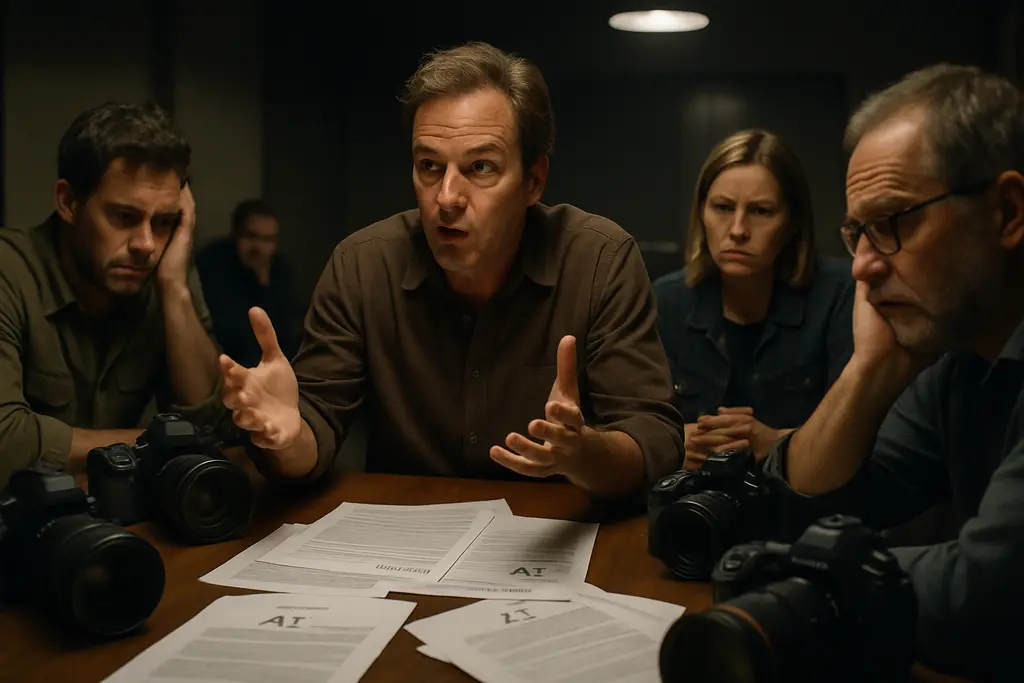
[Confirmed] In July 2026, more than 650 freelance photographers rejected a new Wall Street Journal contract that included a work-for-hire clause, removing their copyright and allowing the Journal to resell imagery and potentially use it for AI training, according to AZPM’s report. The reported concern was not simply that a publication wanted permission to publish assigned photos. The concern was that the contract expanded control over what happens after the original assignment.
[Market-analysis] That distinction is central. A freelance photographer might accept a day rate because later licensing can carry future income, professional visibility, and archive control. If the publisher owns the work outright, the photographer may lose the ability to decide where the image appears, whether it is resold, and whether it becomes part of a training set. AI Media Contracts therefore raise a practical question: is the assignment fee payment for one editorial use, or payment for a much wider transfer of economic and creative control?
Why Audiences Should Care About Ownership
[Opinion] Viewers often experience photojournalism as finished evidence: a frame from a protest, a portrait from a film festival, a courtroom image, a sports celebration, or a scene from a cultural event. Yet the production conditions behind that image affect what gets covered and who can afford to keep doing the work. If freelancers cannot retain copyright, independent licensing income can shrink, especially for photographers who cover niche communities, regional arts, or less commercially obvious public events.
[Market-analysis] This is where the contract debate becomes an audience-engagement issue. Independent image-makers help media outlets reach communities that staff photographers cannot always cover. If contract terms make the work less sustainable, publishers may gain short-term rights flexibility while risking a thinner base of contributors. That could narrow the visual range available to audiences, particularly outside major media centers.
What The Wall Street Journal Dispute Changed
A Rights Fight With A Wider Cultural Signal
[Confirmed] The rejected contract was not described in the research as a general industry standard adopted by every outlet. It was a specific dispute involving freelance photographers and The Wall Street Journal. Still, its scale made it a clear signal. More than 650 photographers acting together showed that visual contributors were treating AI-related rights as core labor terms, not as minor legal language buried in boilerplate.
[Market-analysis] The cultural signal is sharper because news photography now feeds many secondary markets. Images can appear in archives, syndication feeds, documentaries, social posts, educational products, and visual datasets. As publishers face pressure to monetize archives, the temptation to secure broad rights at the assignment stage is understandable from a business view. From the photographer’s view, the same language can look like a permanent rights transfer attached to a temporary job.
The Difference Between Publication And Extraction
[Opinion] Traditional editorial publication makes the photographer’s work visible to audiences. Training-data use is different. It can make the work operationally useful while removing it from public view. That is why many creative workers see AI-training clauses as more sensitive than ordinary republication language. The photograph may stop being treated as an authored cultural object and start functioning as material for a system that produces future images, captions, or visual patterns.
[Market-analysis] The concern is not limited to whether any one image can be recognized inside a model. It is about consent, compensation, attribution, and bargaining power. Freelancers are often asked to sign standard-form agreements because turning down terms can mean losing assignments. In that setting, AI Media Contracts can shift market norms quickly if major publishers adopt broader templates and smaller outlets follow.
Audience Trust And The Visual Record
Authenticity Is Now A Distribution Issue
[Market-analysis] Photojournalism depends on an audience assumption: the image is a record made by a person who was present, working under editorial standards. AI does not erase that premise, but it puts more pressure on disclosure and provenance. If audiences suspect that images are altered, synthetically extended, or blended with machine-generated material, the trust cost falls on both the outlet and the photographer.
[Confirmed] The research supplied for this analysis also noted that some professional photography contracts are adding AI disclaimer clauses, including language about AI-assisted tools, permitted levels of generative alteration, and ownership boundaries. Because that finding was not among the approved high-authority source links for this article, it should be treated here as a reviewed industry-practice note rather than a quantified market claim.
Fan Communities Notice Production Ethics
[Market-analysis] Entertainment audiences, sports fandoms, and creator communities are highly sensitive to authenticity cues. A concert photo, red-carpet portrait, behind-the-scenes still, or independent film set image carries credibility because it is tied to access, timing, and human judgment. If publication contracts allow images to be reused or sublicensed in ways that detach them from that context, audiences may not always know the difference immediately. Over time, though, trust can weaken if people feel the visual record is being treated as raw material rather than witnessed documentation.
[Opinion] Media companies can reduce that risk by using plain-language rights explanations for contributors and by setting clear audience-facing standards for generative alteration. Sites in adjacent coverage networks, including Pilot Pointer, effectively illustrate how specialized audiences often reward clarity when technical and cultural systems overlap. The same principle applies here: readers do not need every contract clause, but they benefit from knowing how images are sourced, edited, licensed, and protected.
Distribution Rights, Resale, And Training Data
The Archive Has Become A Revenue Question
[Market-analysis] The economic pressure behind these disputes is not hard to identify. Publishers hold large image archives, and archives can gain new value when they are searchable, licensable, or useful to technology partners. Freelancers, by contrast, may depend on retaining rights to build their own archive income. A work-for-hire clause can settle that conflict in favor of the publisher before the assignment even begins.
[Confirmed] The UK government’s interim report published on February 19, 2026 found that over half of surveyed content-creation businesses had used generative or modified AI content in the previous 12 months; about 33% used AI-generated images in place of stock content, and 44% modified existing images with AI, with most usage described as commercial in the interim report. While that UK data does not measure U.S. newsroom contracts, it confirms that commercial image workflows had already shifted by early 2026.
Why Licensing Language Needs Specificity
[Market-analysis] Broad phrases such as unrestricted sublicensing can be attractive to publishers because they reduce future transaction costs. For photographers, the same phrases can create uncertainty about whether an image may be sold into markets that did not exist, or were not named, when the assignment was accepted. That is the pressure point for AI Media Contracts: the more general the language, the harder it becomes for contributors to price the risk.
[Opinion] More precise agreements could separate ordinary editorial publication, archive resale, syndication, promotional use, and AI-training permission. Each category has different value and different reputational stakes. If publishers need wider rights, the sustainable path is to name them, pay for them, and make opt-outs meaningful. If freelancers want to protect authorship, the practical path is to negotiate clauses before the shoot, not after the archive has already been transferred.
Freelance Photographers Vs. AI Media Contracts
The Creative Stakes Are Larger Than One Contract
[Market-analysis] The July 2026 dispute showed that photographers were not only defending copyright as a legal asset. They were defending the conditions that make independent visual reporting possible. A freelancer’s copyright can support later licensing, portfolio value, professional reputation, and selective control over sensitive uses. Removing that control changes the relationship between the person who witnessed the event and the organization that distributes the record.
[Opinion] For publishers, the risk is reputational as well as legal. Audiences increasingly ask how media is made, who benefits, and whether human creators are being credited fairly. Contracts that appear to absorb independent work into large institutional archives without clear limits may save negotiation time, but they can also generate distrust among contributors and readers.
[Market-analysis] The likely near-term standard is not a full rejection of AI-related clauses. It is a fight over consent, pricing, and disclosure. AI Media Contracts will be easier to defend when they distinguish between publication and training, name sublicensing rights clearly, and compensate photographers for uses beyond the original assignment. The cultural value of photojournalism depends on more than image supply. It depends on the public believing that the people who create the visual record still have a meaningful stake in it.