

Have you ever watched an incredible game and thought, “There’s a week’s worth of material right there!”? You’re absolutely right, and that instinct is pure gold.
In this guide, we’ll explore the powerful “why” behind atomization for athletic events. This strategic process isn’t just about creating more posts—it’s about giving your work a longer shelf life. It also helps you find SEO gold and reach every channel your fans love.
Think of it like a coach’s film breakdown. Every play, every stat, and every reaction holds value waiting to be unlocked. We’ll show you how to find it.
By mastering this, a single matchup transforms into a wealth of assets. You can engage audiences on social media, blogs, and video platforms—all from one source.
Ultimately, you’ll learn how to build that one event into your foundational, evergreen hub. It becomes a resource that fuels your strategy for months.
The Hub‑and‑Spoke Model: evergreen pillar + clusters (players, key plays, stats)
Don’t think of your game recap as just one piece. See it as the center of a whole content campaign! This change in thinking is the first step to mastering the hub-and-spoke model.
So, what is this model? Picture a bicycle wheel. The strong, central hub is in the middle. From it, many spokes go out, each connecting to the rim. In content terms, your hub is the main, evergreen piece—like a detailed game recap article or a full highlight reel video.
This hub piece is your foundation. It’s the go-to resource that covers the game’s overall story. Because it’s broad and complete, it can attract traffic for months or even years after the final whistle. Think of it as your home base.
Now, let’s build the spokes! These are your focused SEO clusters. Each cluster dives deep into one specific angle that fans are searching for. One cluster might analyze a star player’s incredible performance. Another could break down the three key plays that decided the game’s outcome.
A third cluster might explore the surprising statistics that emerged. By creating these tight, thematic groups of content, you’re building SEO clusters that signal authority to search engines. You’re covering a topic from every possible angle.
Why does this structure work so well? It creates a powerful network. The hub links to all its supporting cluster pages (the spokes). In return, those cluster pages link back to the main hub. This internal linking tells Google your site is the definitive source on that specific game.
You’re not just ranking for “Game 7 recap.” You’re now positioned to rank for all those detailed, long-tail searches. Think “Player X fourth quarter stats” or “key interception third quarter.” This is the real power of organized SEO clusters.
The model brings brilliant organization to what could feel chaotic. It gives you a clear map for creating those 30 assets. You’re not shooting in the dark—you’re systematically covering every fascinating sub-plot of the game’s narrative.
Let’s make it even clearer with a simple breakdown:
- The Hub (Evergreen Pillar): Main game recap/article. The complete overview.
- Spoke Cluster 1 (Players): Deep-dive on a key athlete’s performance, post-game interview, career context.
- Spoke Cluster 2 (Key Plays): Breakdown of the 2-3 decisive moments with video analysis and diagrams.
- Spoke Cluster 3 (Stats): Analysis of surprising numbers, trends, and what the data really means.
This isn’t just about organization for you—it’s about clarity for your audience and for search engines. You’re building a content library that’s easy to navigate and rich in context. The hub-and-spoke model turns a single event into a lasting, valuable resource center.
Your Game-Day Content Factory: The 30-Piece Asset Menu
Ready to make the most of your game? We’ve got a plan for 30 different content pieces. Think of it like a menu for your content. You pick what you serve based on what your audience wants.
This guide helps you plan your content step by step. We’ll cover each type so you know what to create and where to share it.

Let’s look at the main parts of your content menu. Below is a quick guide to the core content types you can make.
| Asset Type | Best Platform | Core Purpose | Production Time |
|---|---|---|---|
| Vertical Shorts | TikTok, Reels, YouTube Shorts | Highlight one amazing play | Fast (15-30 mins) |
| Instagram Carousels | Instagram, Facebook | Tell the game story in slides | Medium (30-60 mins) |
| Quick Blog Posts | Your website, Medium | Deep-dive on a single matchup | Long (1-2 hours) |
| Reaction GIFs | Twitter, Discord, Forums | Share emotion & key moments | Fast (10-20 mins) |
| Audio Snippets | Podcast clips, Social audio | Amplify powerful quotes | Medium (20-40 mins) |
Now, let’s dive into the details of each item on your menu.
Vertical Shorts are your quick appetizers. Perfect for TikTok and Reels. Focus on one standout moment. Keep it short, with bold text and sound.
Instagram Carousels tell the full story. Use slides to recap the game. Start with the hype, end with analysis. It’s a visual summary in your feed.
Quick Blog Posts offer deeper analysis. Write a 500-word piece on a key aspect. Like how the point guard handled the press. It targets specific searches and boosts your site.
GIFs are the universal language of fandom. Capture the game-winning shot or a funny moment. They’re shareable and keep conversations going.
Two often overlooked items are audio snippets and visual quote cards.
Audio snippets are valuable. Clip a 20-second soundbite, like a fiery interview. Use it in Shorts, on social audio, or in blog posts. They make you feel like you’re there.
Quote cards turn quotes into visuals. Overlay a quote on a cool background. These quote cards get shared and used as wallpapers. They spread your message visually.
This menu means you’re never stuck after a game. You choose what to create. Maybe today, you make shorts and a GIF. Tomorrow, you work on a carousel and audio snippets.
This system makes managing content easy. You have your recipe book. Now, it’s time to create amazing content for your fans!
Editorial Standards: naming, captions, alt text, thumbnails
Naming a file ‘vid_final_final2.mp4’ might work once, but for 30 assets from one game, you need a clear system. Editorial standards are the rulebook for your content team. They make your brand look polished everywhere.
Let’s make simple, strong rules for content: naming, captions, alt text, and thumbnails.
1. File Naming Conventions: Your Digital Filing Cabinet
A good naming system helps find any clip or image fast. Avoid vague names. Use a consistent formula.
Try this: Sport_Event_Date_AssetType_KeyPlayer_Description. For example, “NBA_Finals_Gm5_2024-06-15_Highlight_James_GameWinner.mp4”.
This helps SEO too. Clear, descriptive filenames help search engines understand your content.
2. Caption Formulas: Context Meets Conversation
Captions explain the asset and spark interest. Don’t just describe the play—tell us why it matters.
A solid formula is: Hook + Context + Call-to-Action (CTA). “How did he do that? With 2 seconds left, LeBron seals the game. Tag a friend who needs to see this magic! #NBAFinals.”
Adjust the tone for each platform. Twitter is punchy. Instagram is emotive. Facebook can be more detailed.
3. Descriptive Alt Text: Accessibility is Non-Negotiable
Alt text is a written description of an image for screen readers. It’s key for digital accessibility, letting everyone enjoy your content.
But it’s also an SEO superpower. Search engines can’t ‘see’ images, but they read alt text. Use keywords naturally in your alt descriptions.
Instead of “alt=”player shooting””, write “alt=”LeBron James sinking a fadeaway jumper over two defenders in the final seconds of Game 5″”. Be specific and helpful.
The thumbnail is your asset’s storefront window. It needs to stop the scroll. Use high-contrast colors, clear facial expressions (joy, tension!), and minimal text.
Always include your team logo or a consistent graphic element. This builds instant brand recognition in a crowded feed.
Test different thumbnails! Sometimes a close-up of a player’s reaction gets more clicks than the action shot itself.
These editorial standards are the glue that holds your content universe together. When every file name, caption, and image description follows a clear rule, you build trust. Your audience knows what to expect, and search engines can better understand and rank your work. It’s how you go from posting content to building a professional media brand.
Internal Links and Schema: connect recaps, galleries, stats pages
Internal linking and schema markup are like a tour guide and translator for your website. They make it easy to navigate and understand. You’ve gathered a great collection of content from one game. Now, let’s make your website smarter so fans can explore it all!
Internal links are the pathways you build between your pages. Think of your main game recap as the central hub in a stadium. From there, fans should be able to walk directly to the most interesting exhibits.
Here’s how to link naturally and keep visitors engaged:
- From your game recap, link to the deep-dive player profile of the MVP.
- Connect a mention of a critical turnover to the full key plays gallery that shows every angle.
- When quoting final stats, link directly to the dedicated stats page for fans who love numbers.
This strategy does two powerful things. It gives readers more of what they want, and it tells search engines how your content is related. This helps your entire site rank better.
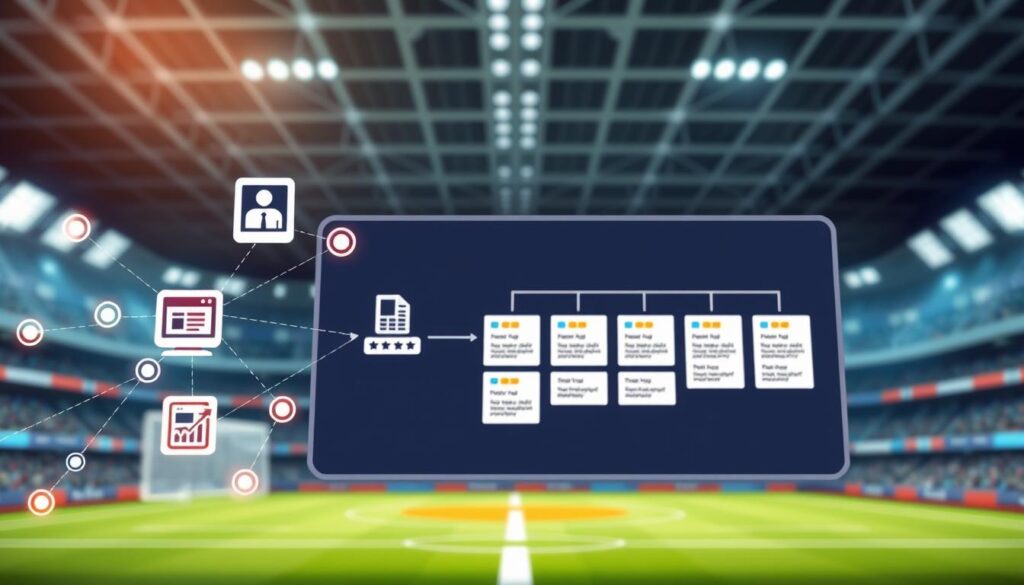
While internal links guide people, schema markup guides search engines. It’s a behind-the-scenes code you add to your pages. This code acts like a translator, clearly telling Google, “This page is about a specific sports event.”
You can use schema to label important details:
- The event type (e.g., “Basketball Game”)
- The teams and key players involved
- The date, location, and final score
Why does this matter? When search engines understand your content perfectly, they can crawl and index it more effectively. This understanding can lead to rich results—those eye-catching search listings that show scores, player stats, and event dates right on the results page!
Combining smart internal links with precise schema markup creates a powerhouse for SEO and user experience. Fans find more great content without hitting the back button, and search engines reward your clear, well-structured site. It’s the final step in transforming one game into a connected, discoverable universe of content.
Drip Journeys: new fan onboarding with best moments
Imagine turning a casual viewer of your team’s big win into a lifelong fan. That surge in new followers is a big chance. But, interest can drop fast if you don’t plan well. A smart drip journey is your best move.
A drip journey is your automated welcome series for new fans. It’s like a tour guide for your content world. Instead of dumping everything at once, you share your best moments in a planned order. This helps new fans learn about your team and join your community.
Let’s create a simple yet effective email drips campaign for a single epic game. The goal is to onboard through highlights, not too much info.
Here’s a three-email framework that works:
- Day 1: The Instant Hook. Subject: “Welcome! Here’s the game-winning highlight.” The first email is all about celebrating. Share the most iconic play right away. It rewards the subscriber and shows why they followed you.
- Day 3: The Deep Dive. Subject: “Did you see this incredible individual performance?” Now, highlight a standout player’s moment. It could be a record-breaking run or a defensive masterpiece. It adds depth to the game story and introduces team stars.
- Day 5: The Strategic Insight. Subject: “Here’s what the stats told us about the team’s strategy.” This email provides context. Share a key statistic or tactical breakdown that defined the victory. It shows new fans the smart side of the win, making your content seem authoritative.
This structured approach does the hard work for you. These email drips send automatically, giving every new fan a consistent and engaging intro. You’re not just sending emails; you’re telling a story over several days.
The result? You build trust and familiarity. Newcomers know what to expect from your channel and feel like insiders. By using your game assets, you create a journey that turns short-term interest into lasting loyalty.
Archive Hygiene: update rules, 301s, seasonal refresh
Your content engine is running at full speed! Now, let’s talk about maintaining your library. Archive hygiene is the practice of managing your older content so it stays valuable.
Set clear update rules. When a rookie you mentioned becomes a star like LeBron James, update that old recap. Add new stats or context. This turns a simple game story into evergreen content that keeps attracting readers.
Use 301 redirects wisely. If you remove or merge pages, proper redirects preserve your hard-earned SEO link equity. No visitor should ever hit a dead end.
Plan a seasonal refresh. Curate themed playlists of the best games from a past season. Update “Greatest Plays” compilations with fresh analysis. These playlists give fans a reason to dive back into your archive all year.
This systematic care ensures your entire content library—from yesterday’s live update to last year’s deep dive—keeps working for your audience and your SEO.