
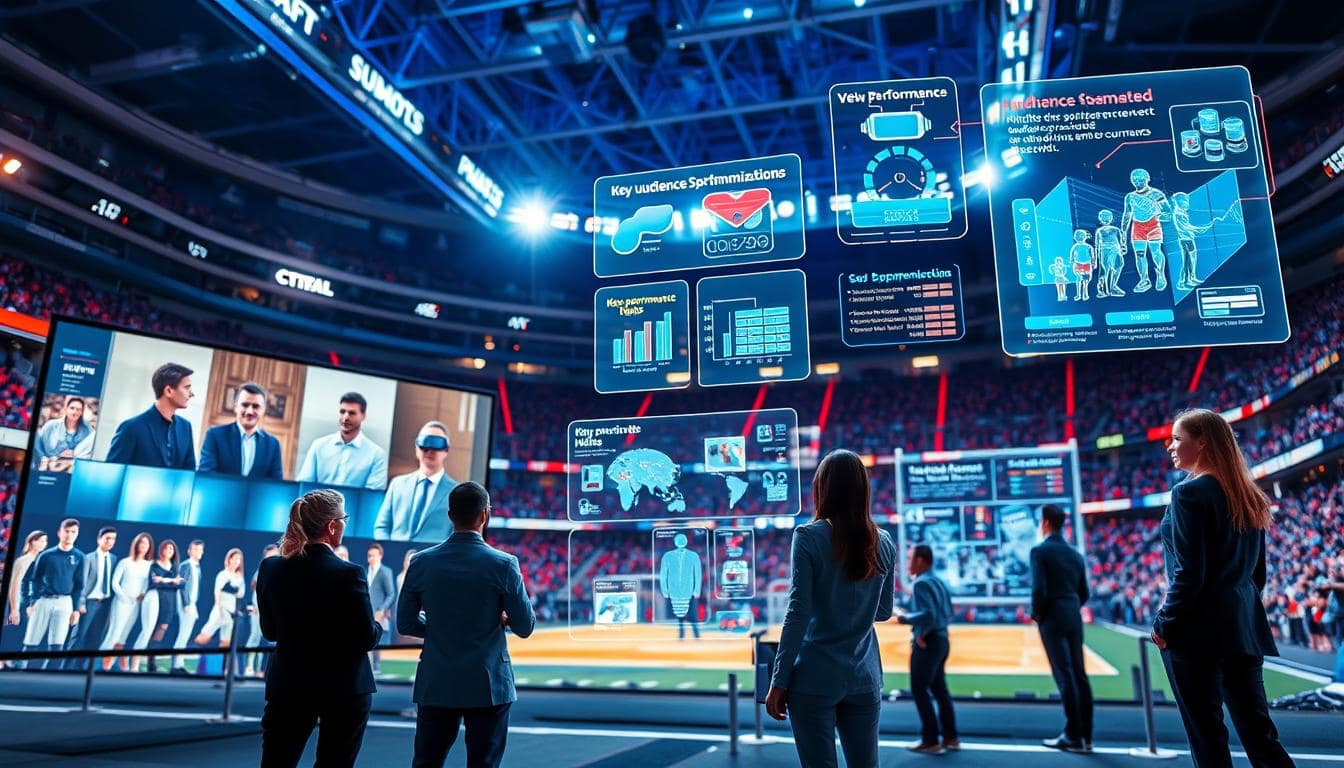
Remember when brands just put logos on billboards and hoped for the best? Those days are gone, like dial-up internet.
Now, smart brands use tech to create immersive experiences. They make people want to join in.
Imagine augmented reality at halftime shows. Or campaigns that turn viewers into players. It’s not just marketing; it’s meaningful engagement.
These new methods turn old sponsorship into real connections. They bring in real results and create lasting memories.
Welcome to the new world of audience interaction. Let’s see how these digital sponsorships are changing the game.
Examples from Leading Brands
Think digital activations are just ideas? Meet the brands changing the marketing game. They’re diving deep into virtual events, not just testing the waters.
FIFA’s Roblox experience drew 500 million hours of engagement in 2024. That’s like 57,000 years of people watching virtual soccer. The Olympic Committee and Wimbledon also made big moves, turning digital spaces into real experiences.
Cisco used connected scarves for Manchester City fans, tracking their heart rates. AB InBev put NFC chips in Mexico jerseys, linking fans to digital content.
Coca-Cola’s FIFA World Cup AR campaign let people unlock virtual experiences with bottle scans. Nike and Heineken also created engaging social activities, blending fun with learning.
These aren’t just random marketing stunts. They’re smart moves in the world of virtual event engagement. Brands that get it right mix physical and digital seamlessly, making fans feel like they’re part of something special.
| Brand | Activation Type | Platform | Engagement Metric |
|---|---|---|---|
| FIFA | Virtual Experience | Roblox | 500M hours (2024) |
| Olympic Committee | Digital World | Proprietary Platform | Visa-sponsored |
| Wimbledon | Virtual Access | Fortnite | American Express partnership |
| Cisco | Wearable Tech | Connected Scarves | Physiological response tracking |
| AB InBev | NFC Technology | Mexico Jerseys | Direct fan connection |
The table shows the variety of virtual event engagement strategies. Brands are using everything from gaming to wearable tech to connect with fans. The key is creating experiences people want to be a part of.
This isn’t about pushing ads. It’s about adding value through fun and usefulness. The best digital activations are like premium content, not ads. They know you need to earn attention in today’s world.
The best virtual event engagement builds communities, not just audiences. It creates value through participation, not just data collection. This approach feels natural, which is why it works so well.
First Steps for Event Coordinators
Ready to dive into digital sports promos but feeling lost? Let’s turn that blank slate into a winning strategy.
First off, let’s tackle the elephant in the room: the Field of Dreams approach. Just building something doesn’t guarantee success. The real winners start by asking the right questions.
What do you want to achieve? Do you want to boost brand awareness, generate leads, or create unforgettable moments? These moments can turn casual fans into brand champions.
- Define crystal-clear objectives before you even think about tactics
- Leverage existing partnerships with sports organizations – they’re your secret weapon
- Start with pilot campaigns, not big bets on new ideas
- Measure everything like your career depends on it (because it kinda does)
- Iterate constantly based on what the data tells you
The best coordinators treat digital activation like building a relationship. They know successful promos aren’t just one hit. It’s about consistent, thoughtful engagement that grows over time.
Remember, your sports organization partners are more than just vendors. They’re your allies in creating magic. Talk to them often and honestly. They know their audience better than any algorithm.
Start small, measure a lot, and scale what works. Your digital sports promos should feel like a natural part of the fan experience. That’s what they should be.
Planning Engaging Digital Content
Planning digital content without a strategy is like trying to win the Super Bowl with a pop warner playbook. You’ll get flattened before reaching the end zone. The brands that dominate this space know it’s not about using every digital tool. It’s about choosing the right ones that resonate with your audience.
Think of your digital sponsorship activations as a carefully crafted game plan. Each element should serve a purpose and deliver real value. It shouldn’t just occupy digital space.
Gamification taps into that competitive madness that makes sports fans so wonderfully obsessive. Leaderboards, challenges, and rewards turn passive viewers into active participants. It’s like turning your brand into the fourth quarter of a close game – everyone leans forward.
AR and VR experiences are your secret weapon for creating moments fans can’t get in the physical world. Virtual locker room tours, courtside seats from their couch, or interactive product demonstrations. These technologies transform spectators into participants.
Social media activations need to feel organic, not like corporate propaganda wearing a fan’s jersey. The best campaigns blend seamlessly into the social feeds people actually want to see. They create shareable moments, not forced ads.
Exclusive content is the ultimate VIP pass to fan hearts. Behind-the-scenes access, athlete takeovers, or limited-time offers make fans feel like insiders. It’s the difference between being welcomed backstage and being sold a ticket.
| Content Type | Best Use Case | Audience Engagement Level | Implementation Complexity |
|---|---|---|---|
| Gamification | Competitive fan bases | High | Medium |
| AR Experiences | Product demonstrations | Medium-High | High |
| VR Immersion | Virtual access events | Very High | Very High |
| Social Media Activations | Real-time engagement | Medium | Low-Medium |
| Exclusive Content | Loyalty building | High | Low |
The common thread? Every piece of content should serve a strategic purpose. Whether you’re building brand awareness or driving conversions, your digital sponsorship activations need clear objectives. Random acts of digital content rarely move the needle.
Successful planning means understanding your audience’s digital habits better than they understand themselves. Where do they spend time online? What content do they actually share? What makes them click?
Remember: the most effective digital sponsorship activations feel less like marketing and more like value-added experiences. They enhance the fan journey, not interrupt it. For more insights on creating authentic connections, explore our comprehensive guide to sport marketing and.
The digital landscape changes faster than a rookie’s 40-yard dash time. What worked last season might already be outdated. The key is staying agile while maintaining strategic focus on your core objectives.
Live Interactions & Social Media
Watching brands on social media during live events is like seeing someone dance at a wedding. Some dance smoothly, while others seem to be having a fit. The key difference is knowing social media is for starting conversations, not just shouting.
Good virtual event engagement turns viewers into active participants. It’s like sharing popcorn at the game – creating moments everyone wants to talk about.
Some brands treat Twitter like a corporate news feed. But the smart ones run polls, create Instagram challenges, and make TikTok content that fits the platform’s vibe.
These actions aren’t just strategies. They’re invitations to join conversations fans are already having. The magic happens when you start talking instead of just broadcasting.
Here’s what really works in live social media:
- Twitter polls that tap into real-time reactions
- Instagram challenges tied to event milestones
- Hashtag campaigns that encourage user-generated content
- Influencer partnerships that feel authentic, not transactional
The secret is being genuine. Fans can spot fake efforts from far away. Your social presence should feel like it’s from people who love the event, not just marketers.
When you get it right, you create a buzz of shared experience. It’s like a digital high-five that turns casual viewers into passionate fans. That’s the true power of virtual event engagement through social media.
Remember, social media during live events isn’t about controlling the conversation. It’s about joining it. Sometimes, the best thing to do is listen more than you speak.
Using Tech for Measurement
If you’re not measuring your digital sports promos, you’re basically playing darts blindfolded while investors watch. The digital realm offers something physical events never could: crystal-clear accountability.
Every click, like, share, and conversion tells a story. The smart brands aren’t just collecting data – they’re having conversations with it. They ask the right questions and actually listen to the answers.
Vanity metrics are the participation trophies of marketing. Real measurement digs deeper. It’s not about how many people saw your content, but what they did after seeing it.
Data analysis transforms guesswork into strategy. I’ve watched campaigns evolve from basic awareness plays to sophisticated personalization engines. All because someone decided to actually read the numbers.
The ROI question becomes surprisingly simple when you have the right tools. Digital analytics provide the proof that either justifies your budget or tells you to pivot immediately.
| Metric Type | What It Measures | Why It Matters | Actionable Insight |
|---|---|---|---|
| Click-Through Rate (CTR) | Content | Audience interest level | Optimize call-to-action placement |
| Engagement Rate | Interaction depth | Content relevance | Adjust content format strategy |
| Conversion Rate | Goal completion | Campaign effectiveness | Refine user journey pathways |
| ROI Calculation | Financial impact | Budget justification | Reallocate resources efficiently |
Digital tools now offer real-time analytics that would make NASA jealous. You can track fan behavior patterns, identify peak engagement times, and measure emotional responses to different content types.
The most successful digital sports promos use this data not just to prove value, but to create better experiences. They turn analytics into action, transforming numbers into meaningful connections.
Remember: if you’re not measuring, you’re just guessing. And in today’s market, guesses don’t get funding renewed.
Pitfalls & Hacks
Let’s talk about digital sponsorship activations that crash harder than a rookie quarterback’s first playoff game. For every viral success story, there’s a digital graveyard filled with campaigns that forgot one thing: humans need to enjoy it.
The biggest pitfall? Treating your activation like a Silicon Valley product launch instead of something people might actually want to use. I’ve seen brands create experiences so complicated they make tax forms look inviting. The best digital sponsorship activations work because they’re simple, intuitive, and actually fun.
Then there’s data privacy – the elephant in the room that’s currently wearing a GDPR jersey and looking very angry. Too many brands treat user data like found money instead of borrowed trust. Being transparent about data collection isn’t just good ethics; it’s survival in 2024.
Integration issues plague campaigns that feel like they parachuted in from another planet. When your digital activation doesn’t speak the same language as the rest of your sponsorship, fans notice the disconnect immediately.
So what separates the winners from the digital dumpster fires? Here are the hacks that actually work:
| Common Pitfalls | Smart Hacks | Real-World Impact |
|---|---|---|
| Over-engineered experiences | Start with user journey, not technology | 75% higher participation rates |
| Data privacy concerns | Transparent opt-ins & clear value exchange | 40% better data quality |
| Poor integration | Collaborate early with sports partners | 2x longer engagement duration |
| Zero testing | Beta test with real fans pre-launch | 90% fewer technical issues |
The magic happens when you stop thinking about technology and start thinking about people. Collaborate with your sports partners until your activation feels native to their brand DNA. Test everything with actual humans before launch – I’ve seen more campaigns fail from lack of testing than from lack of budget.
Remember: the goal isn’t to create the most technologically advanced activation. It’s to create something people will actually remember tomorrow. Sometimes the simplest ideas – a clever social media filter, an instant win game, a behind-the-scenes VR experience – outperform the most complex tech stacks.
The best digital sponsorship activations feel less like marketing and more like value-added entertainment. They understand that in sports marketing, as in sports themselves, sometimes the simplest plays work best.
Success Stories
Forget theory – let’s dive into brands that really got it right. These aren’t just case studies; they’re lessons in making tech feel personal.
Oracle made Premier League analytics exciting to watch. Amazon Web Services turned Formula One races into cloud computing lessons for everyone. They made complex tech simple!
Tata Consultancy Services did something amazing with the London Marathon. They created digital twin runners that showed health data in real-time. Suddenly, a B2B IT company became the coolest teacher on the course.
Adobe’s partnership with the Women’s FA Cup was genius. They gave teams creative tools that improved the sport itself. It wasn’t just about slapping their logo on something.
The common thread? These companies offered real value instead of just seeking attention. Their virtual event engagement worked because everyone won – brands, athletes, and fans.
Coca-Cola, Nike, and Heineken have similar stories. They knew the best marketing doesn’t feel like marketing at all. It’s part of the experience.
That’s the secret. When your activation enhances the event, not just interrupts it, you’ve hit marketing gold.
Conclusion
Digital transformation is not just a future idea in sports marketing. It’s the key to winning games today. The best digital sports promos mix old traditions with new tech, focusing on the fan’s experience.
Brands like Nike and Red Bull have nailed this mix. They know digital marketing isn’t just about fancy tech. It’s about adding real value that fans love long after the game ends. As tech advances, with AI and blockchain, the core ideas stay the same.
The magic happens when everyone benefits. Sports teams get more fans, brands see real returns, and fans make memories that last. Done right, digital sports promos feel like part of the game, not just ads.


