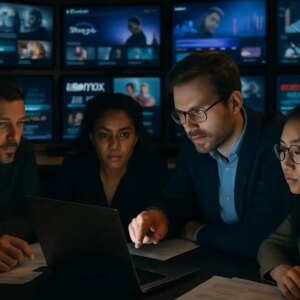

Film festival acquisitions have moved from headline-grabbing bidding contests toward a more selective, data-aware model shaped by streaming habits, fewer traditional buyers, and tighter risk controls. Confirmed data from the 2025 Sundance Film Festival showed 19 films acquired, down from about 38 in 2019, despite more than 17,000 submissions, according to a March 2026 Senate hearing statement on independent film distribution Senate testimony. Market-analysis: that decline does not mean festivals matter less. It means the festival function is changing from a pure sales bazaar into a mixed system of audience testing, brand building, financing, rights strategy, and community signal gathering.
For distributors, the question is no longer only whether a film can win attention in Park City, Cannes, Toronto, Venice, Berlin, or Austin. The sharper question is whether that attention can be converted into a rights package, theatrical event, streamer placement, social audience, or direct sales plan that matches the film’s scale. That shift has cultural weight because acquisition decisions help determine which stories reach broad audiences, which titles stay inside festival circuits, and which creators can finance a second feature.
Why Film Festival Acquisitions Became More Selective
Film Festival Acquisitions As Risk Filters
Confirmed data point: at the May 12-20, 2026 Marché du Film in Cannes, research notes indicate about 16,000 industry participants registered, up from roughly 15,000 the prior year. The same research record said buyer attention shifted toward smaller, lower-risk productions as larger studios became more cautious. Market-analysis: this is less a retreat from cinema than a recalibration of exposure. A $2 million acquisition can be easier to defend than a costly all-rights deal if the likely audience is niche, region-specific, or dependent on awards momentum.
The shift in film festival acquisitions also reflects consolidation pressure. The Senate statement cited above argued that studio consolidation has reduced the number of companies actively competing to acquire independent films. SiteBob’s related analysis of media consolidation and distribution power makes the same business issue visible from the other side: fewer large gatekeepers can mean stronger bargaining power for those who still control platforms, data, and audience reach.
Opinion: the most important cultural risk is not that fewer films sell at festivals. It is that risk filters can quietly narrow the kinds of films that sell. Smaller dramas, debut features, non-English projects, experimental documentaries, and politically specific work often need patient distributors. If buyers favor only prestige signals, known talent, or proven audience categories, festivals may still celebrate discovery while the wider market funds familiarity.
How Streaming Habits Change The Deal Math
Audience Access Now Shapes Acquisition Value
Confirmed data point: an AP-NORC poll published on September 25, 2025 found that about 75% of U.S. adults had watched a new movie through streaming in the prior year, while about 30% did so at least monthly AP-NORC poll. Market-analysis: these viewing habits change the value of festival heat. A strong premiere can still spark reviews, social conversation, and awards chatter, but buyers increasingly need to know whether that response can travel into a living-room environment where viewers are surrounded by competing series, sports, creator videos, and catalog titles.
For distributors, film festival acquisitions now require more precise audience mapping. A horror title with intense social chatter may have a different route than a patient literary adaptation. A documentary tied to a public-policy debate may need educational partners, local screenings, and creator-led outreach before a streaming window. A filmmaker with an active newsletter, podcast following, or regional fan base may bring signals that were harder to measure a decade ago.
This is where entertainment partnerships become practical rather than decorative. Festival teams, distributors, creator platforms, ticketing providers, and audience-data companies can work together to understand who showed up, who recommended the film, which cities overperformed, and which communities are likely to convert. Relevant industry insights can be further explored at Internet Video Magazine, as it highlights how festival distribution competes within the broader video attention economy.
What The 2026 Market Signals Show
Curated Markets Are Gaining Importance
Confirmed data from the supplied research shows that the first TIFF: The Market, scheduled for September 10-16, 2026, had confirmed more than 130 buyers from 49 countries by September 15, 2026. Market-analysis: Toronto’s effort points to a larger shift toward curated deal spaces where acquisition, financing, packaging, and international sales can be coordinated closer to festival discovery. That format may help smaller titles by giving them structured buyer access, though the effect will depend on deal volume and follow-through after the festival dates end.
At Cannes Next during the May 12-20, 2026 Marché du Film, the research record also noted growing attention to self-distribution and direct-to-audience models. One data point from that discussion said Eventive had worked with about 6,000 festival editions globally over the past decade, sold tickets in more than 50 countries, and issued more than 16 million tickets. Market-analysis: these figures point to infrastructure that can help films move beyond a single premiere weekend. Ticketing data, virtual screening records, and community activity can become proof points for a distributor, a regional exhibitor, or a filmmaker deciding whether to keep rights and sell directly.
Reported festival deal values from 2025 also show the split between ambition and caution. The research notes cite Mubi paying about $24 million for multi-territory rights to “Die My Love” at Cannes, and Netflix spending about $10 million on “Train Dreams.” Those examples suggest that major checks still exist, but they are more likely to cluster around prestige, star-driven, or awards-positioned projects than broad buying volume. Reviewed cautiously: deal prices alone do not prove audience success, since marketing spend, retention value, awards impact, and long-tail viewing all affect return.
Why Direct Audience Strategy Matters

Festivals Are Becoming Community Tests
For distributors, film festival acquisitions now sit beside a second strategy: using the festival as a public signal even when a traditional sale is delayed, partial, or absent. Market-analysis: a premiere can identify the communities most likely to care about a film. Those communities may be organized around language, region, genre, identity, issue advocacy, music, cast loyalty, or a director’s prior work. That does not replace distribution expertise, but it gives sales teams and filmmakers a more specific argument than “the reviews were strong.”
The October 9, 2025 MIA market discussion in Rome, as summarized in the supplied research, emphasized the need to connect theatrical exhibition with streaming and social media, while also recognizing public support for debut filmmakers and quality titles. That point is important because not every worthwhile film can be made viable by audience data alone. Some work needs grants, public funds, nonprofit partners, festival awards, and regional exhibitors willing to build context around the release.
- Confirmed: acquisition volume at major festivals has tightened compared with the 2019 Sundance benchmark cited in Senate testimony.
- Market-analysis: smaller deals may reduce buyer risk but can limit upside for producers if rights are bundled too cheaply.
- Opinion: the healthiest distribution model is likely mixed, pairing festival prestige with targeted theatrical dates, streaming windows, and direct community outreach.
Fan engagement is often discussed after a release, but it now needs to begin earlier. A distributor that studies festival Q&A reactions, newsletter signups, sellout patterns, social clips, and local press can design a smarter rollout. The risk is over-reading small samples. Festival audiences are not the same as general audiences, and early enthusiasm can distort expectations. The opportunity is using those signals as directional evidence, not as a guarantee.
What Film Festival Acquisitions Mean For Indie Reach
The evolution of film festival acquisitions is best understood as a shift from scarcity-driven bidding to evidence-driven matching. Buyers still want standout films, but they are asking more questions about price, windowing, audience behavior, rights flexibility, awards potential, and marketing burden. Creators, in turn, are being pushed to think like distribution partners earlier in the process.
That pressure can be unfair, especially for first-time filmmakers who already carry creative and financial risk. Yet it also opens room for smarter partnerships. A film may not need one giant deal if it can assemble festival credibility, regional exhibitors, creator-led promotion, educational licensing, streaming placement, and direct fan communication. The best outcome is not always the biggest check on premiere weekend. It is the deal structure that gives the film a real audience without stripping away long-term value.
For fans, the cultural implication is clear: how films are acquired affects what stories become visible. A cautious market can protect buyers from expensive misses, but it can also leave original work underexposed. The challenge for festivals, platforms, public funders, and independent distributors is to keep discovery connected to actual access. If that connection weakens, festivals remain influential showcases but lose some of their power as engines of cultural circulation.