
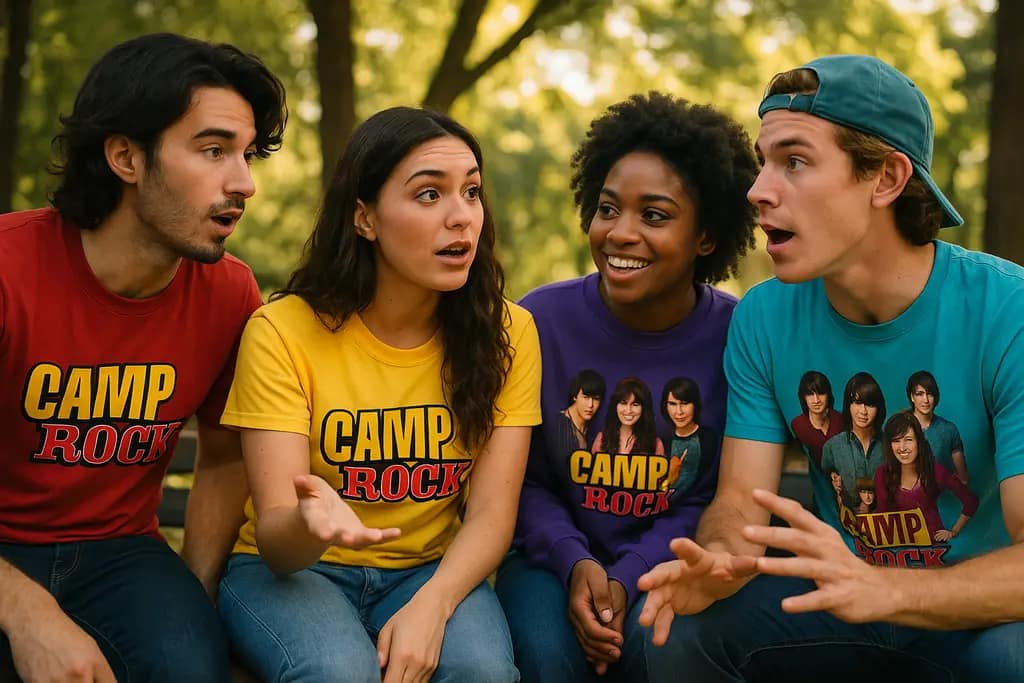
Camp Rock 3 arrived as more than a sequel. It was a controlled test of how Disney can use a familiar youth-musical property to reconnect older viewers, introduce younger audiences, and keep conversation active across linear television and streaming. Confirmed: the film premiered on Disney Channel on August 13, 2026, and became available on Disney+ the following day, August 14, according to Disney+ Press.
That timing matters because nostalgia programming now has to serve two audience groups at once. One group remembers the original Disney Channel cycle as part of adolescence. Another may be encountering the brand through parents, siblings, clips, playlists, or Disney+ recommendations. The cultural question is not only whether viewers remember the songs. It is whether the new release gives them a reason to participate again.
Why Camp Rock 3 Uses Nostalgia As Audience Infrastructure
The Camp Rock 3 Release Was Built Around Memory And Access
Market-analysis: nostalgia works best for streamers when it is treated as audience infrastructure, not decoration. A familiar title lowers the barrier to sampling. A returning musical identity gives viewers a shared reference point. A next-day Disney+ release then turns the premiere into something that can keep moving after the first broadcast window.
The original films occupy a specific place in Disney Channel culture: music-led storytelling, teen performance aspiration, and pop-star crossover appeal. The research record for the new film shows Disney leaning into that memory while widening the cast frame. The Jonas Brothers return as Connect 3, while new campers, including Liamani Segura and Malachi Barton, help establish a younger character layer. That is a common revival structure: legacy performers act as trust signals, while new characters provide future-facing story options.
The value of Camp Rock 3 is not only that it recalls a prior hit. It gives fans permission to compare eras. That comparison fuels social posting, reaction videos, playlist revisits, and rewatch behavior. No public Disney+ viewing-hours figure or verified social-volume total was included in the supplied research, so any claim of measured audience growth should be treated cautiously. What is supported is the campaign design: release timing, returning talent, a promotional build, and music as a repeat-engagement tool.
Music Makes Nostalgia Easier To Share
Reviewed in the research: the soundtrack includes new original songs and updated versions of earlier franchise songs such as “Play My Music” and “We Rock.” From an engagement standpoint, that is more than a fan-service move. Music travels differently from plot. Songs can circulate through short-form clips, playlists, singalong posts, and memory-based reactions without requiring a full rewatch.
This gives Disney a practical advantage. A viewer may not immediately watch the full film, but a familiar chorus can pull them back into the franchise. A younger viewer may first meet the property through a new performance, then move backward to the original films. Nostalgic content is strongest when it creates two-way traffic: older fans returning forward and new fans moving backward.
How The Release Strategy Connects Platforms And Generations
Linear Television Still Has Event Value
Confirmed: Disney used Disney Channel first, then Disney+ the next day. That sequence is notable because it avoids treating streaming as the only meaningful audience site. For a brand with roots in Disney Channel, the cable premiere carries symbolic value. It mirrors how many original viewers first encountered the franchise: scheduled, communal, and tied to a youth-TV identity.
Market-analysis: the next-day Disney+ window then changes the shelf life. A one-night cable event can produce appointment viewing. A streaming release can extend access for families, repeat viewers, and fans outside the premiere moment. That dual path is especially useful for nostalgia titles because the audience is no longer in one life stage. Some viewers who watched the original movies as teenagers are now adults with different media habits and, in some cases, children of their own.
The release also sits within a broader network of entertainment attention. Comparing how different media engages audiences, True Real TV analyzes similar patterns in unscripted and reality programming, where memory, character attachment, and repeat discussion also shape engagement.
Promotion Extended The Story Before Premiere
The supplied research identifies an “All Roads Lead to Camp” bus tour beginning July 3, 2026, with stops across U.S. cities, nostalgic photo opportunities, and camp-themed giveaways. Confirmed within the research set: the official trailer followed on July 21, 2026, highlighting new musical performances and the next generation of campers.
Those choices point to a clear engagement pattern. Disney was not only asking fans to press play. It was giving them physical and social prompts before the film arrived. Photo opportunities convert nostalgia into shareable proof of participation. Giveaways make the campaign tangible. A trailer focused on new performers helps reduce the risk that the project looks backward only.
- Confirmed: the premiere used Disney Channel and Disney+ in sequence.
- Confirmed in research: the campaign included a U.S. bus tour and a July trailer.
- Market-analysis: the release plan served both returning viewers and new viewers.
- Unverified: exact Disney+ streaming gains and social-posting volume were not quantified in the approved sources.
Why Returning Talent Gives The Revival Cultural Weight

Where Camp Rock 3 Uses The Old Cast Without Freezing The Franchise
Confirmed: Demi Lovato, who played Mitchie Torres in the original films, serves as an executive producer and makes a cameo appearance, as reported by LOS40. That combination matters. A cameo alone can be read as a quick nostalgia cue. Executive-producer credit signals a deeper connection to the project’s framing, though it does not by itself tell us how creative decisions were made.
For fans, Lovato’s involvement carries cultural weight because Mitchie Torres was central to the original identity of the franchise. For Disney, the appearance offers continuity without making the revival depend entirely on the past. The Jonas Brothers’ return as Connect 3 works in similar fashion: familiar enough to activate memory, but positioned alongside a new camper group.
Opinion, based on the confirmed setup: the strongest version of this strategy is not pure repetition. It is intergenerational handoff. If legacy characters dominate, younger viewers may feel like guests at someone else’s reunion. If the new cast arrives with no meaningful ties to the prior films, older fans may reject the project as a brand exercise. The available facts suggest Disney tried to balance those risks by pairing returning figures with new performers and updated music.
Fan Memory Is A Distribution Asset
Nostalgia is often discussed as sentiment, but for platforms it also functions as distribution support. Fans who remember the original films become informal marketers when they post favorite scenes, compare songs, explain references, or recommend the new film to younger family members. The research notes that social platforms saw an uptick in related content, but no verified count was provided, so the safer reading is qualitative: the title produced visible discussion rather than a confirmed, quantified surge.
Critics in the supplied research described the film as paying homage through references and moments tied to the original movies. That matters because references give fans tasks. They can identify callbacks, debate choices, rank songs, and explain why a detail matters. In media engagement terms, those actions extend the viewing period. The film becomes not only a release but a prompt for interpretation.
What Camp Rock 3 Means For Nostalgic Engagement
Camp Rock 3 shows how a studio can use a legacy youth title without relying only on recognition. The confirmed strategy combines a Disney Channel premiere, next-day Disney+ access, returning performers, new campers, music updates, and pre-release promotion. Each piece serves a different part of the audience funnel: awareness, memory, sampling, sharing, and rewatching.
The caution is measurement. Without public viewing data, verified completion rates, or platform-level social analytics, it would be too strong to claim a proven streaming win. What can be said is narrower and more useful: Disney built the release around known fan-engagement mechanics. It gave longtime viewers a reason to return, younger viewers a clear point of entry, and online communities enough material to discuss beyond premiere night.
That is the cultural implication of the revival. Nostalgic content is no longer just a backward glance. At its best, it is a bridge between media habits, age groups, and platform schedules. The real test will be whether Disney can sustain interest after the initial memory cycle fades. For now, the supported evidence points to a careful audience-reconnection play built around music, access, and shared franchise memory.


